Fishguard, Skomer and Milford Haven

A lumpy crossing, a dripping hatch, puffins by the thousand, a lock gate, a steering repair, and a paddle steamer. Seven days that took us from Pwllheli to the edge of Wales and back into civilisation.
We slipped the lines in Pwllheli just before sunrise. Cardigan Bay welcomed us with a confused sea, and it didn't take long before we had to find our sea legs all over again. Crossing the bay isn't just about the weather either. The whole area is an active military firing range, so the day before we'd checked in with the range control to make sure we could cross safely and that they'd keep a lookout for us. That was one of the reasons for the early start.
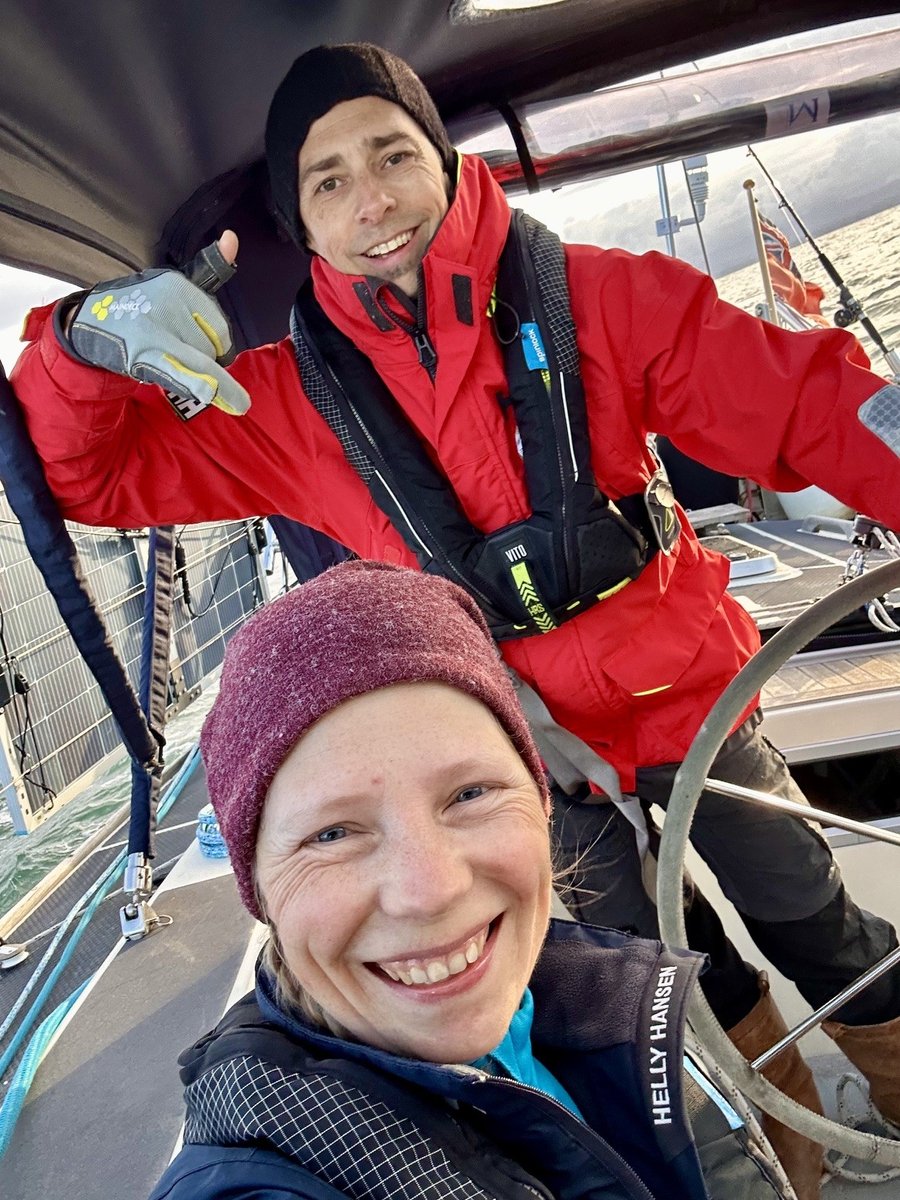
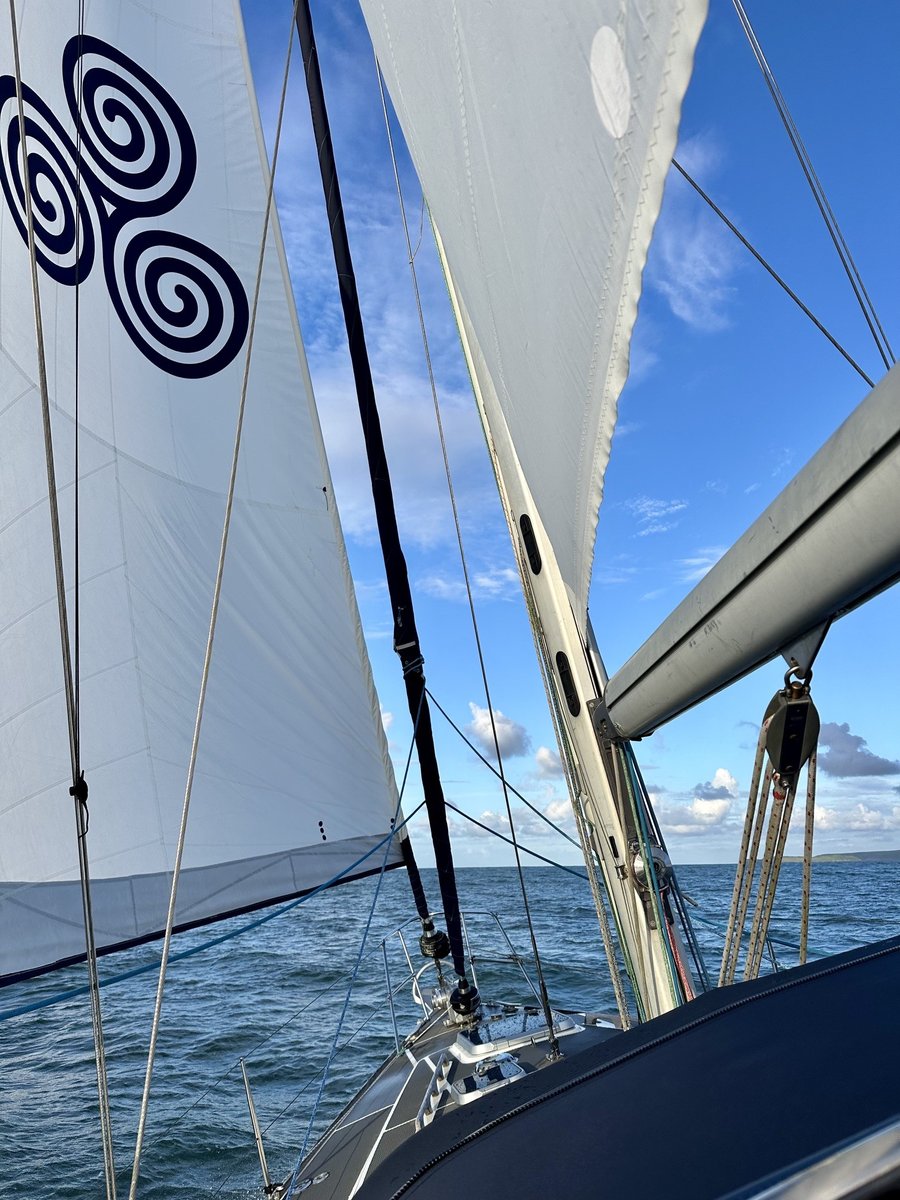
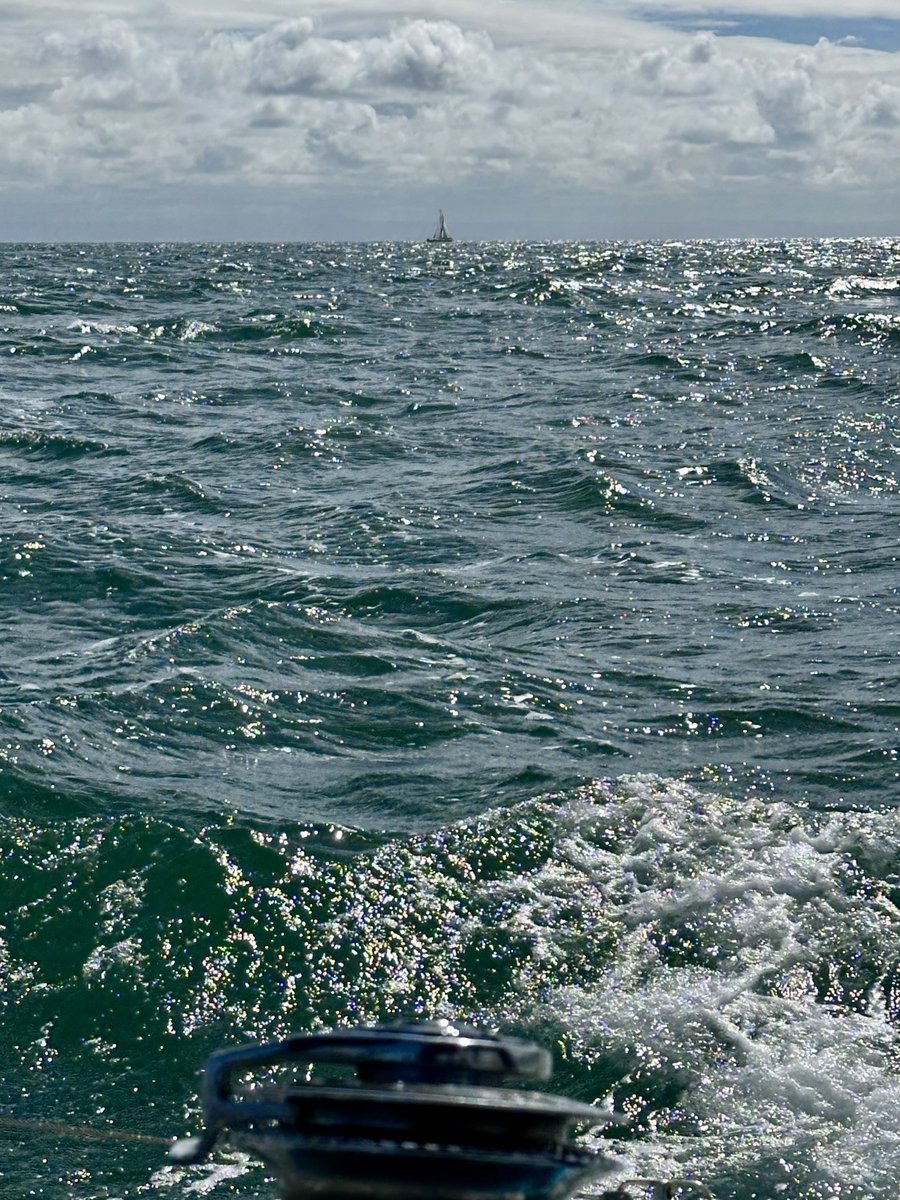
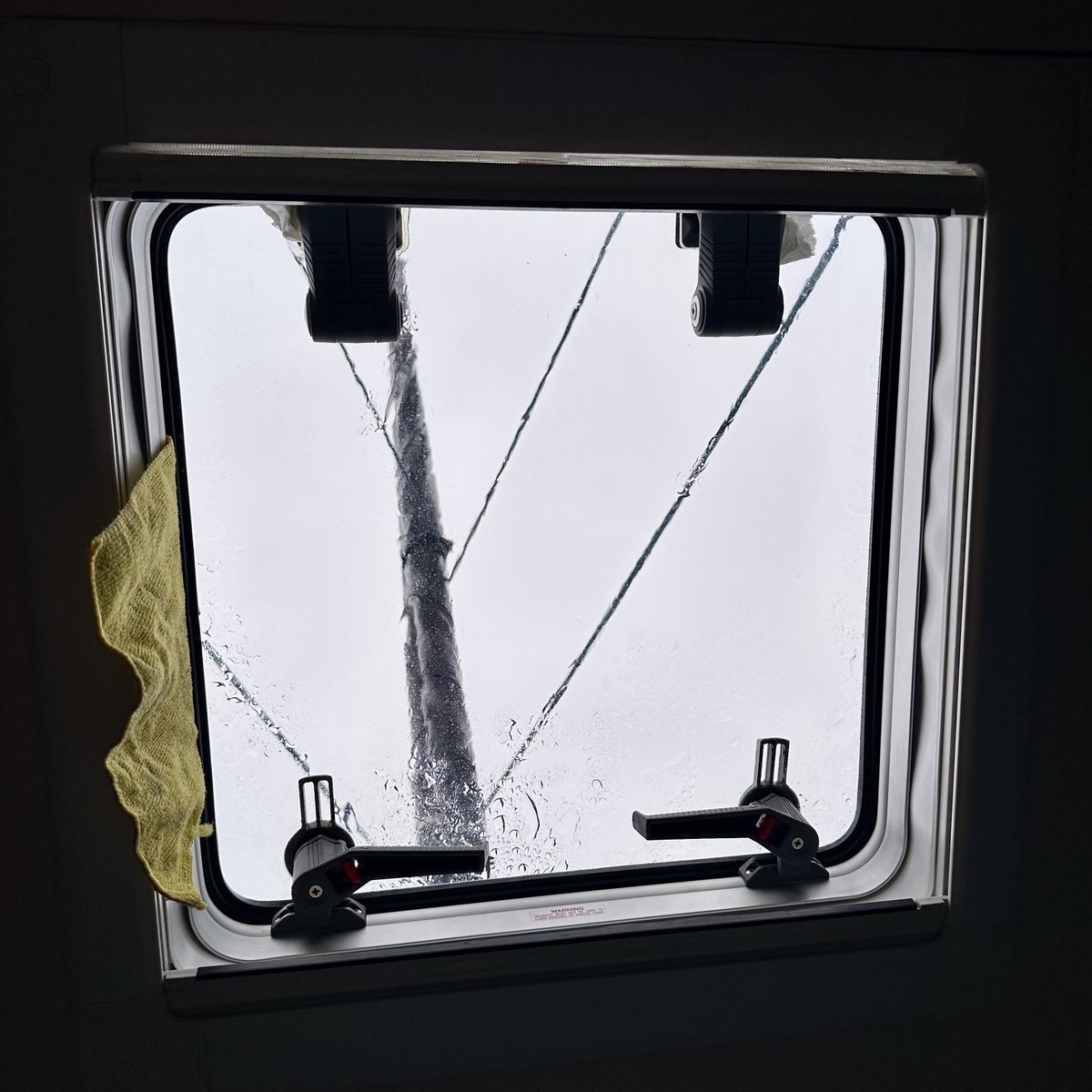
By the time we reached Fishguard we were tired and wet. Somewhere out in Cardigan Bay the forward hatch had started leaking, leaving our bed damp and salty. Fortunately, the sun appeared just as we dropped the hook beneath Fishguard Fort. The forecast had already made the decision for us anyway. St David's Head wasn't going anywhere, so neither were we.
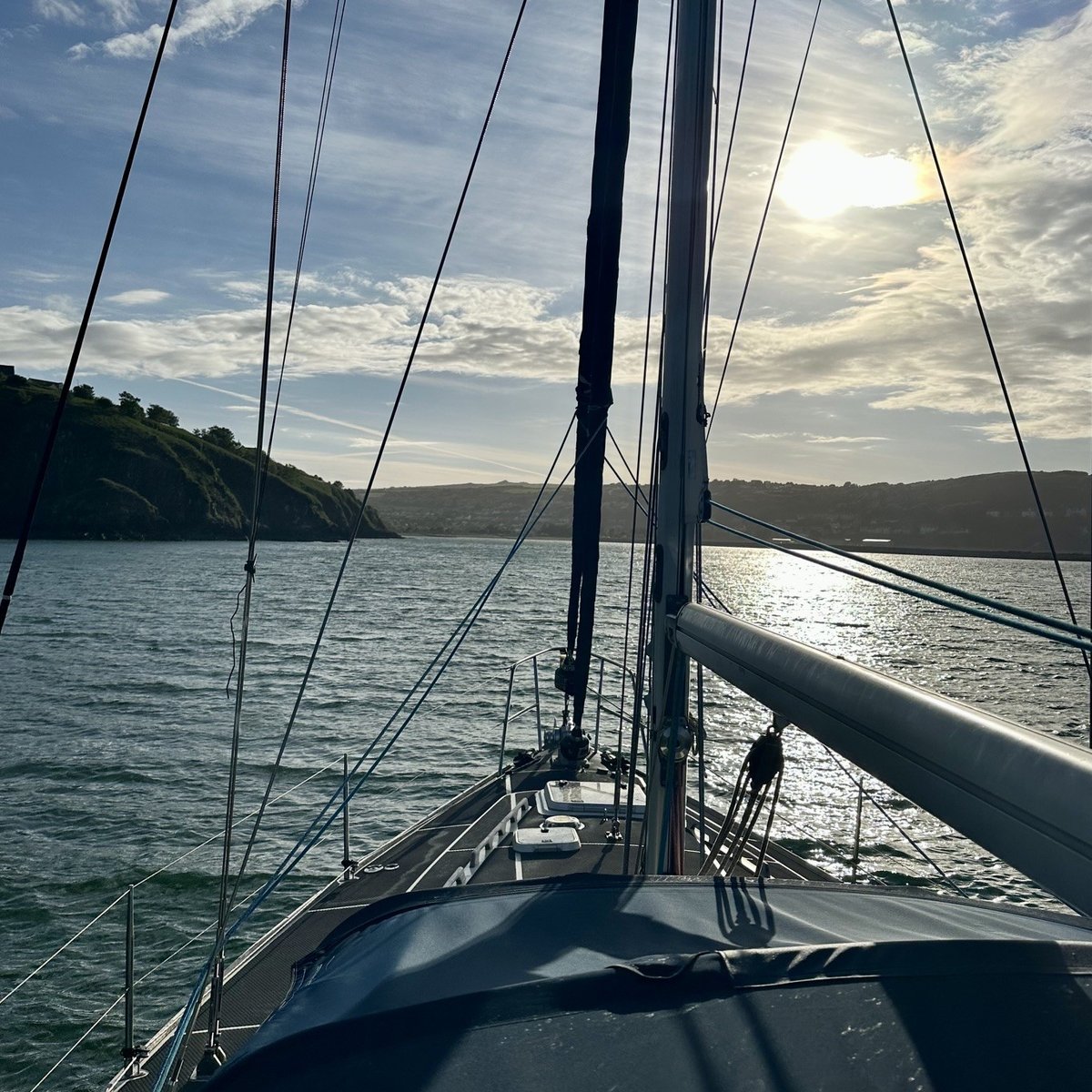
Bara Brith and a Dripping Hatch
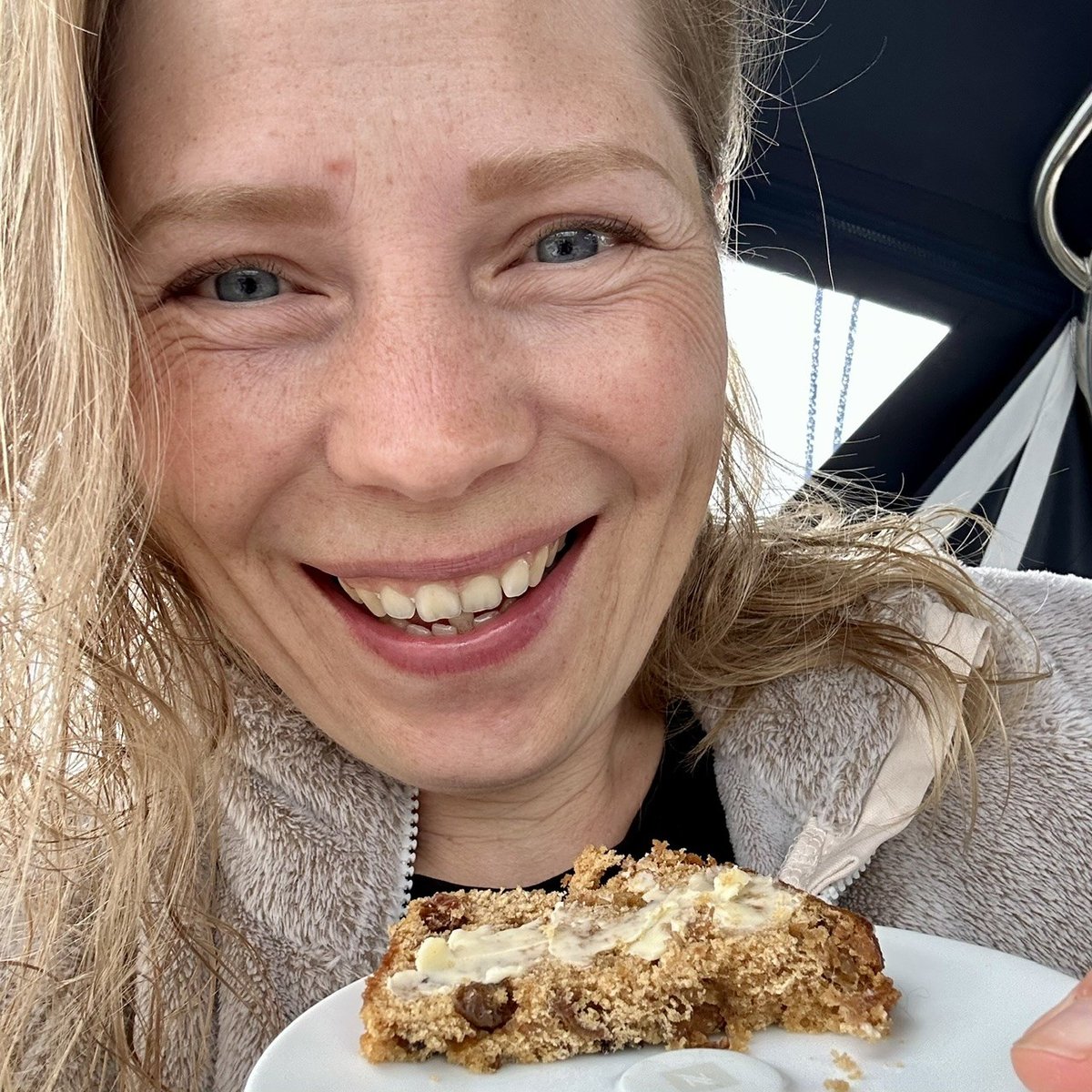
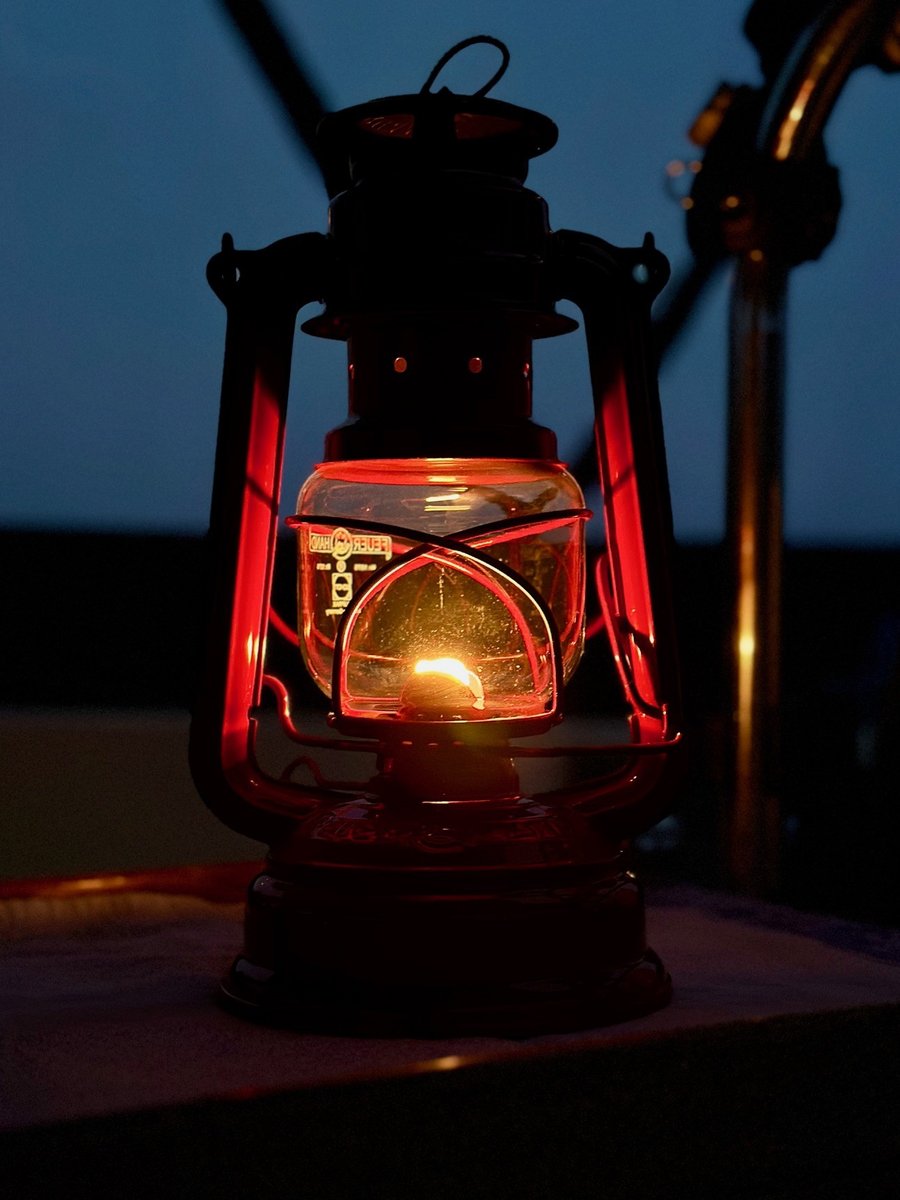
The next morning we woke to rain tapping on the deck and water dripping from the hatch above our heads. Not quite the alarm clock we'd hoped for. Still, life at anchor has a way of making even miserable weather enjoyable. We sat under the cockpit tent with coffee and slices of bara brith while the rain passed overhead.
A Walk Above the Anchorage
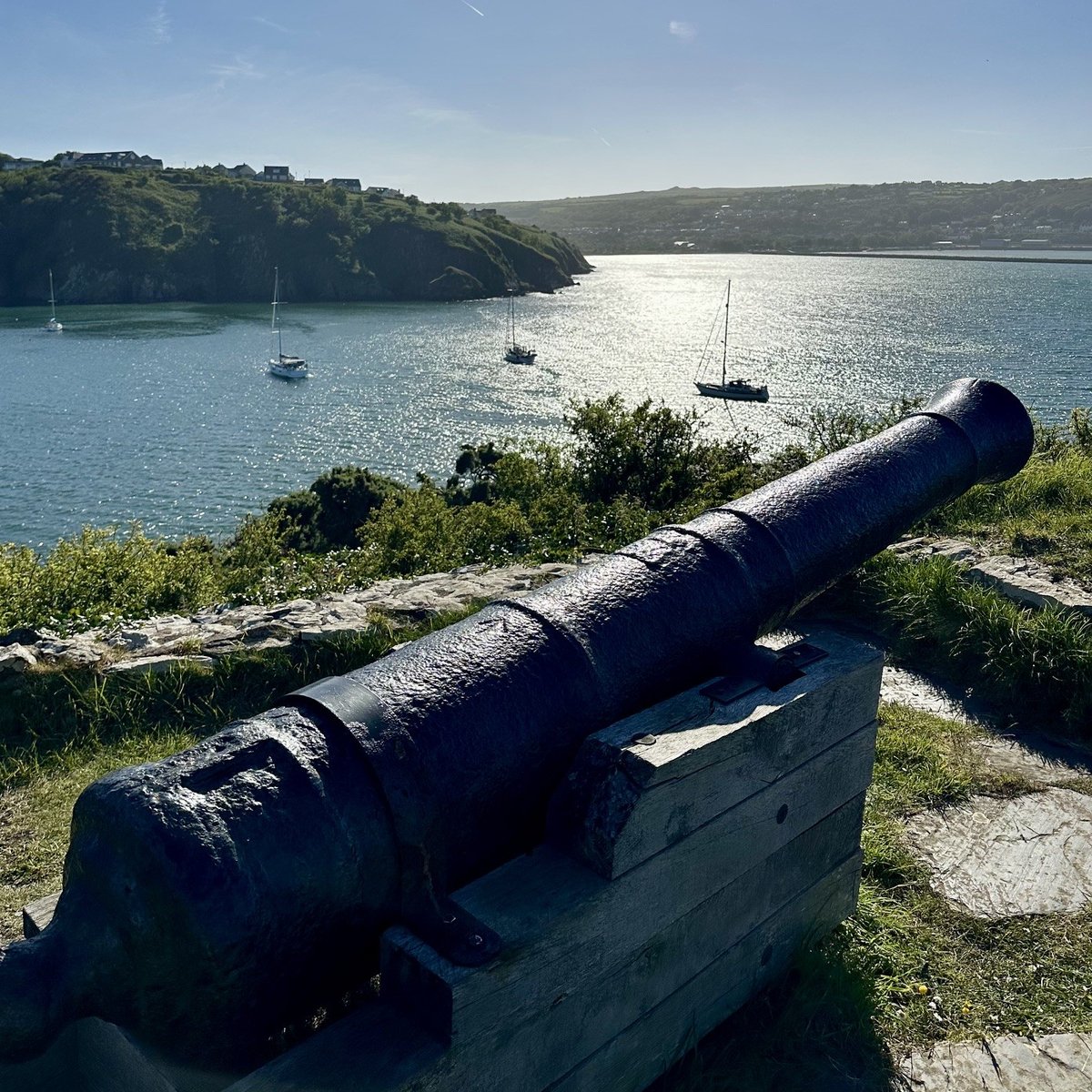
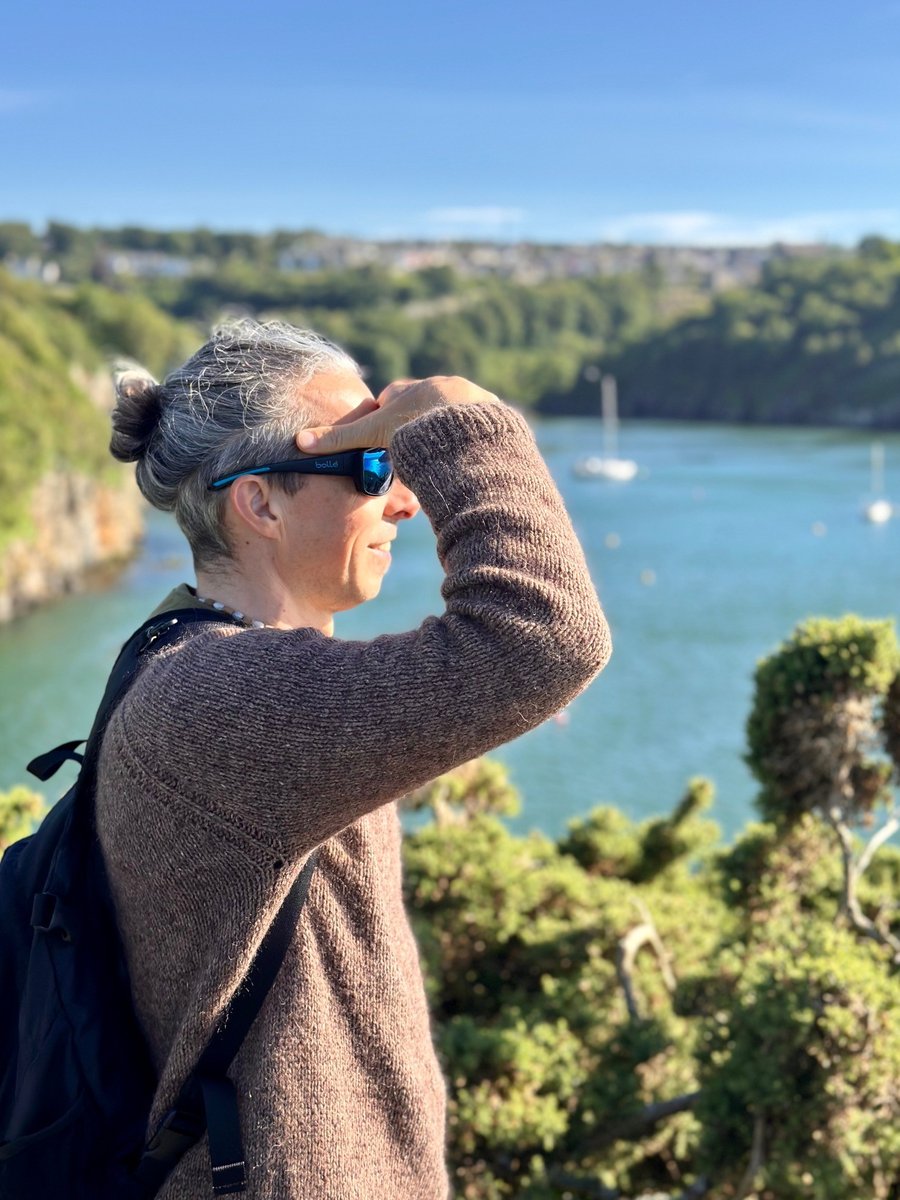
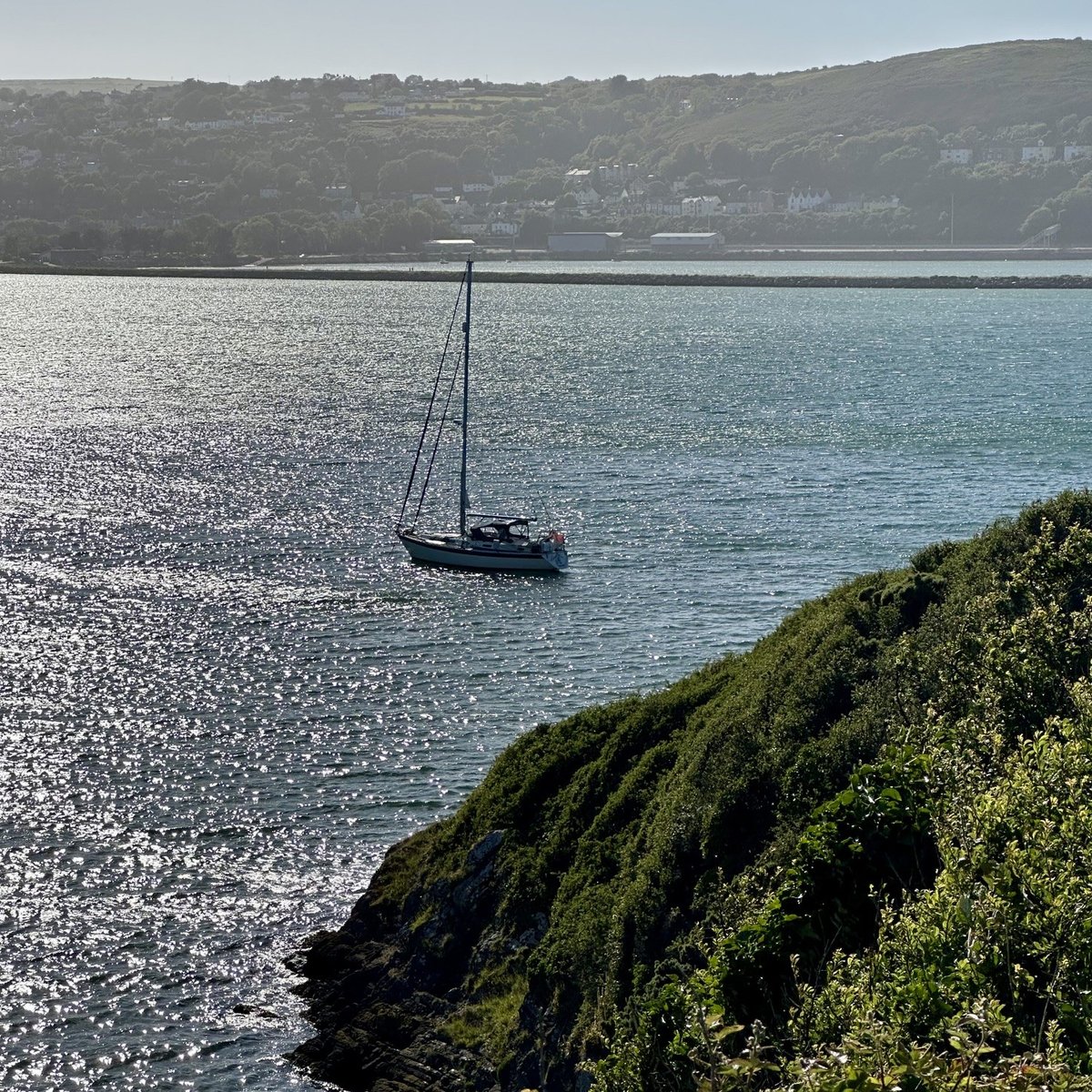
When the weather finally eased, we took the dinghy ashore at Lower Town Quay. It felt like a long ride with the little electric outboard, but it was worth every minute. We climbed up to Fishguard Fort, where the old cannons still overlook the bay. The fort was built after Britain's last invasion in 1797, when French troops landed at nearby Carregwastad Point. Looking down from the ramparts we could see Lagertha lying peacefully at anchor below. Not a bad reward after a morning that had started with water dripping onto our pillows.
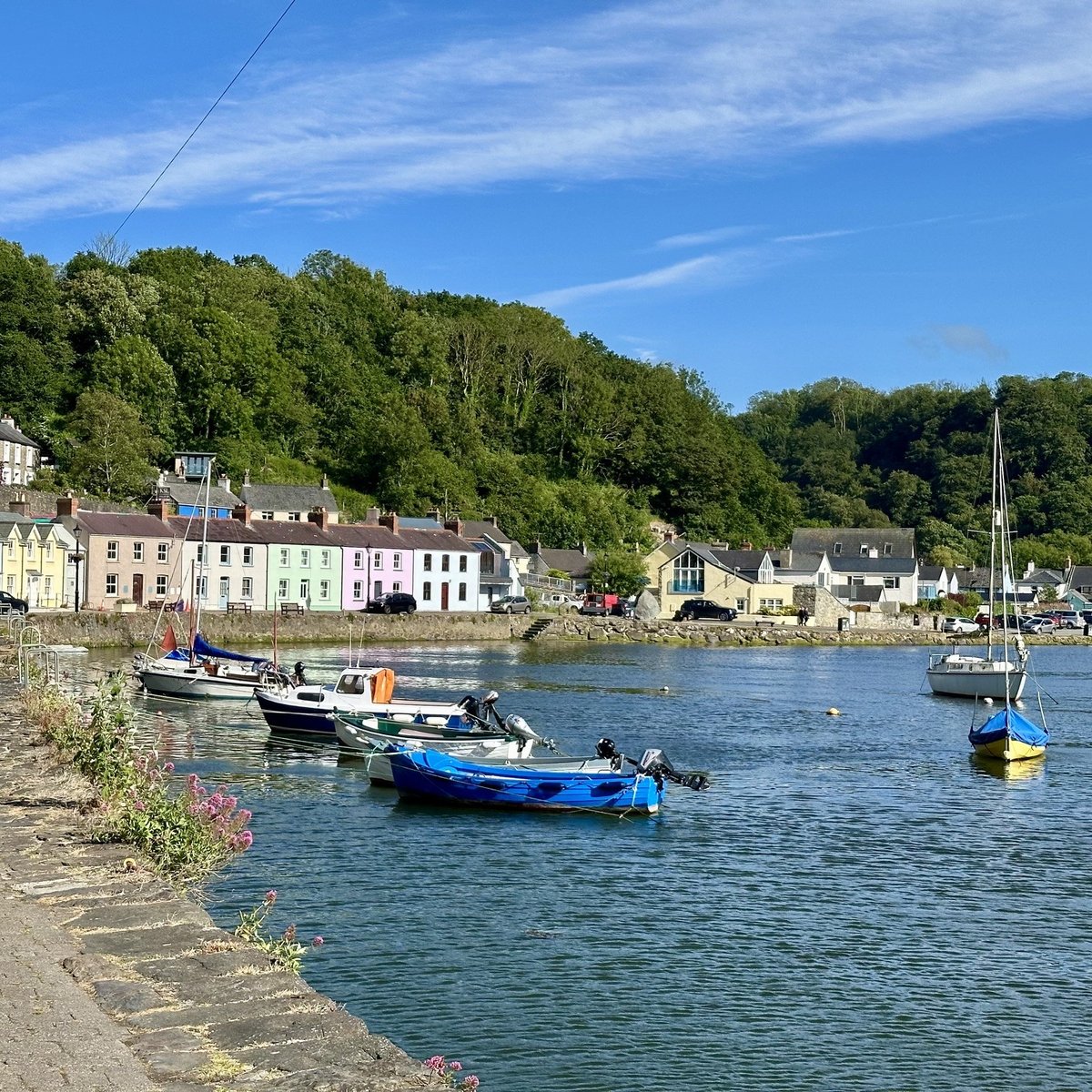
That evening we wandered over to the Yacht Club for a drink and a chat before returning to the boat. Two quiet days passed surprisingly quickly, and eventually the forecast offered the weather window we'd been waiting for.
Fifty-Two Thousand Puffins
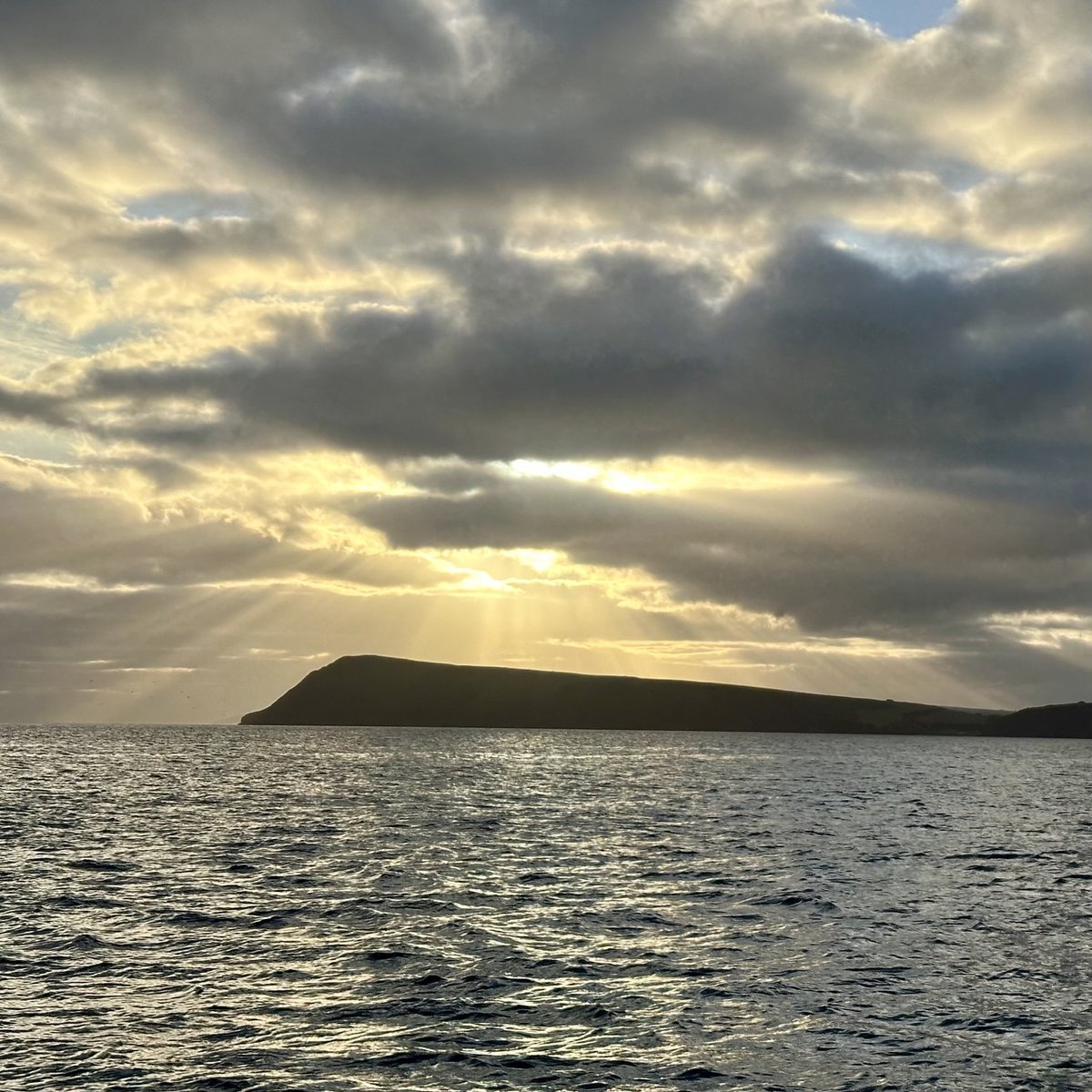
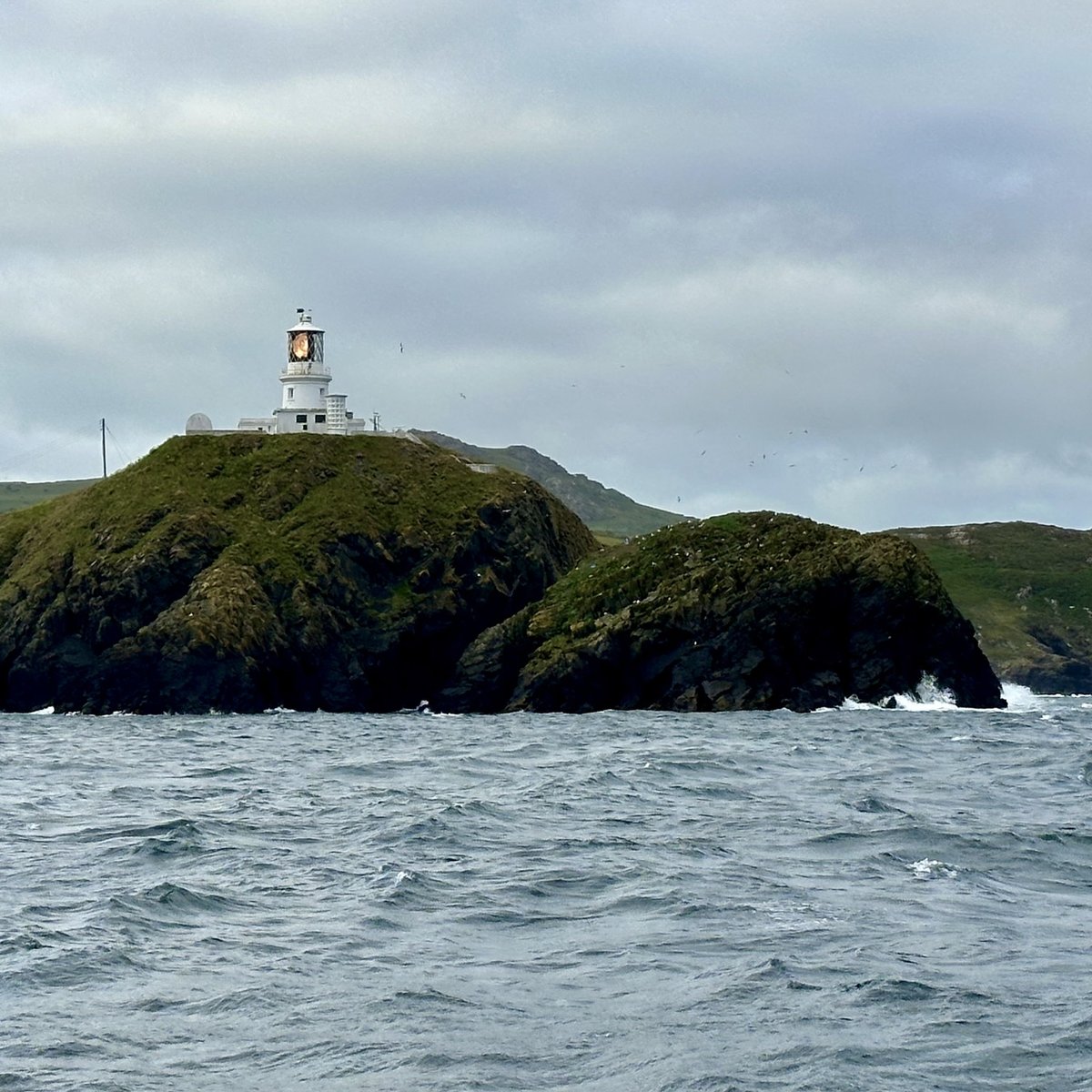
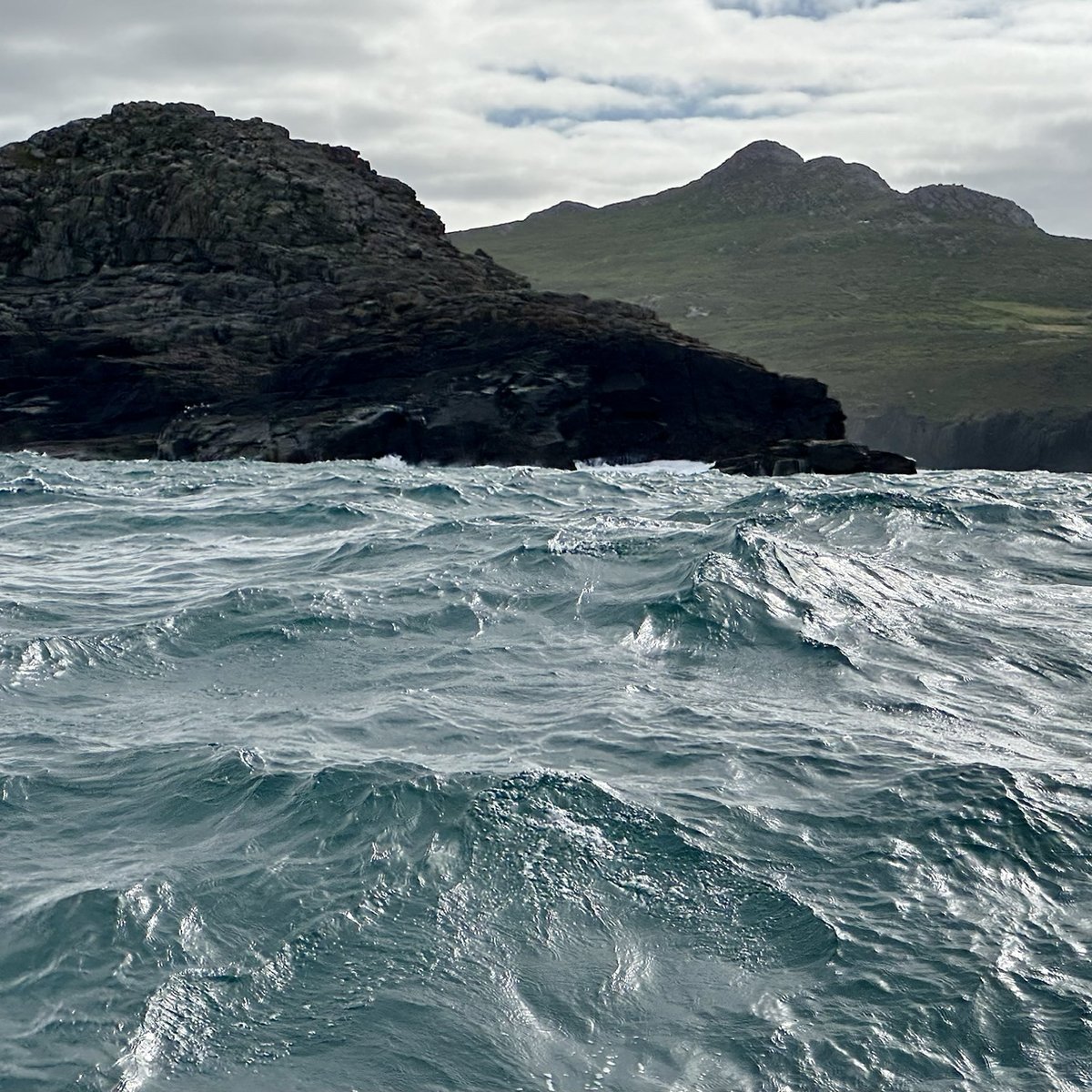
Once again the alarm went off early. The anchorage was almost flat calm, although a heavy swell still rolled lazily underneath us. Around Strumble Head the waves began to build, and by the time we reached St David's Head we were beating into a modest headwind with surprisingly impressive seas. It wasn't difficult to understand why there's a lifeboat station nearby. This is not somewhere you'd want to be in bad weather.
Ramsey Sound
Next came Ramsey Sound. One of Britain's most notorious tide races. We'd timed it perfectly. The tide simply picked us up and carried us through, and only a few minutes later we were gliding through calm water with Skomer Island lying ahead.
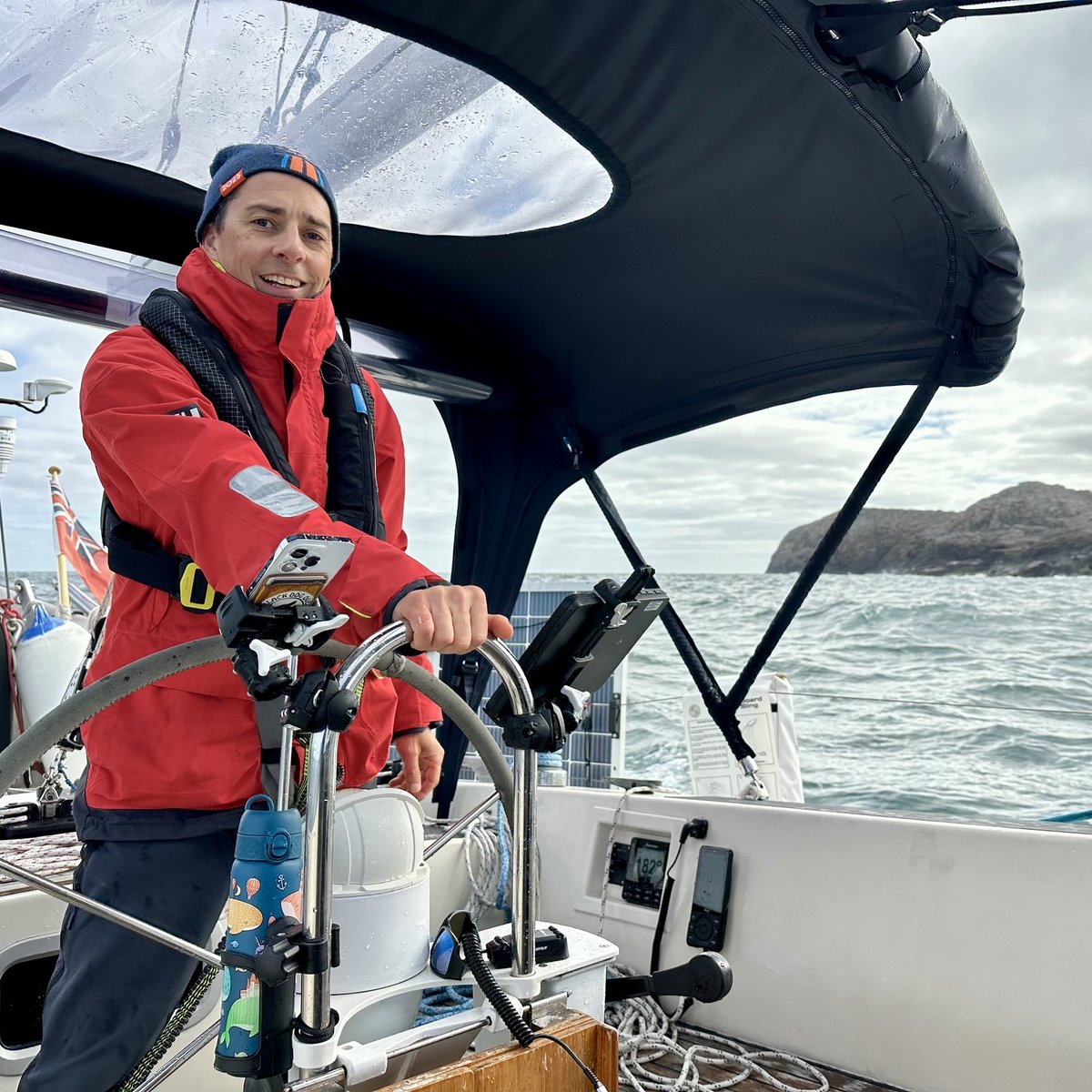
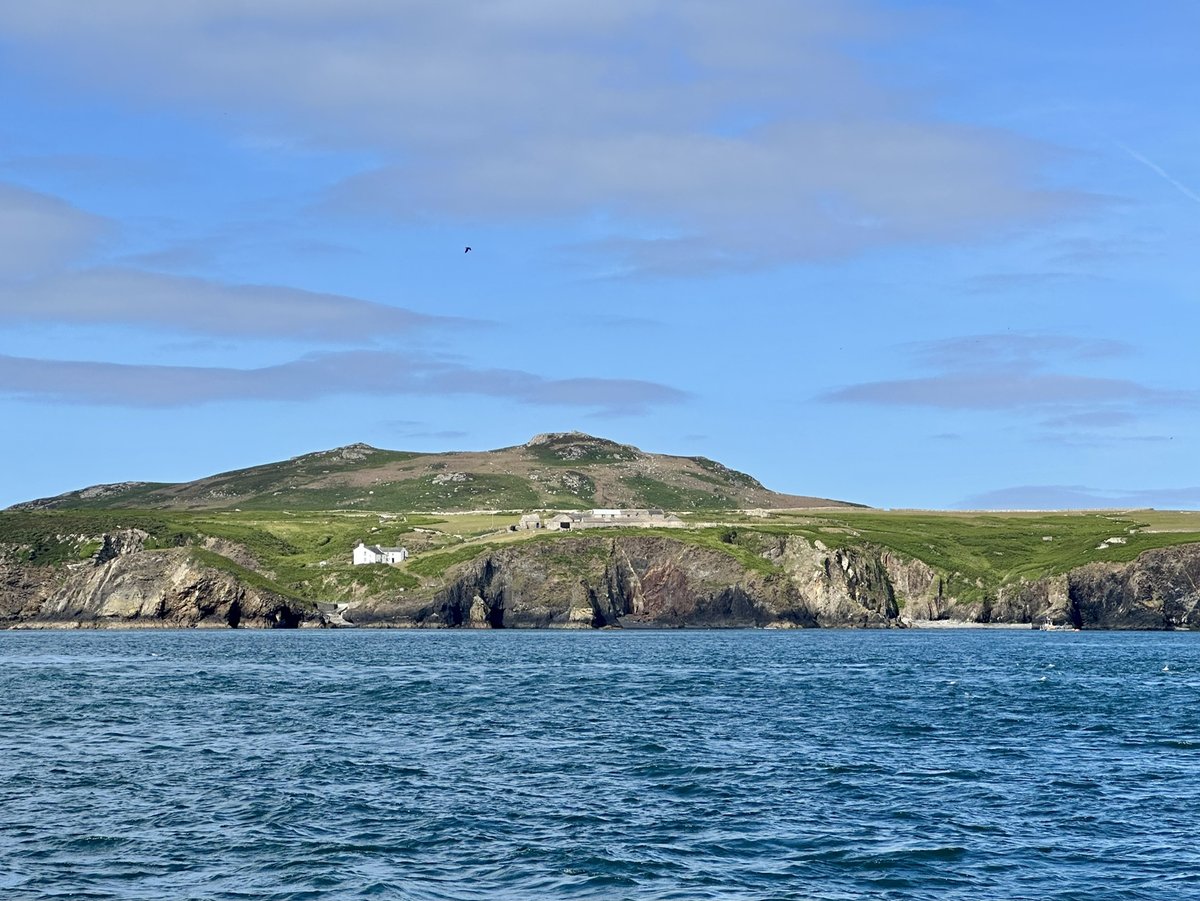
After picking up a visitor buoy we grabbed a quick lunch before taking the dinghy ashore. Dragging it over the steep, slippery stones wasn't particularly elegant, but everything changed the moment we reached the island.
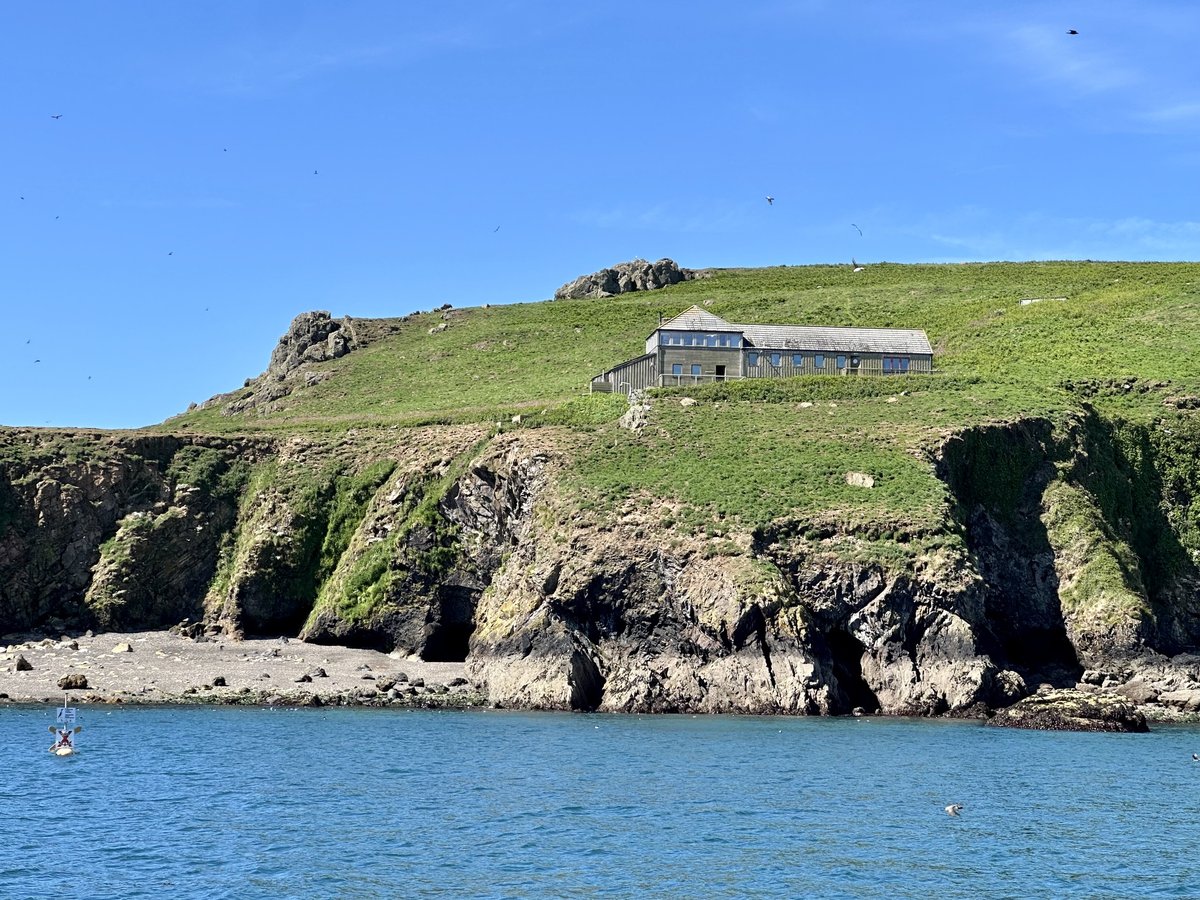
Puffins. Everywhere.
This was a big one for Andrea. She'd seen puffins before on a sea stack off the Scottish coast, but they were always far away - close enough to recognise, never close enough to really watch. Ever since then she'd wanted to visit Skomer. Last year we'd planned to come here during our Wales trip, but the weather never gave us the chance. Skomer had quietly stayed on the bucket list. So the early start, the rough crossing and the waves off St David's Head suddenly felt completely worthwhile.
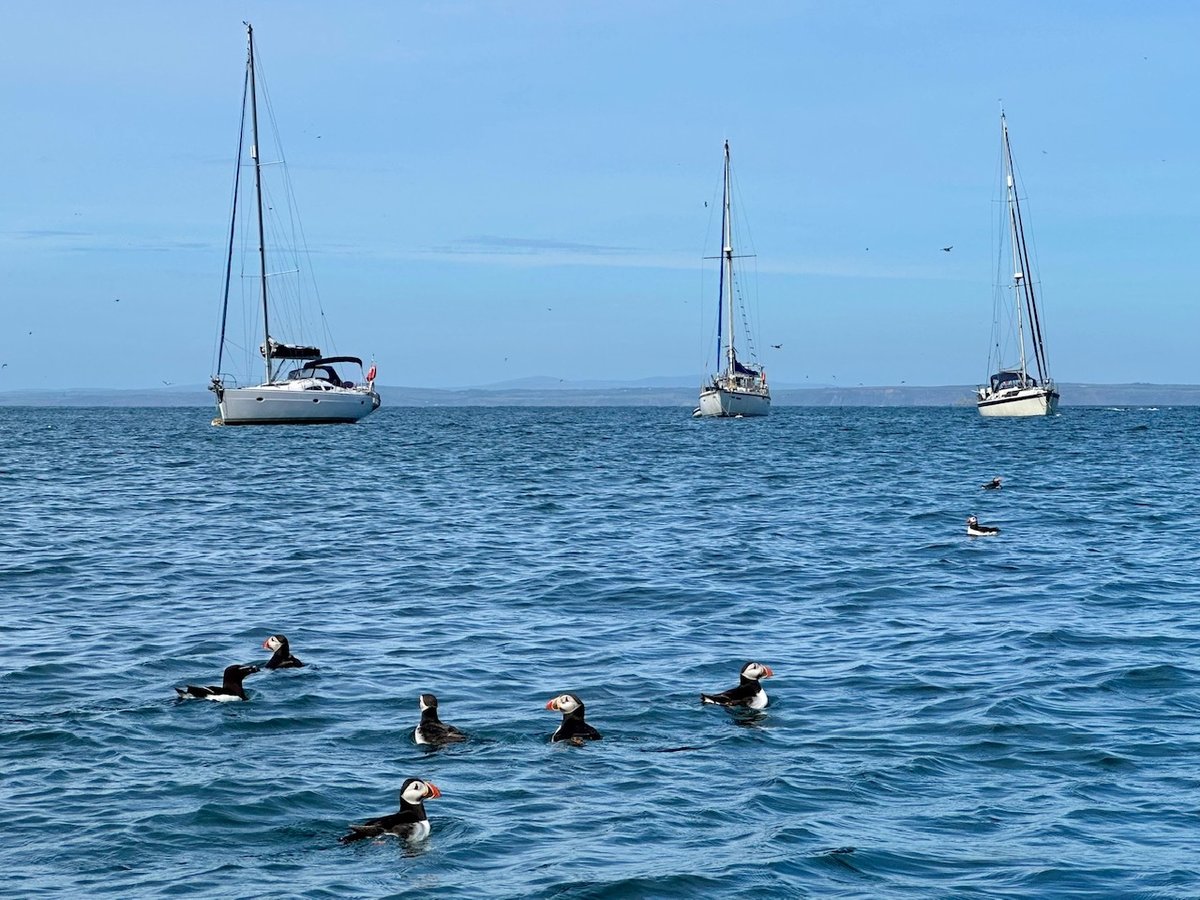
Life on Skomer
You notice Skomer long before you step ashore. First comes the smell - thousands of seabirds produce an unmistakable scent that drifts across the water well before the island appears close. Then comes the sound. Bird calls everywhere, constantly rising and falling with the wind.
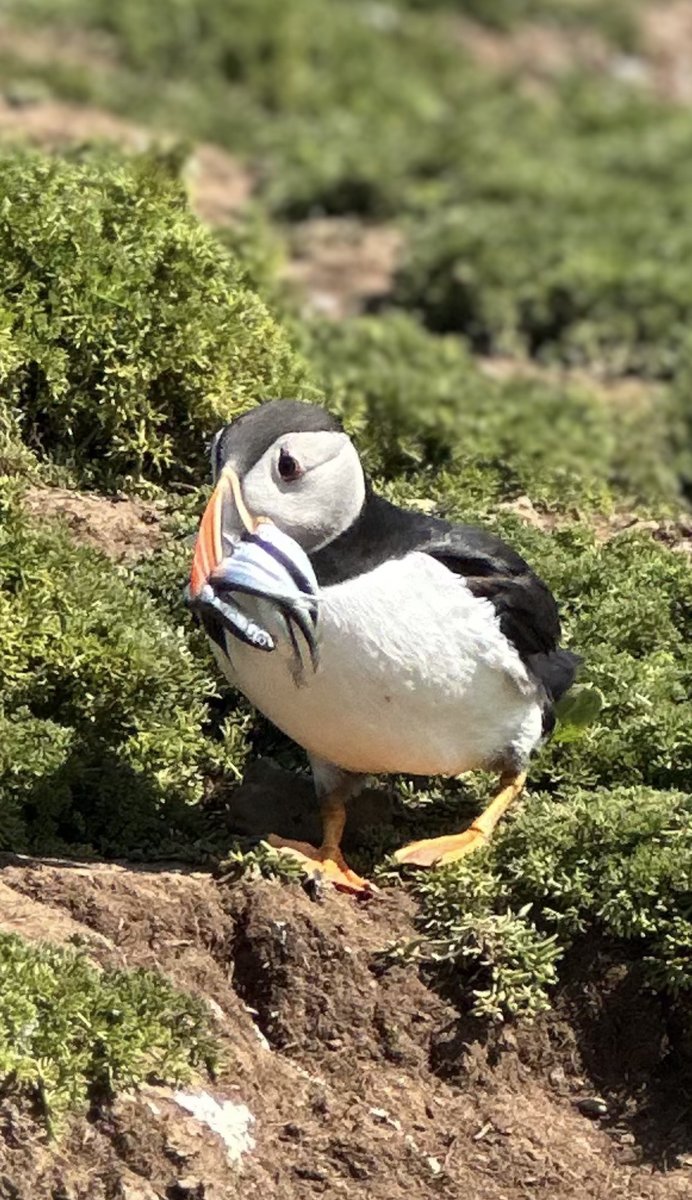
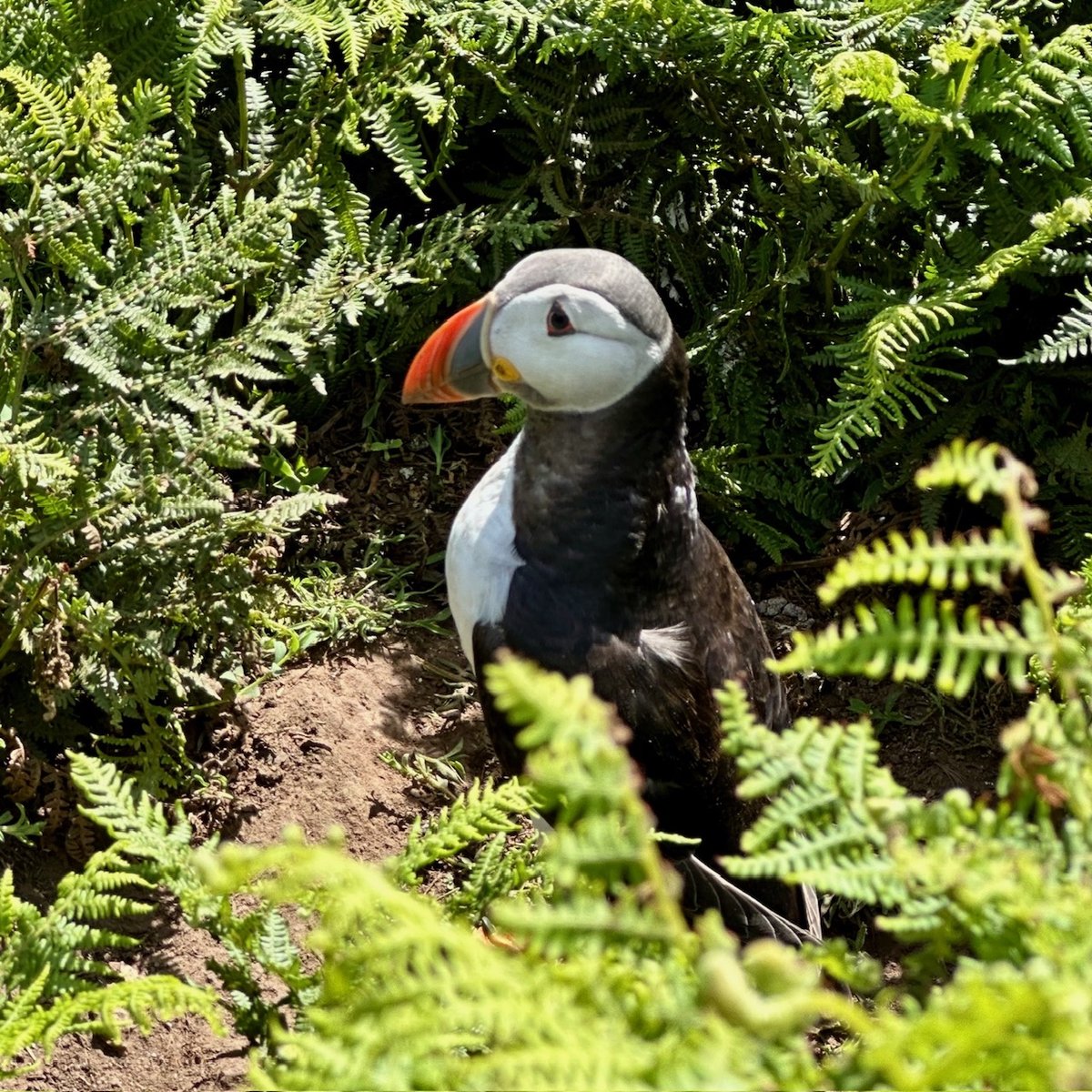
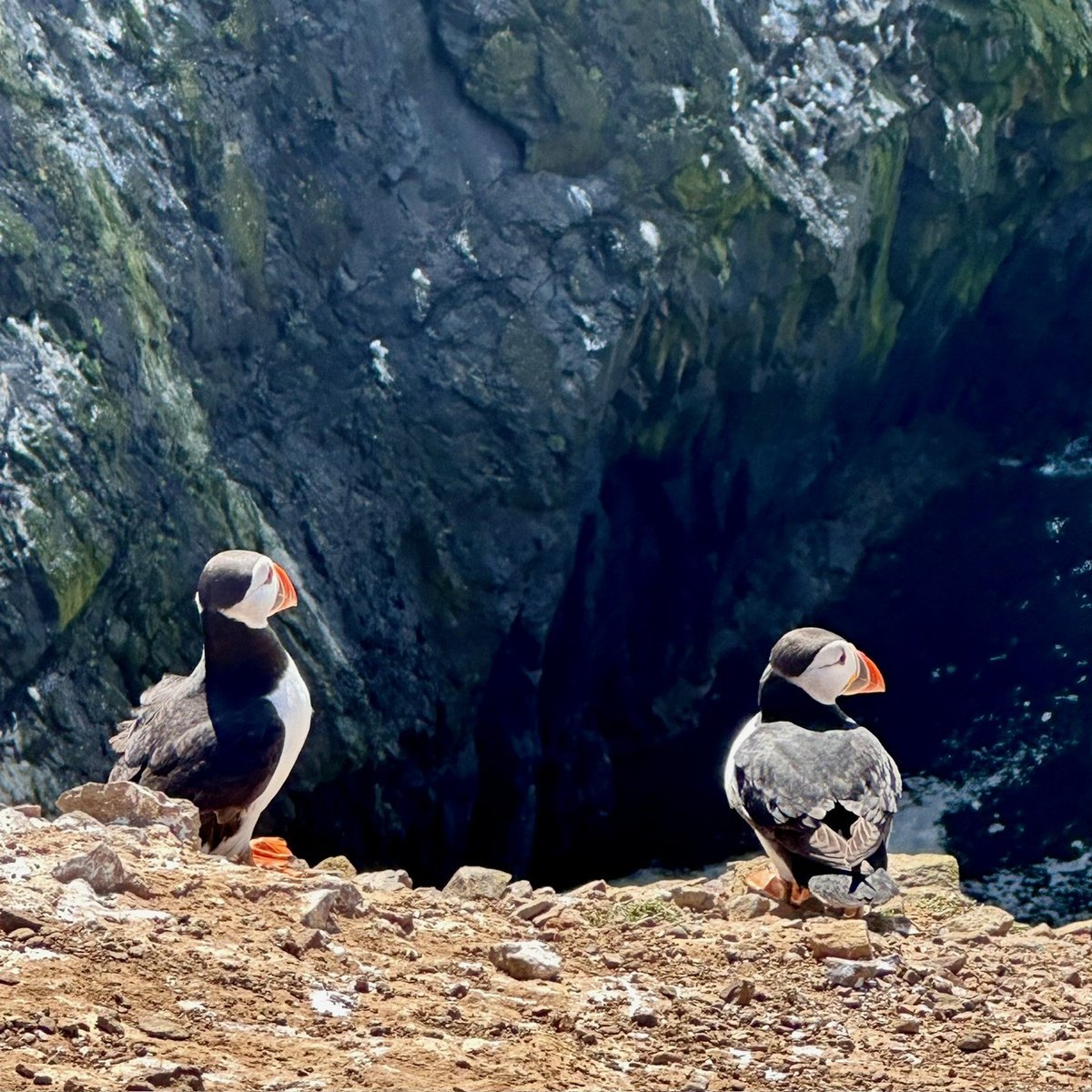
This year the wardens counted 52,019 puffins. Fifty-two thousand. The cliffs were alive with guillemots and razorbills packed tightly onto every ledge, while puffins stood proudly among the ferns as though they owned the island. Their burrows are everywhere beneath your feet, so the wardens have carefully marked out paths across the island. Every step needs a little attention.
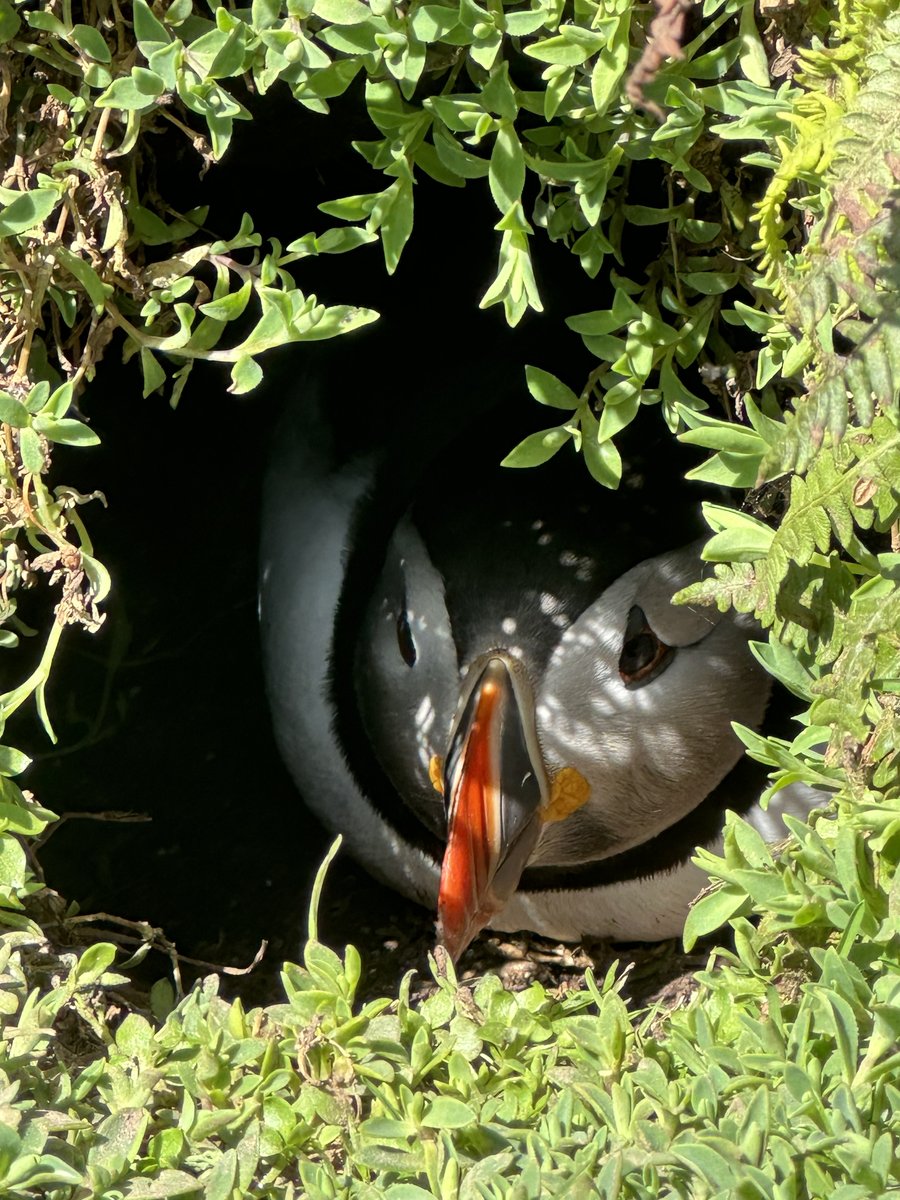
Finding the Right Burrow
We spent the entire afternoon wandering around in warm sunshine, stopping to chat with the wardens before simply sitting down to watch the puffins only a few metres away. One landed right beside the path carrying a beak packed with sandeels - six or seven tiny silver fish somehow all hanging neatly together. Then came the difficult bit. Finding home. It waddled confidently across the path, gave us a slightly irritated look, and disappeared into one burrow. Wrong one. Out again. Second burrow. Wrong again. Only on the third attempt did it finally find the right entrance. We were trying very hard not to laugh.
Manx Shearwaters at Dusk
After a full day exploring the island we turned in early. As darkness settled over Skomer, the Manx shearwaters returned from the sea. Their strange, haunting calls drifted across the anchorage, sounding almost too unusual to belong to a bird.
Breakfast with Puffins
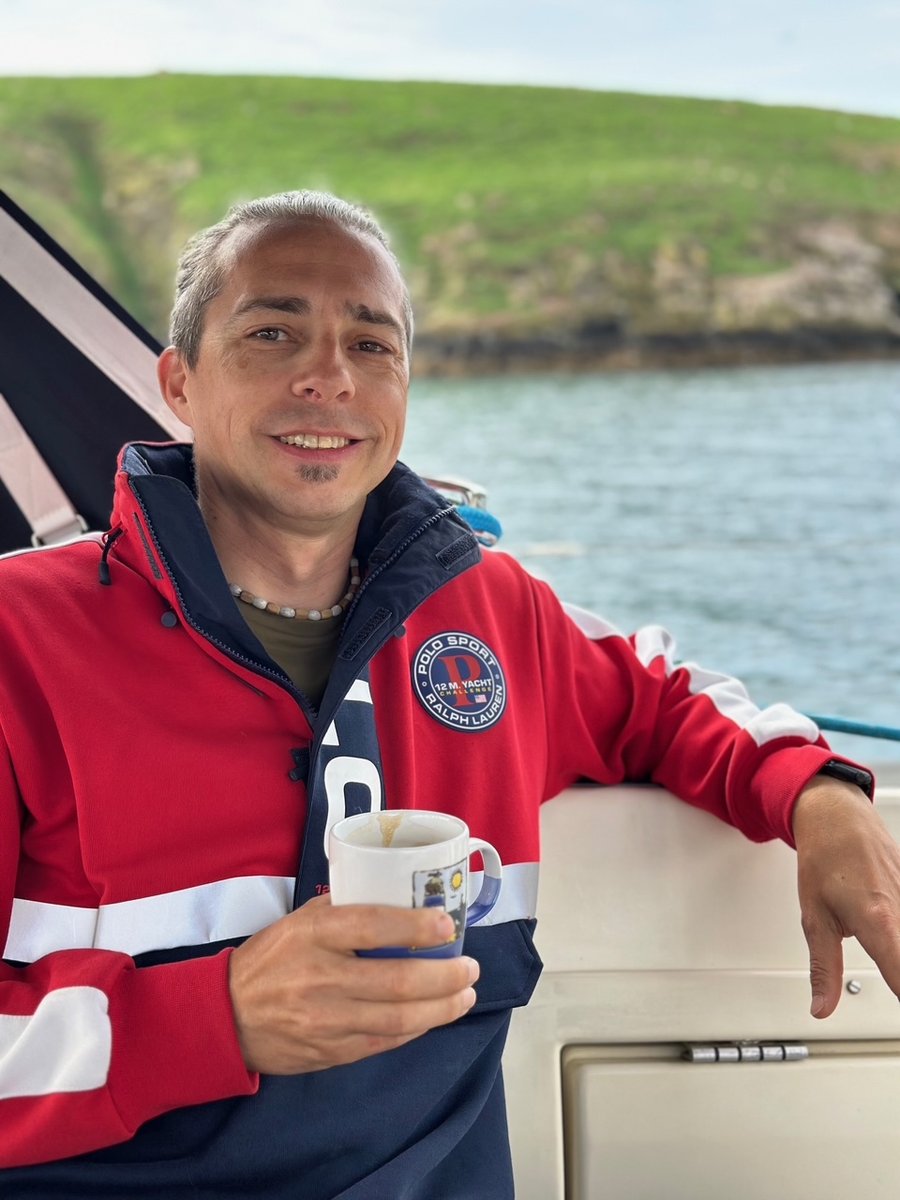
Morning couldn't have looked more different. Blue skies. Sunshine. Coffee in the cockpit surrounded by thousands of seabirds. We couldn't even think about leaving. Puffins floated around the boat, crash-landed rather clumsily on the water, then paddled away with those tiny orange feet. Some moments simply aren't worth rushing.
Around Skomer
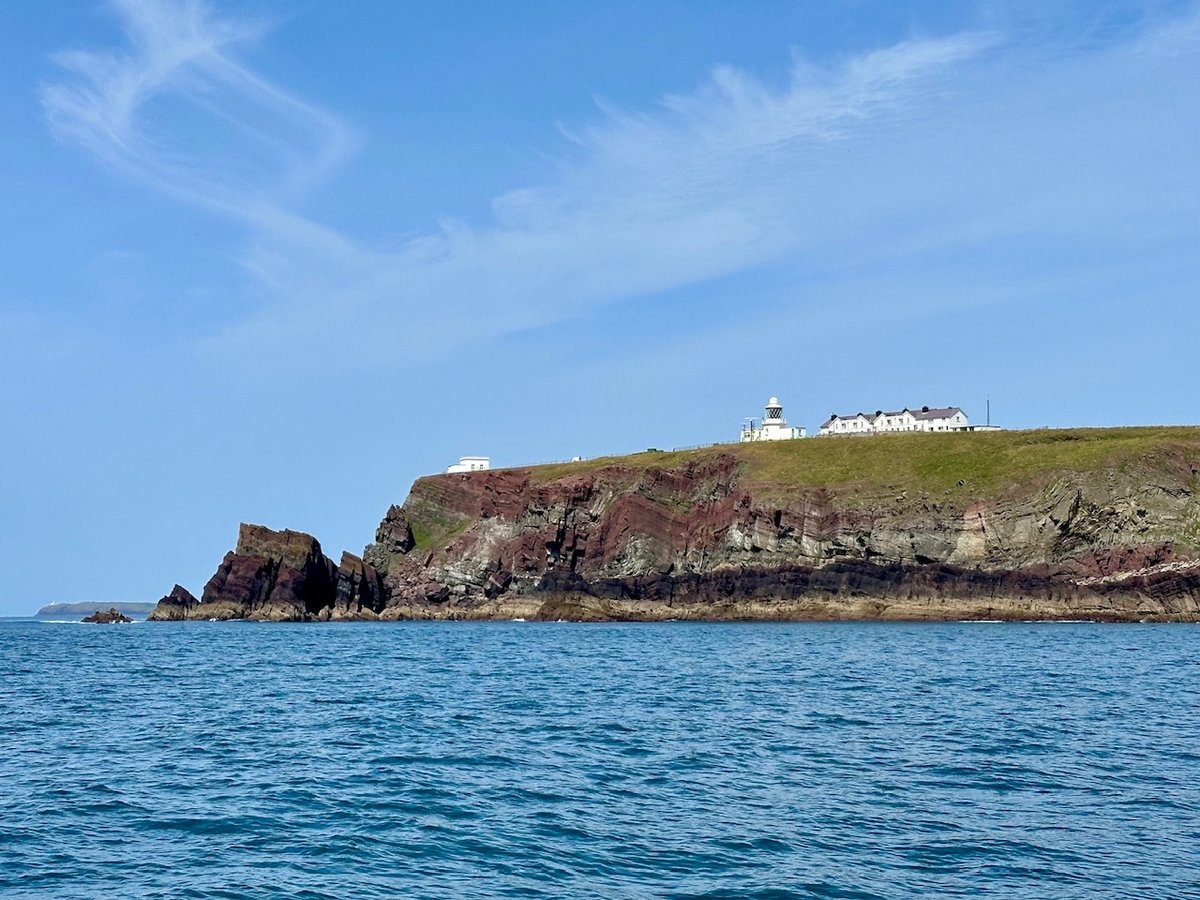
Around lunchtime we finally slipped the buoy and, with almost no wind, decided to go around the outside of Skomer rather than through Jack Sound. There was still a little swell but nothing compared with the tide race that usually develops there. Passing through Broad Sound between Skomer and Skokholm Island, we rounded St Anne's Head and entered Milford Haven. A quick detour into Dale Bay convinced us we'd definitely be coming back one day before we continued up to the marina.
First Lock
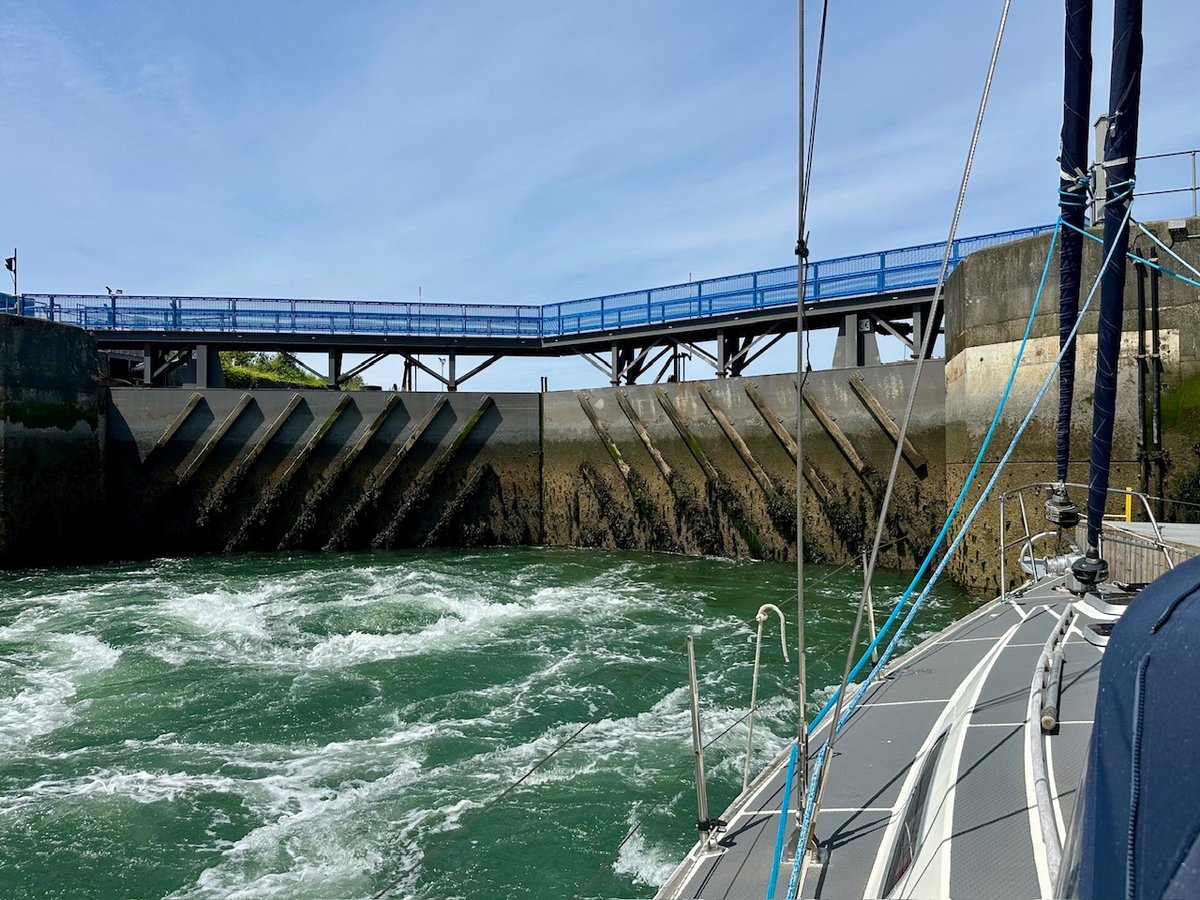
Milford Haven Marina lies behind a lock. Until that afternoon we'd never taken Lagertha through one. We watched the boats ahead of us carefully, quietly trying to work out exactly what we were supposed to do while looking as though we'd done it dozens of times before. In reality, we hadn't. Thankfully it turned out to be far less dramatic than we'd imagined.
A Familiar Voice on the VHF
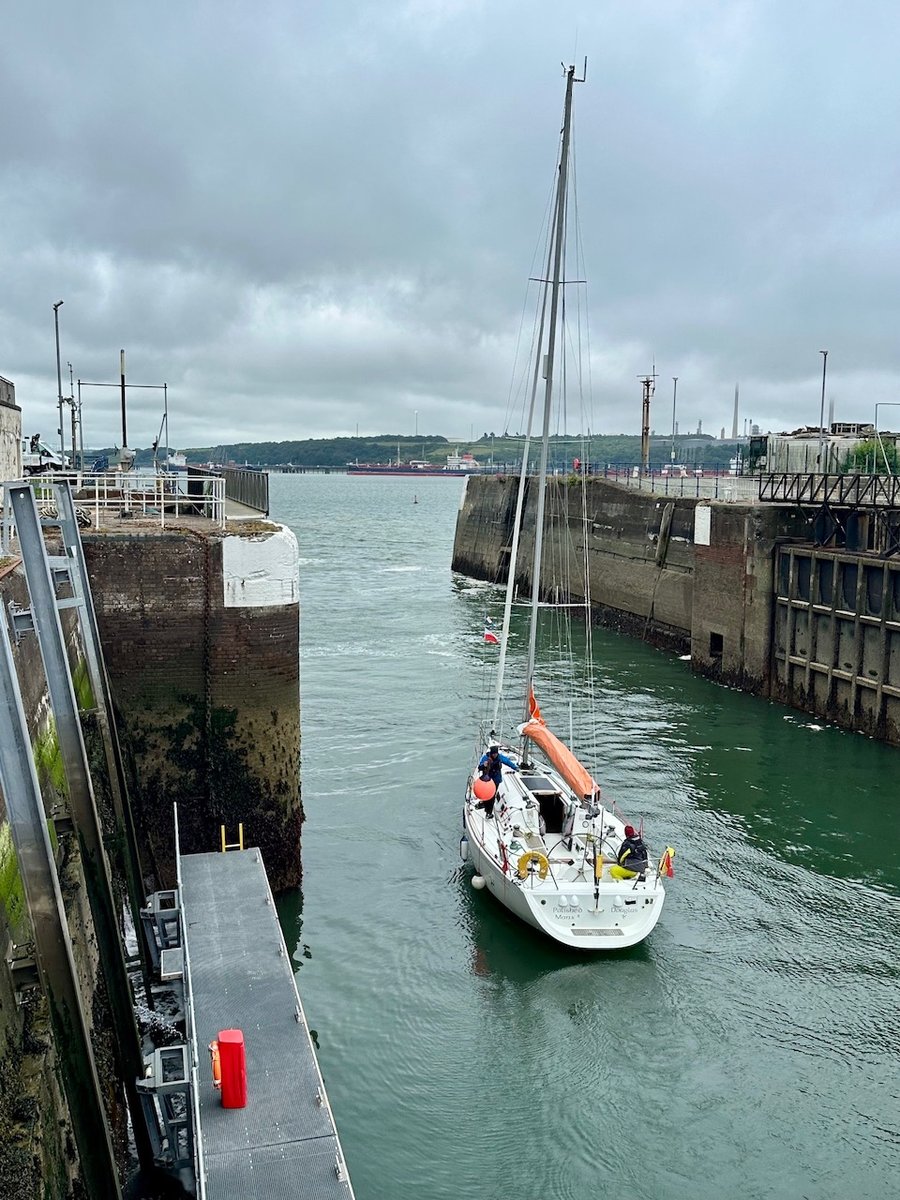
While we were still inside the lock a familiar voice crackled over the VHF. "Rob, Rob! This is Kuba - we just came in before you!" Moments later Captain Kuba from Polished Manx 2 appeared on top of the lock wall with his crew. What a coincidence. They'd just finished a race in Falmouth and were on their way to Ireland. It really is a small world.
After fuelling up we found our berth and finally relaxed.
Steering, Steamers and the Bristol Channel
Boat Jobs
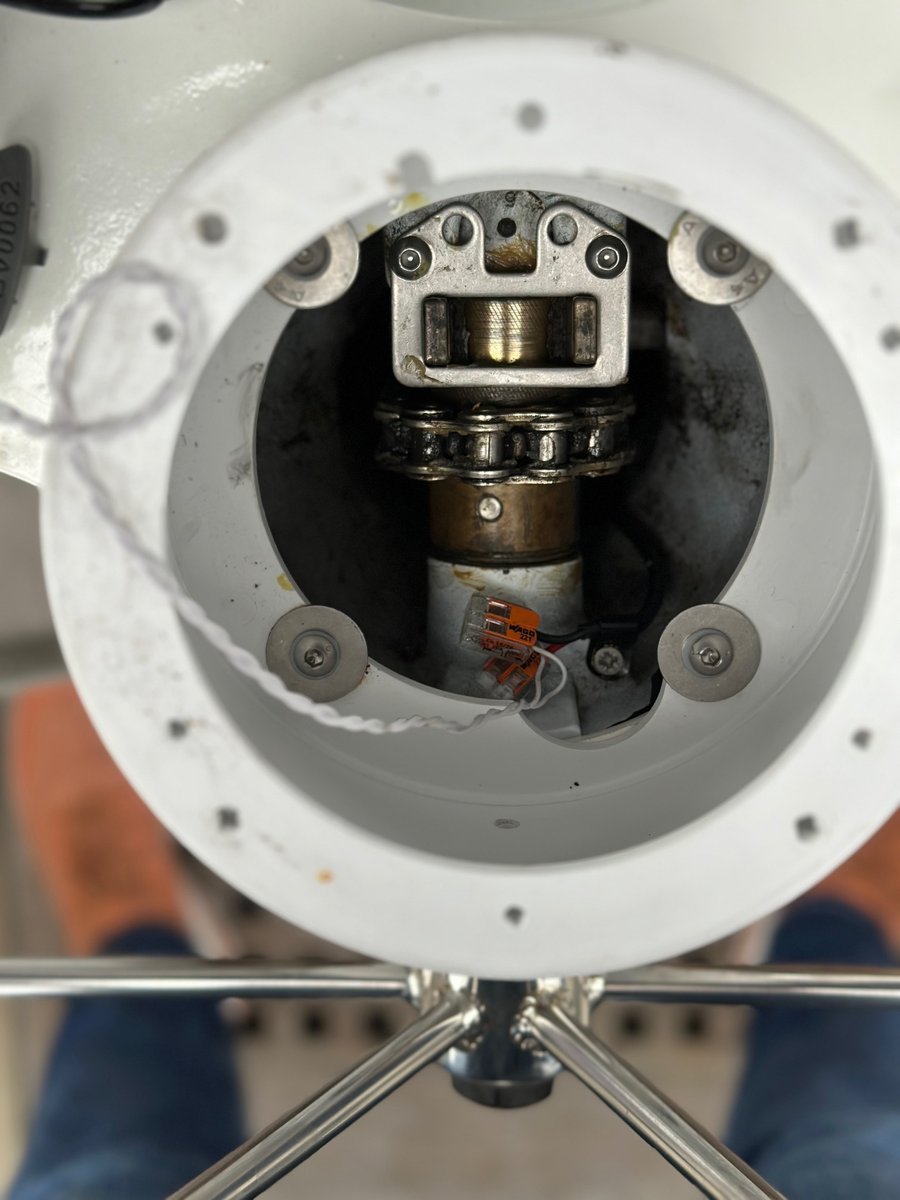
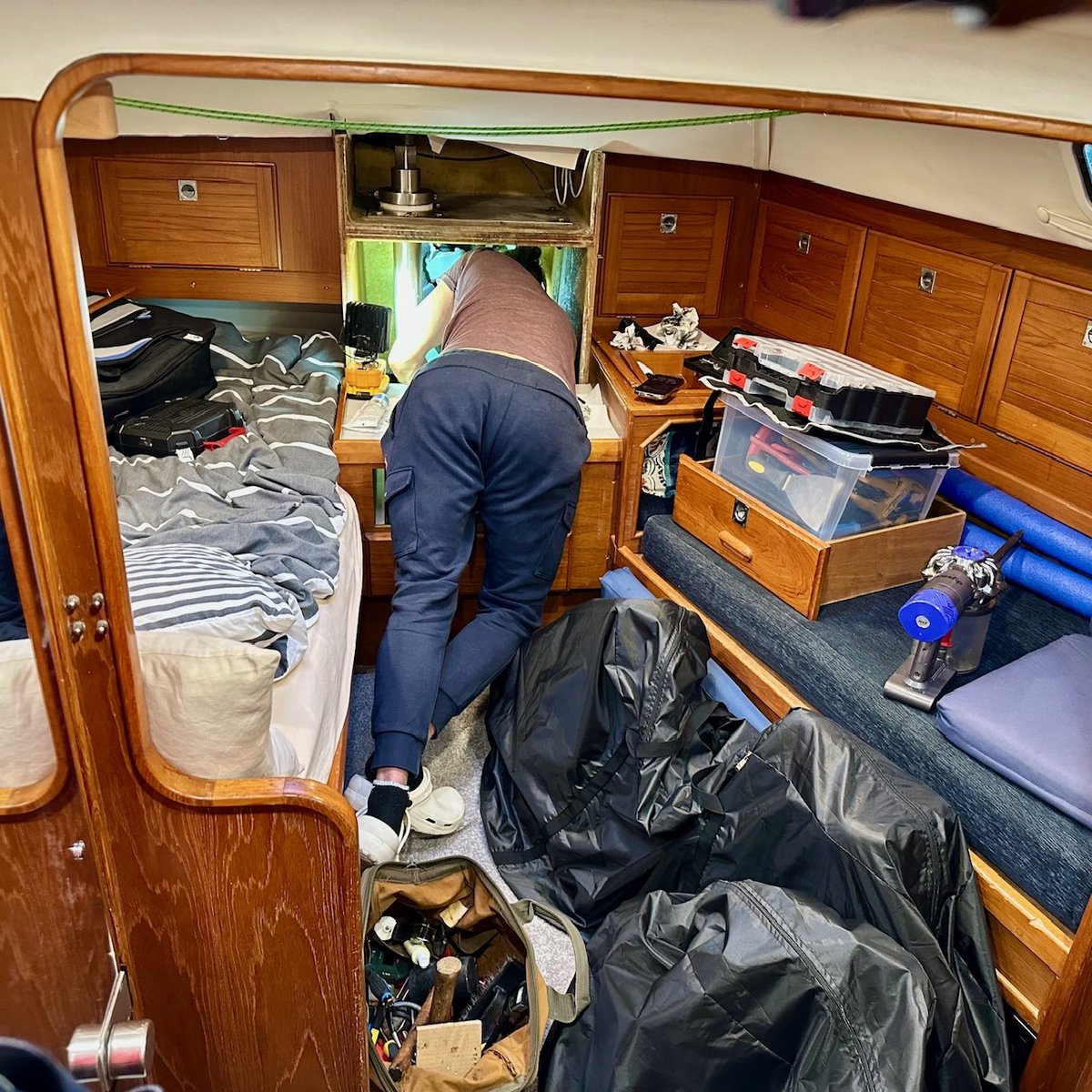
One thing still needed attention. Ever since the rough crossing of Cardigan Bay, the steering hadn't quite felt right. Like so many boat jobs, it started with removing one inspection panel. Twenty minutes later tools were everywhere and half the aft cabin looked as though we'd started dismantling the entire boat. Fortunately Dave from Windjammer pointed us in exactly the right direction, and after a bit of head scratching everything was working properly again.
With the jobs finished, marina life settled into an easy rhythm. Laundry. Dinner at Martha's Vineyard. Watching the world go by.
The Waverley
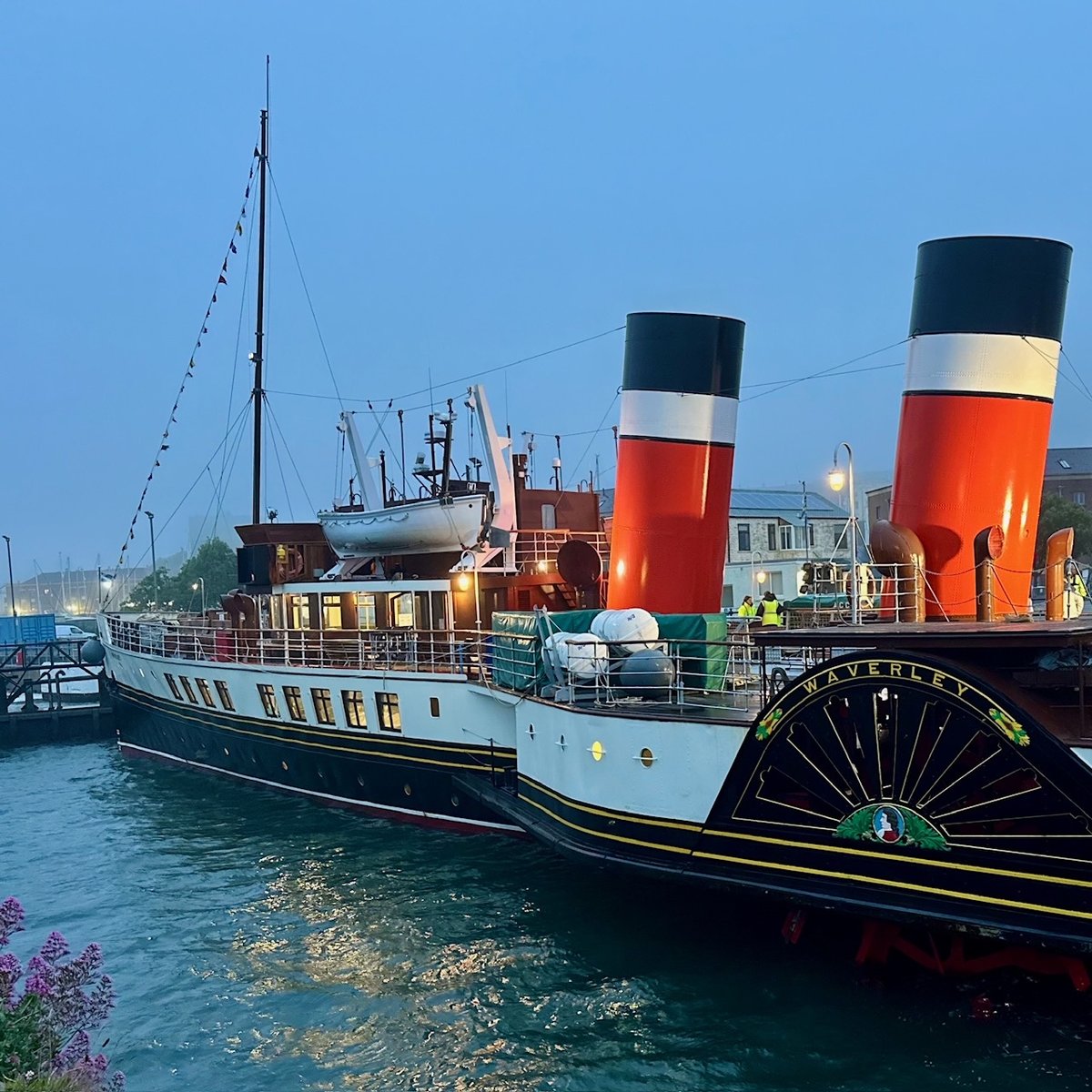
Then the PS Waverley arrived. The world's last seagoing paddle steamer still carries passengers almost eighty years after entering service. Seeing her alongside the pontoon, with her huge paddle boxes and polished funnels, felt like stepping back into another era.
Waiting for the Window
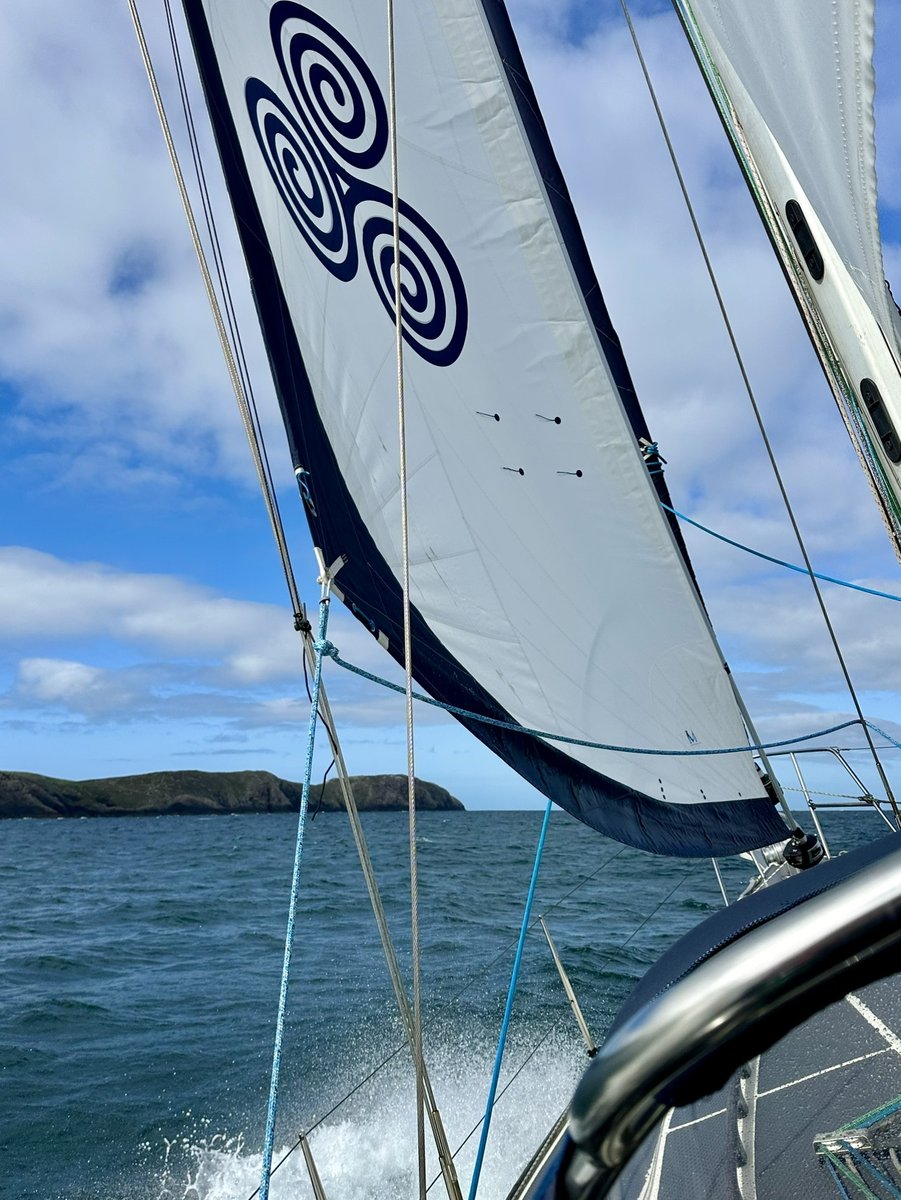
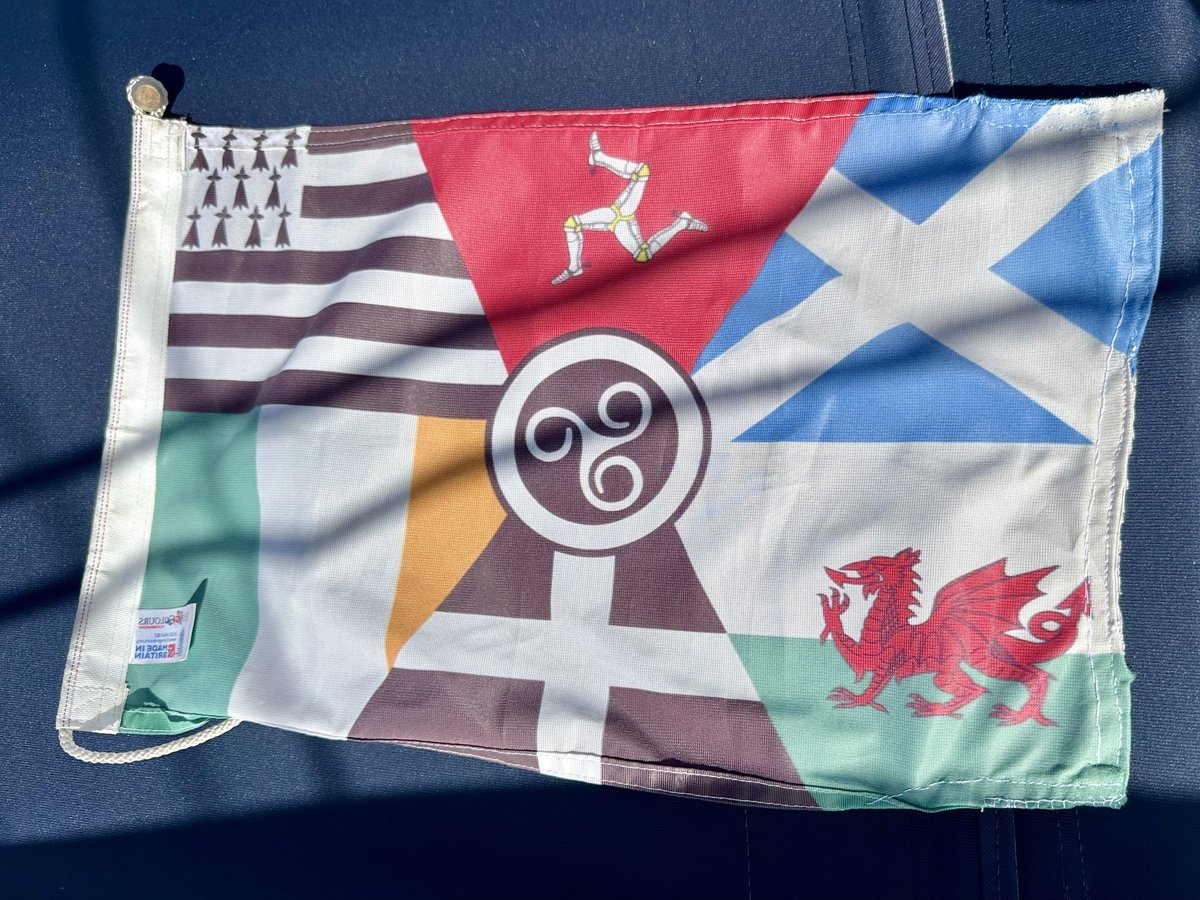
The following day disappeared into drizzle and fog. We repaired our rather tired-looking Celtic guest flag and kept one eye on the weather forecast. Crossing the Bristol Channel isn't something you rush into just because you're getting impatient.
In just seven days we'd crossed Cardigan Bay, waited out the weather in Fishguard, wandered among fifty-two thousand puffins, learnt our first lock, repaired the steering and prepared for the next big passage.
The boat was ready again. The weather was finally beginning to turn in our favour. Ahead lay the Bristol Channel, the Scillies and everything beyond.
But for now, Wales had given us everything we'd hoped for. Including fifty-two thousand reasons to come back.