First Crossing to France

A first Channel crossing at night, bioluminescent dolphins glowing in the dark, a Schengen check-in puzzle, a summer thunderstorm over Brest, an underground air raid shelter, and spider crabs served with wooden hammers. Five days that took us from the Isles of Scilly to France - and from familiar waters into a whole new cruising ground.
Leaving the Scillies
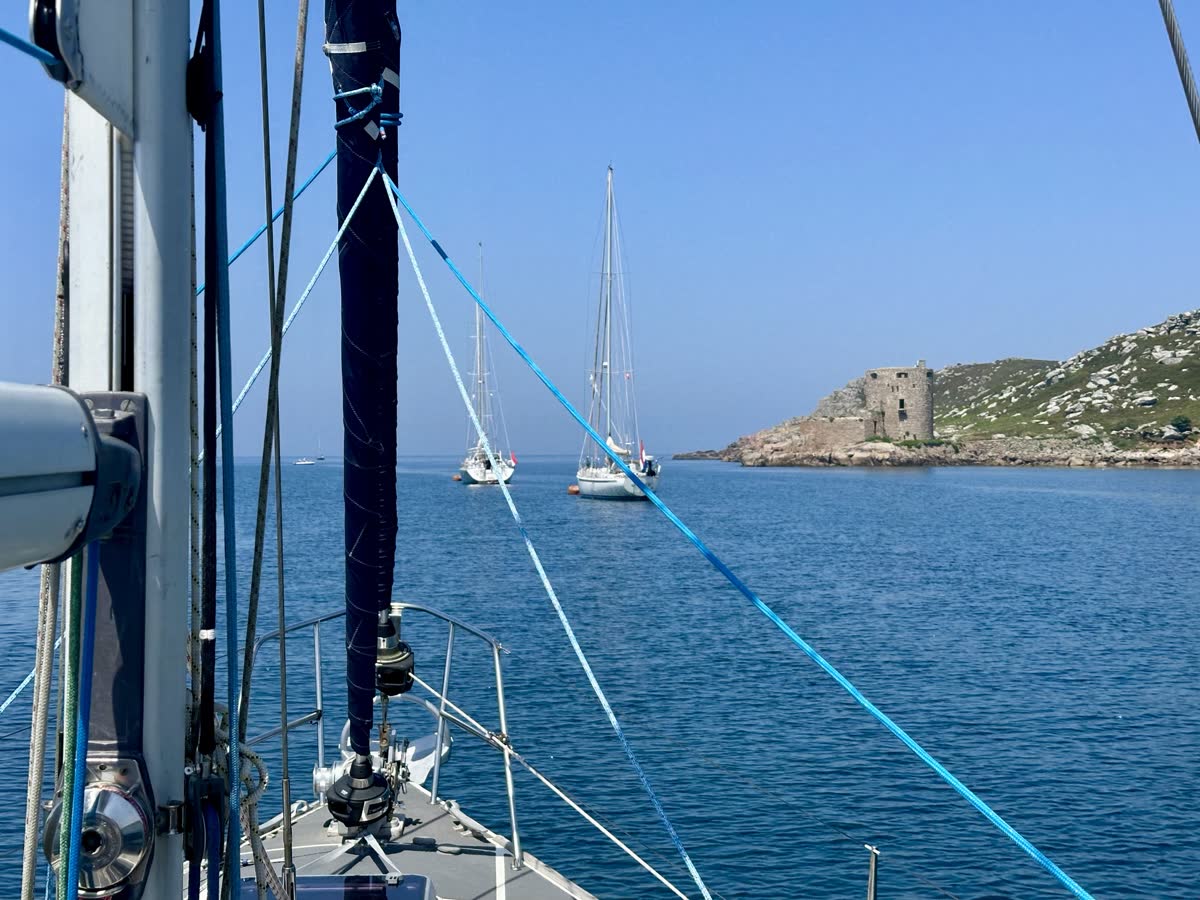
Around noon we left our mooring at New Grimsby, past Hangman Rock and the castle ruin, out into very fine weather. A slow motorsail around the north-eastern tip of the Isles of Scilly, admiring the beautiful white beaches of St Martin's - fond memories from last year's anchorage. Then the course was set at 150 degrees, straight to Brittany.
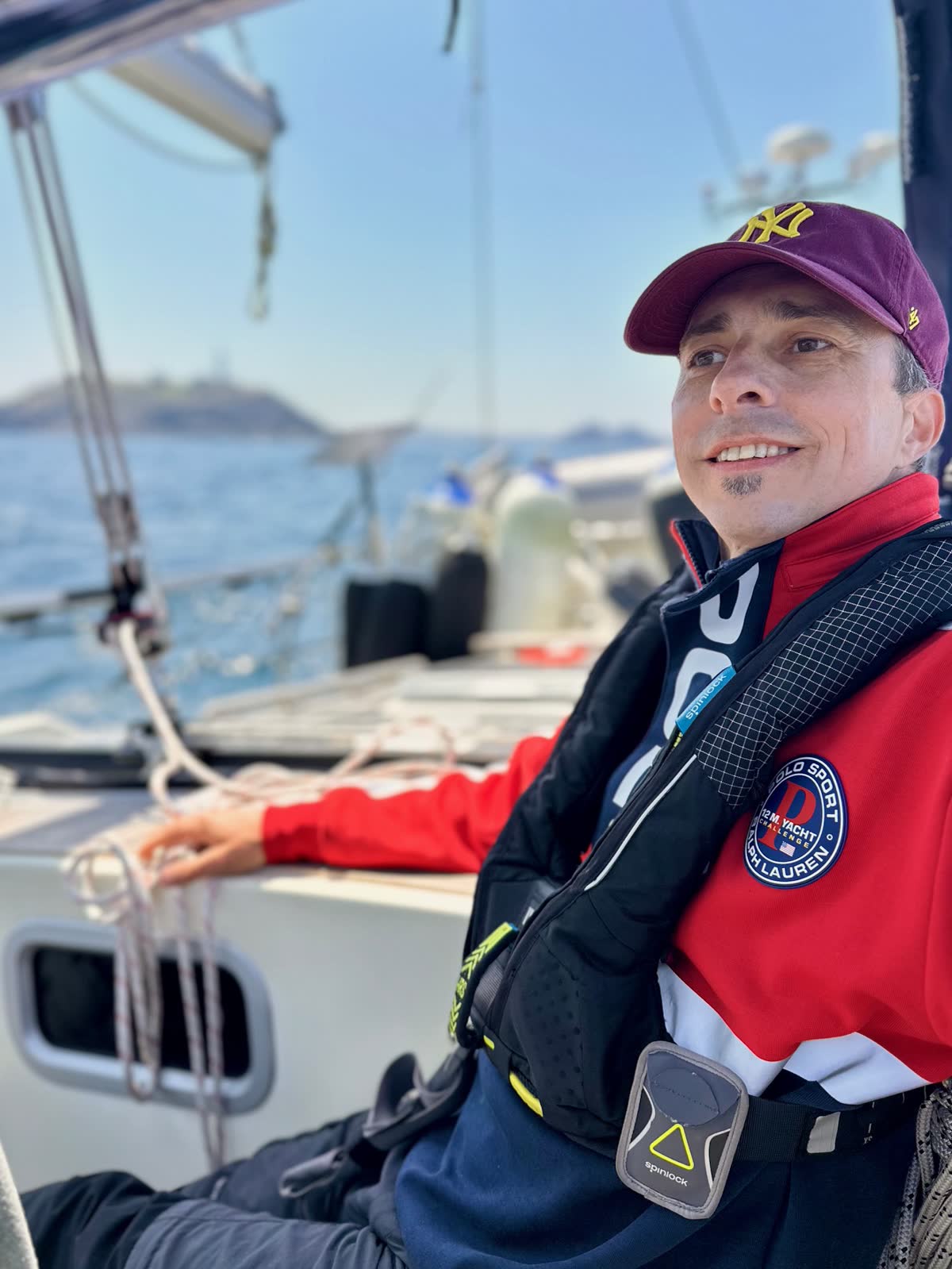
This was our first Channel crossing. We'd read plenty about the Channel - its shipping lanes, the TSS and the constant traffic. In reality, the channel is a big area, and while it's busy further up towards the shipping lanes, we had plenty of room. We also kept a careful lookout for Russian tankers and naval vessels. The running joke from the Scillies clearly hadn't worn off yet.
The first few hours were slow. There was barely enough wind to keep the sails drawing, so the engine did most of the work. By nightfall the breeze finally arrived, allowing us to sail all the way to the Chenal du Four. In fact, we even tucked in a few reefs to slow ourselves down and arrive with the tide.
A Night to Remember
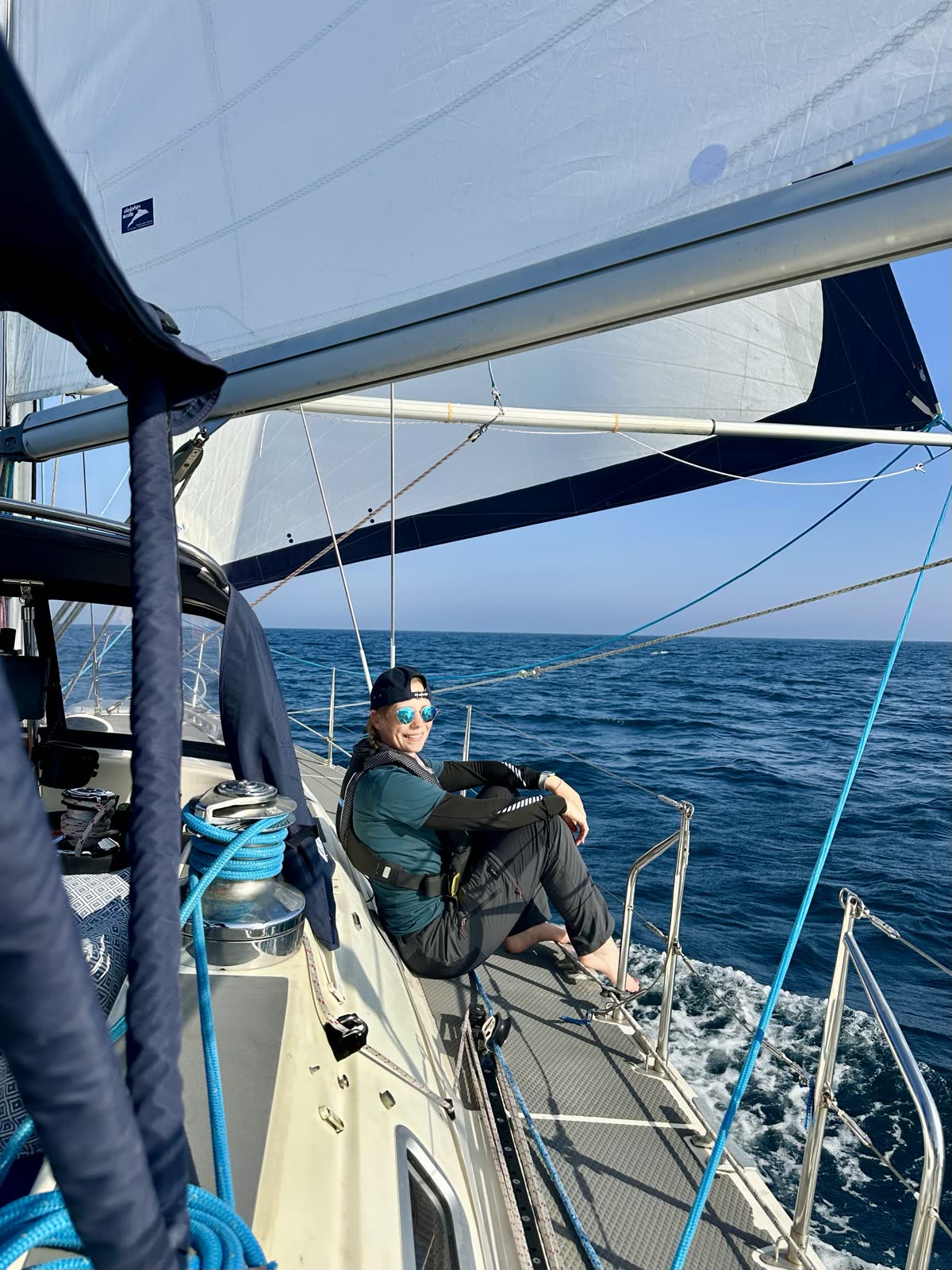
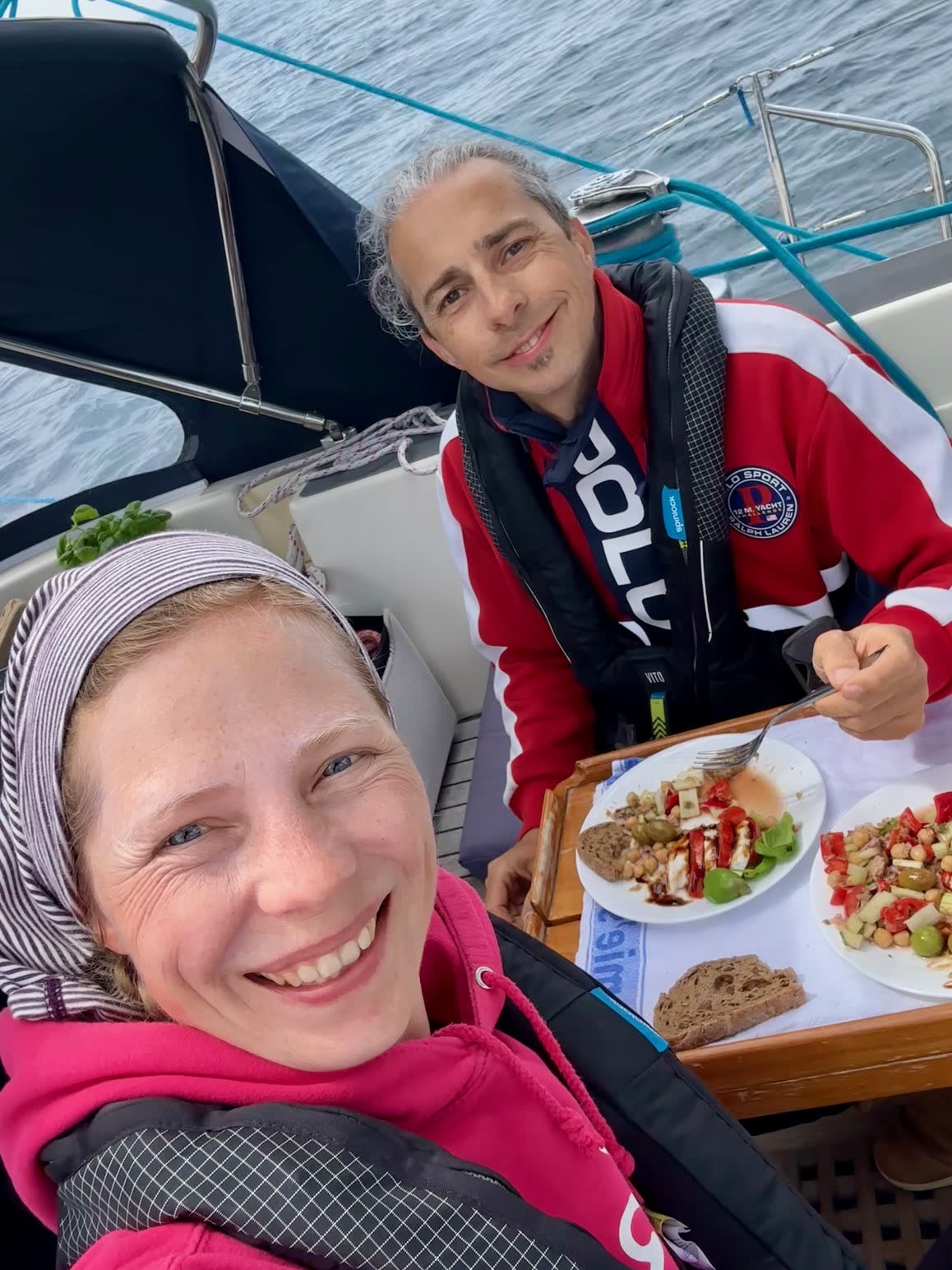
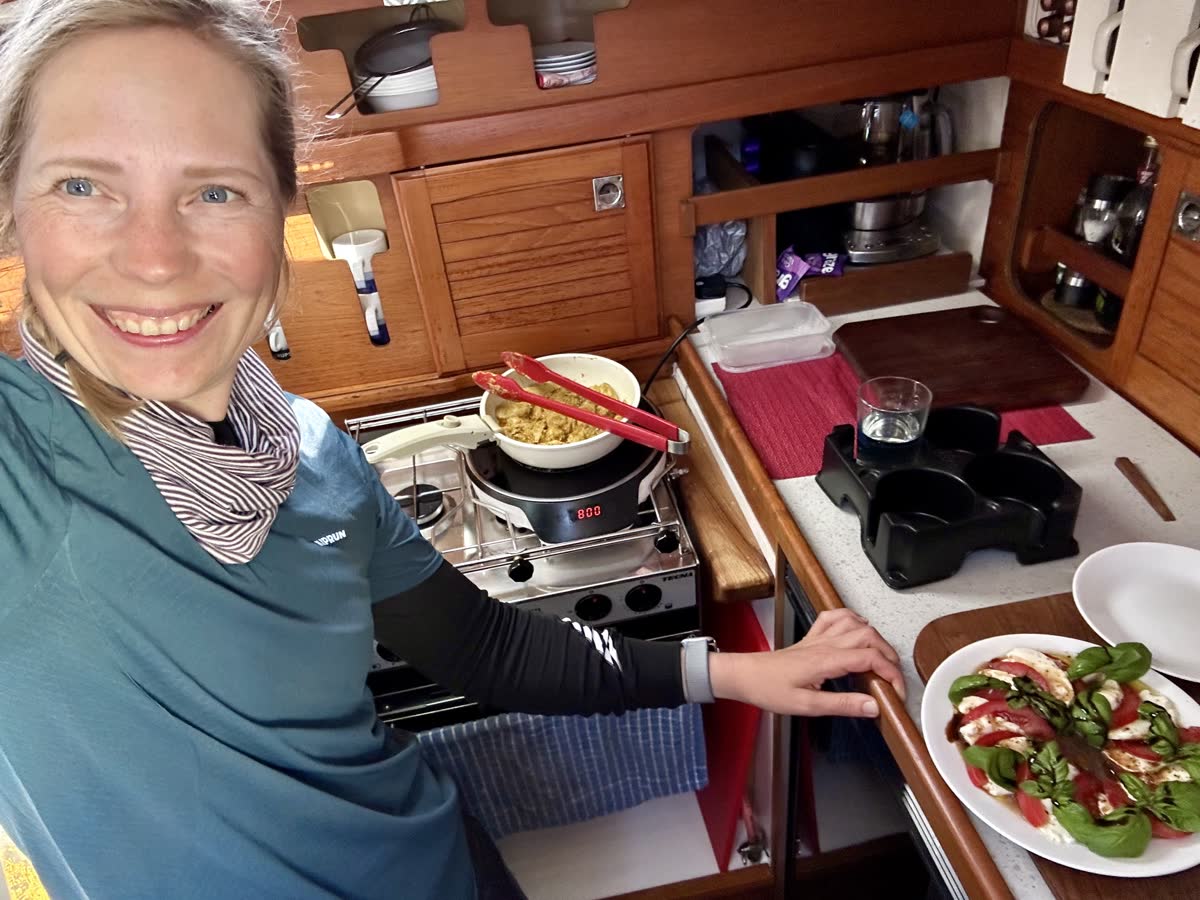
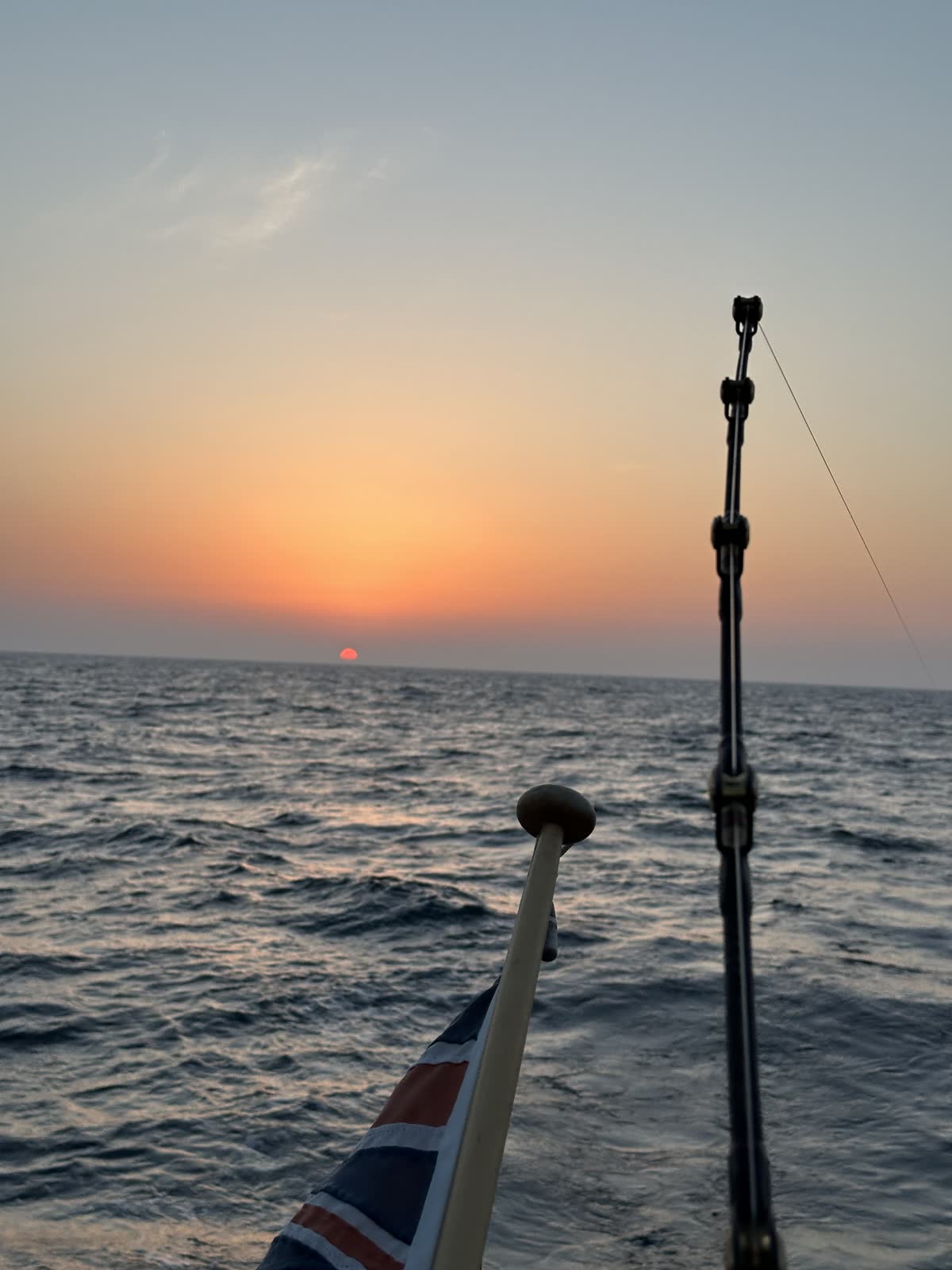
Offshore nights have a rhythm of their own. Rob took sunset and sunrise, Andrea the midnight-to-three watch.
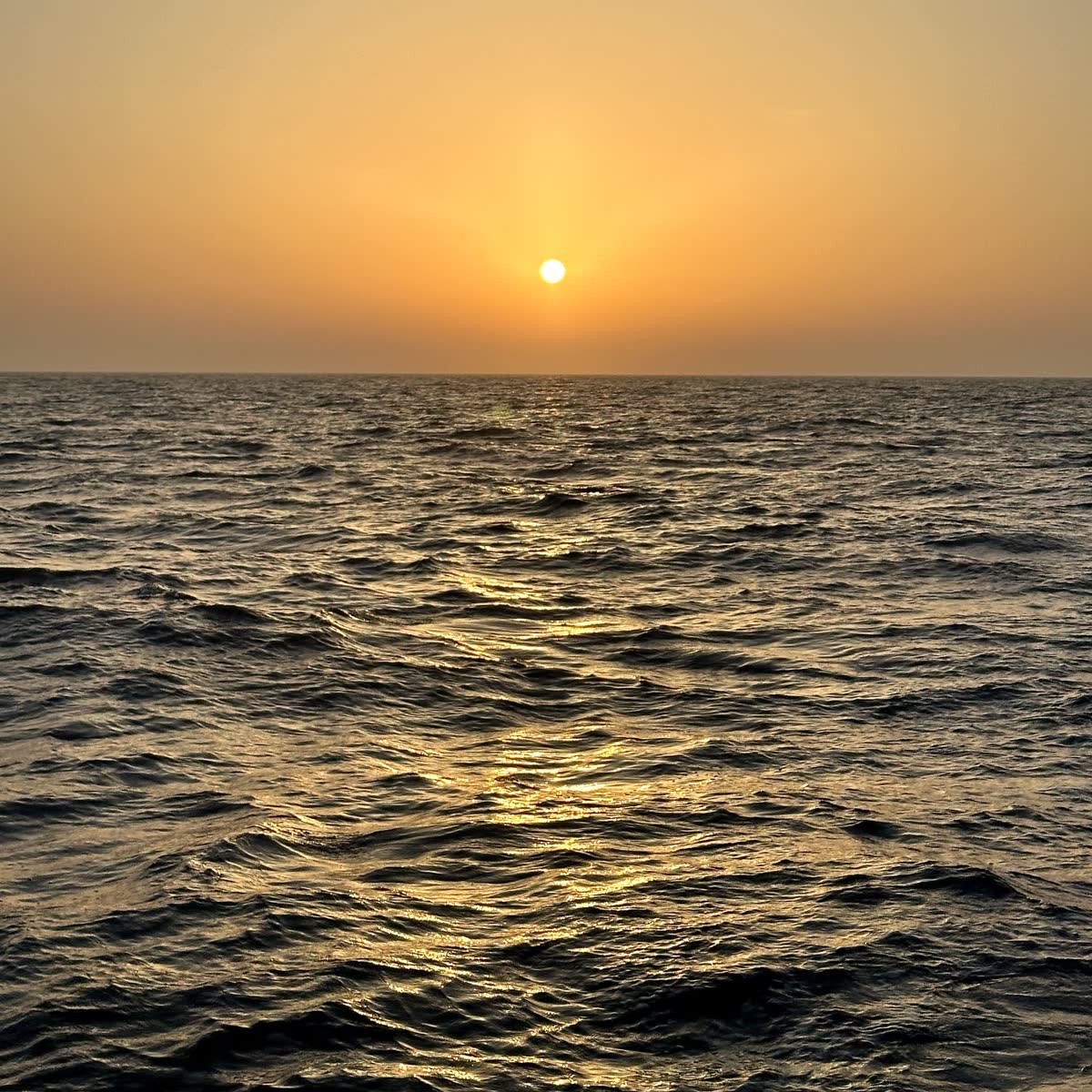
When Andrea started the watch, the moon was just preparing to sink - a lovely sight, deep orange sinking into the hazy horizon. Then it gets really dark and the stars pop out. The best view of the Milky Way either of us had ever seen - just stunning to watch.
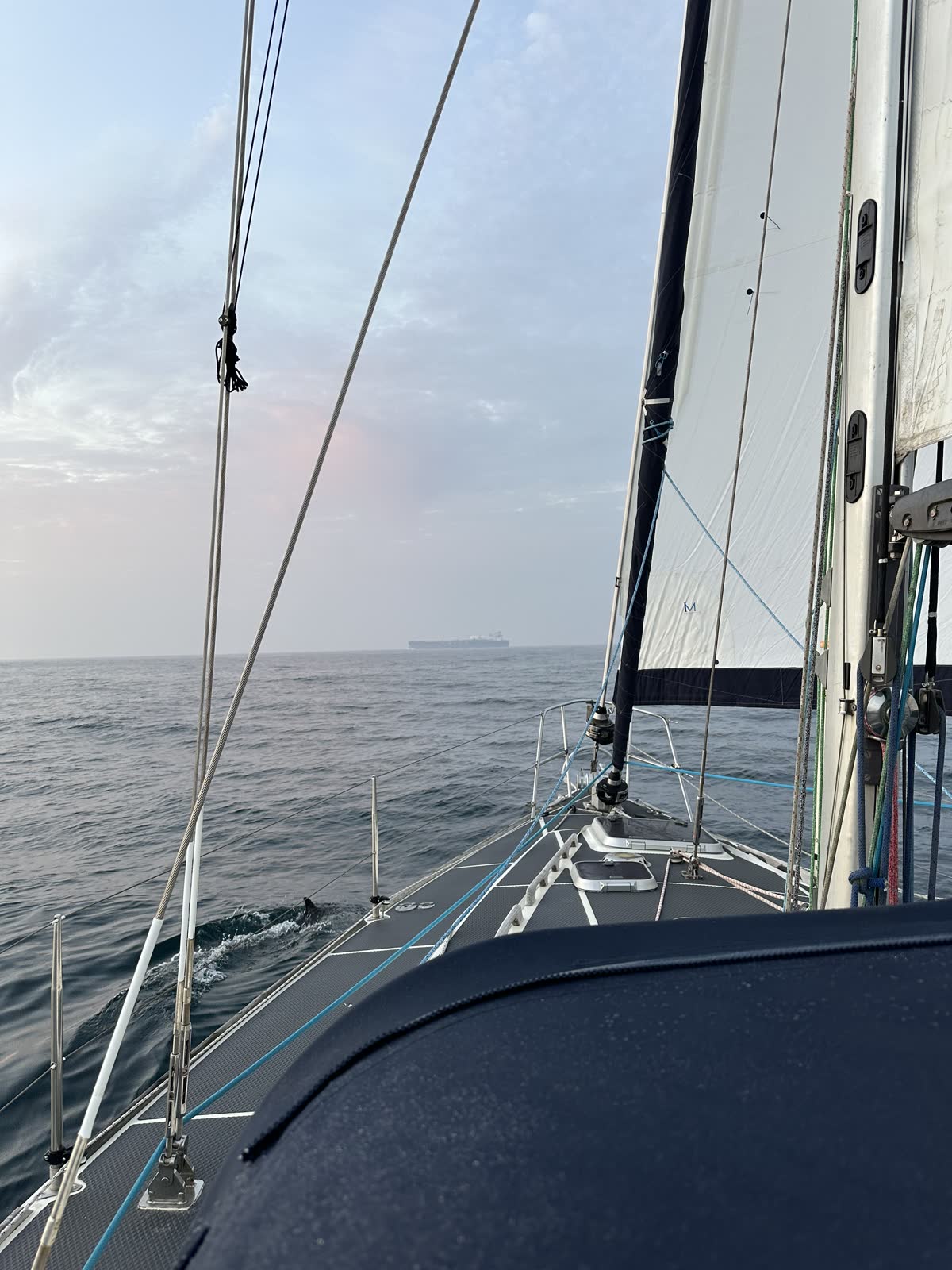
And then something really special happened. Andrea had been wondering for a while why the wake from the boat looks so bright white. After watching it for some time she realised it had to be bioluminescent plankton. And then - wavy luminous lines in the water, coming towards the boat from the dark, back and forth, to the bow and then back to the sides. Finally she spotted them. A pair of dolphins, glowing as they swam through the plankton. They almost looked like mermaids, with their tails and the long luminous trail after them. So serene and beautiful to watch. Andrea will never forget that.
They were gone by the time Rob came up for his watch. A last short nap before coming into French waters.
Ushant and the Chenal du Four
Towards the small hours we came close to the Ushant TSS and it was quite busy there. Lots of big vessels going in and out, and while we didn't go across the TSS itself, you have to keep a good lookout for those coming in and out - they are very fast. It was easy enough to manage and stay out of the way.
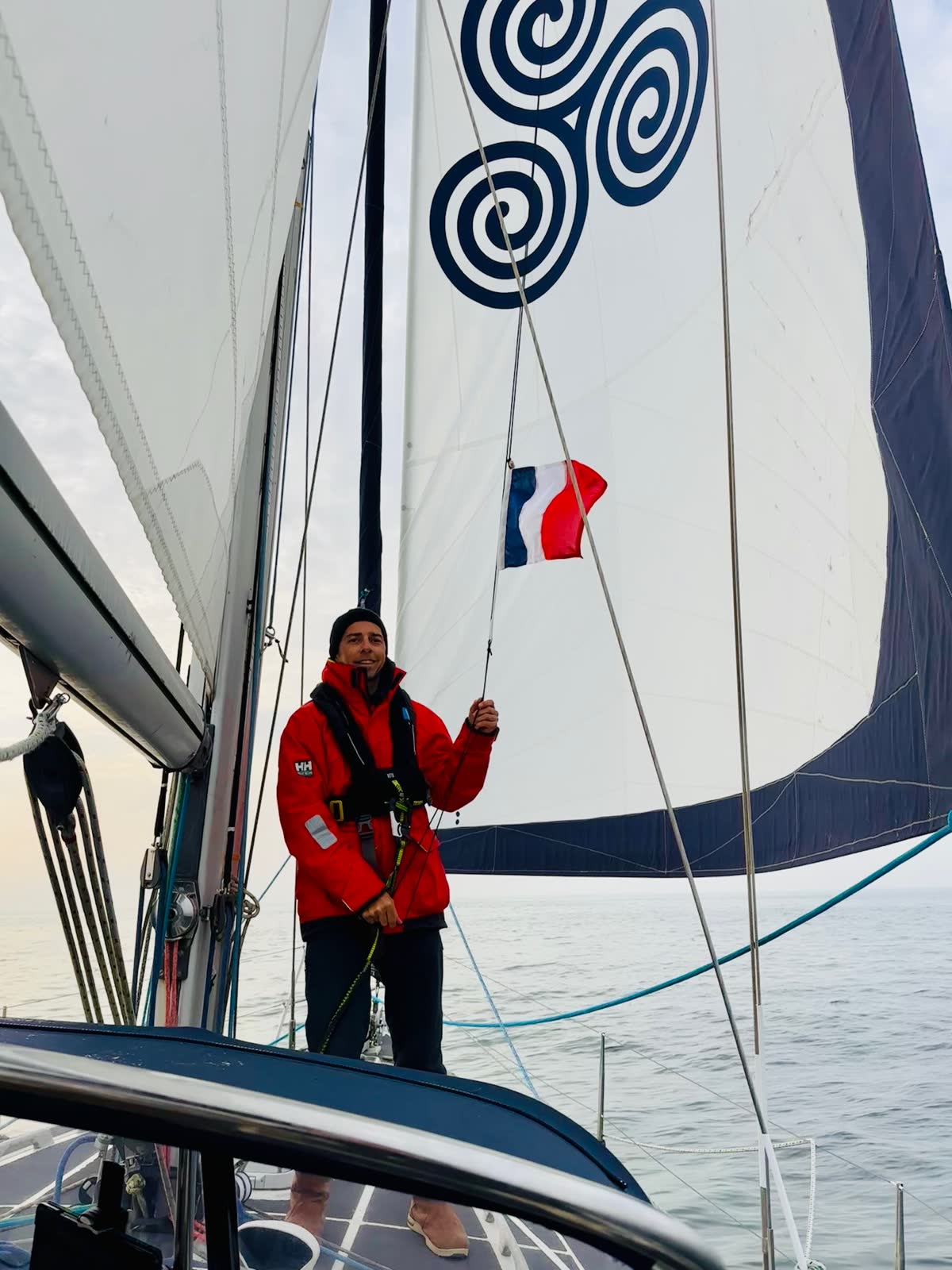
Then the coast of Brittany appeared, still a bit hazy but beautiful. We'd timed it to be at the Chenal du Four with the tide - though at these conditions it wouldn't have mattered too much if we'd been there a bit earlier. Lots of sailing boats and ferry traffic. Certainly a place to keep a good lookout, not just for the scenery.
The Schengen Puzzle
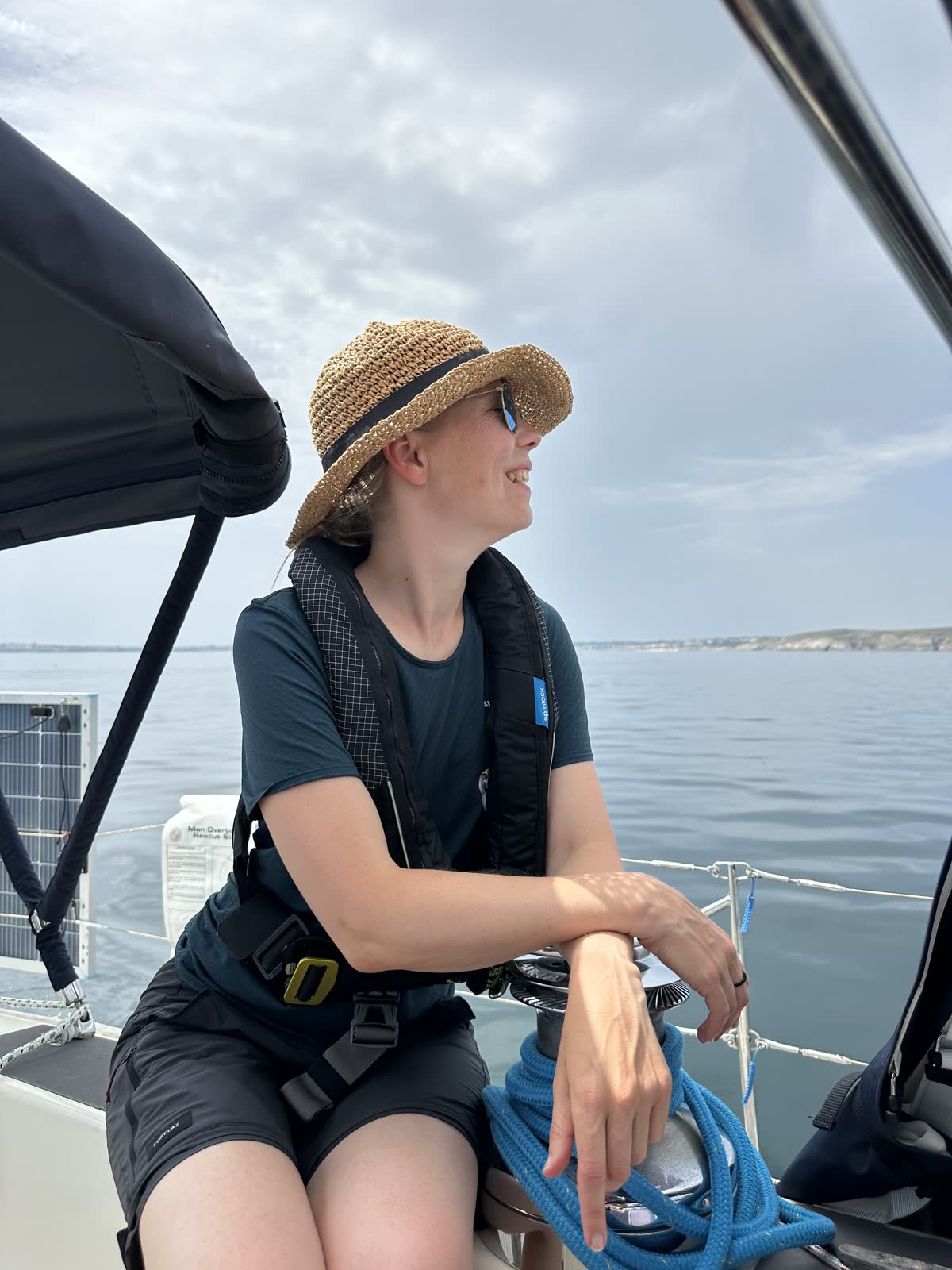
Originally we'd planned to make landfall at Camaret-sur-Mer. But we had to check in to Schengen at Brest instead.
This had been a puzzle for us. We both hold European passports, but Lagertha is a UK-registered vessel. We couldn't find much about this special case online, and we even reached out to the RYA and the Cruising Association, but neither could give us clear advice. We checked out of the UK online, submitted France's arrival form, and contacted Brest Customs directly. They confirmed that, because Lagertha is UK registered, we had to report to Brest rather than clearing in at Camaret.
The check itself was very uneventful. Probably ten minutes, most of it waiting for them to man the desk. A quick scan of our passports and boat papers, and that was it. We're still wondering why they can only do this in certain towns.
Bonjour France
So we headed past Camaret into the Rade de Brest and made for Marina du Chateau. The entrance at the breakwater was busy - Brest is home to one of France's main naval bases, including its submarines. We didn't spot one of those, but several fast naval training vessels came charging back towards the harbour entrance, throwing up an impressive wake. They have the right of way, so we tried to stand off while they came past. We had to hold on tight.
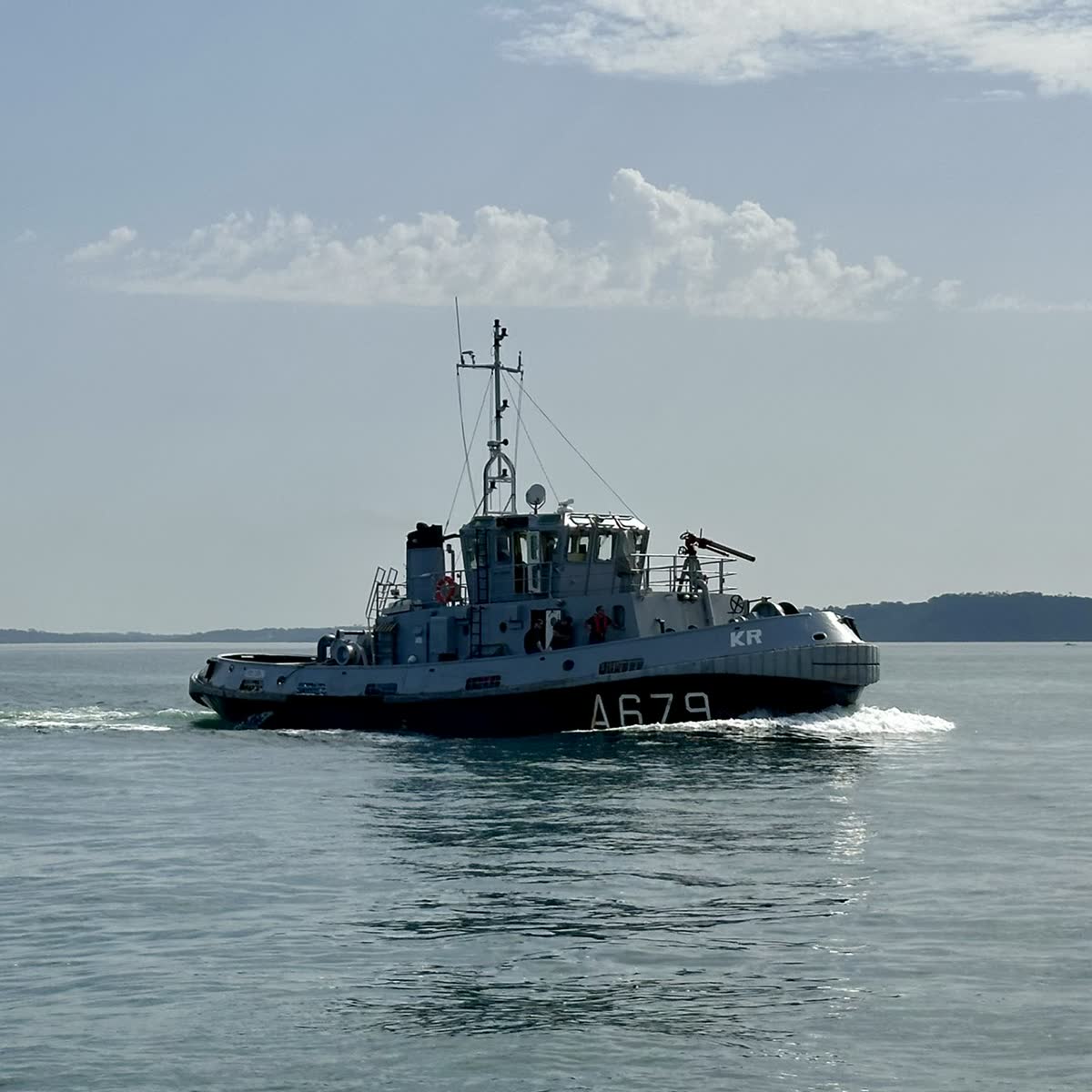
At the marina entrance we were greeted by a dinghy and escorted to our pontoon berth. The young lady in the dinghy even took our lines. A fab welcome. Bonjour France.
Thunderstorm in the Marina
The next day brought a heatwave - well over thirty degrees. After living so many years on the Isle of Man, we aren't used to these temperatures anymore.
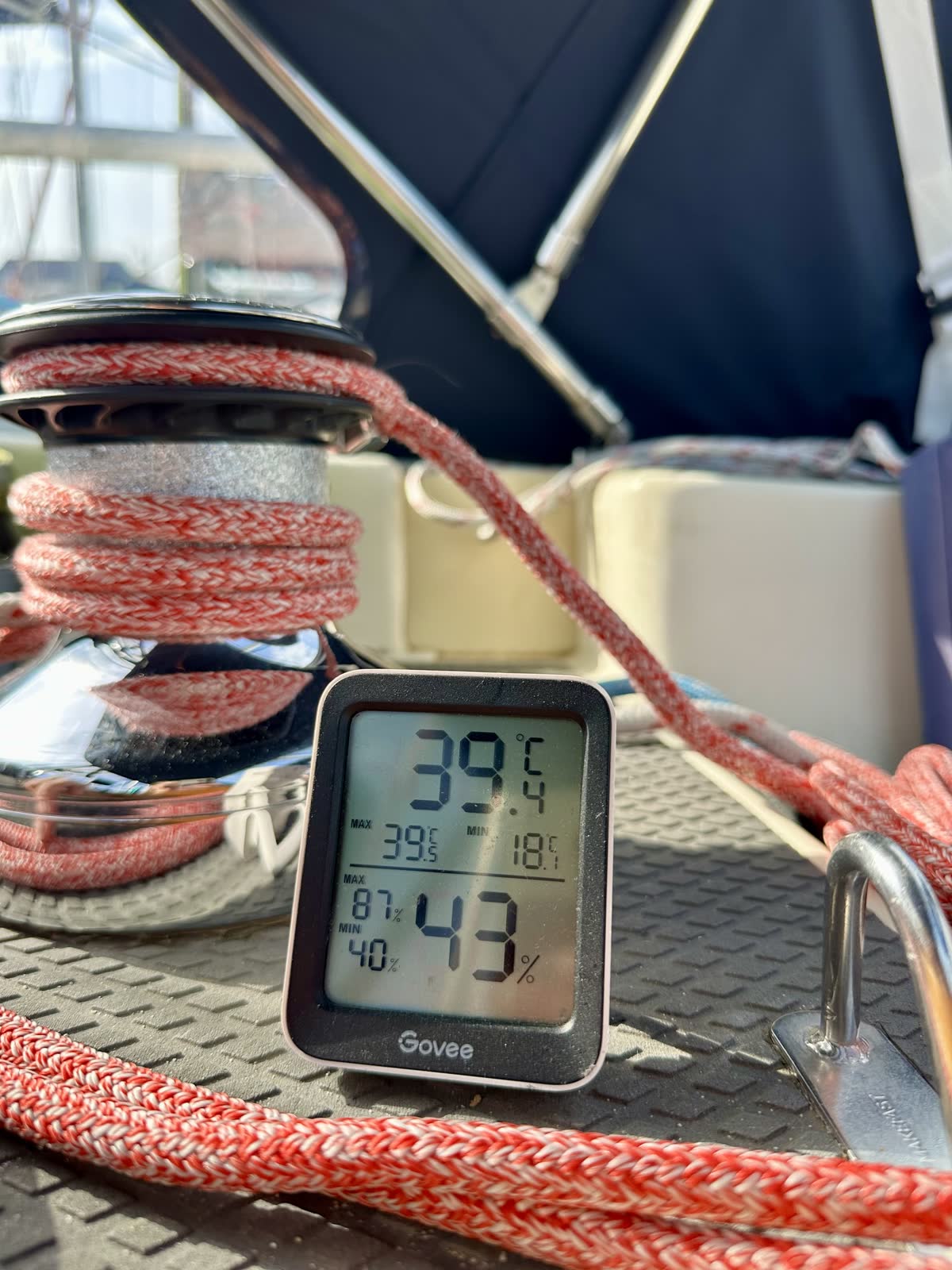
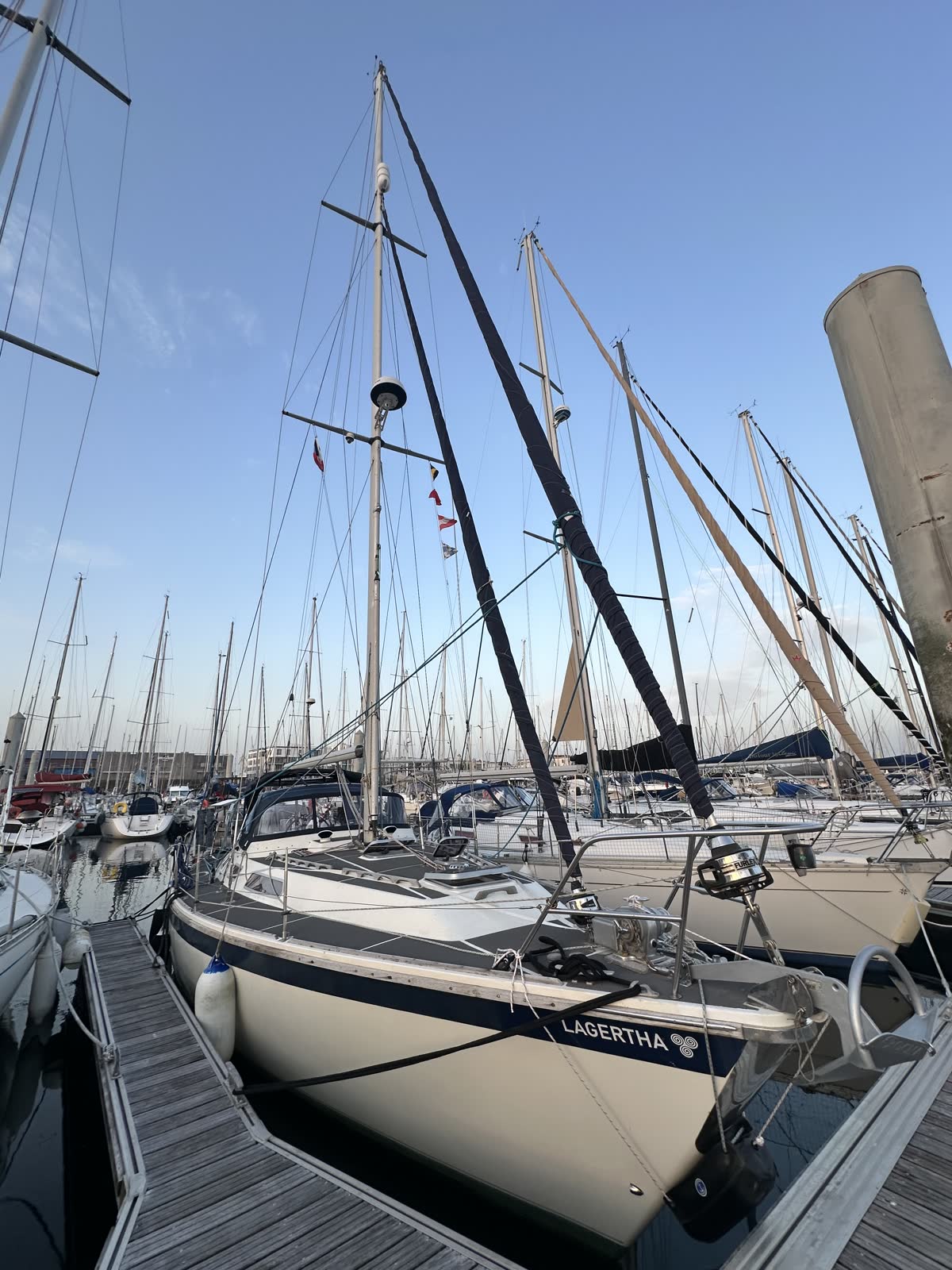
Before we could head off to explore, the sky turned really dark. Then the squalls started - gusts up to 42 knots in the marina. Lightning, thunder, and the atmosphere finally releasing all that built-up heat. It was impressive, but we were moored up tight and secure. Nothing to worry about. The heat afterwards was almost worse than the storm.
Exploring Brest
Brest is not a city that charms at first glance. But if you dig a bit, you can find some quite interesting places. And the people are very friendly - while our French was very basic, they weren't at all dismissive, which was a pleasant surprise after previous experiences in Paris.
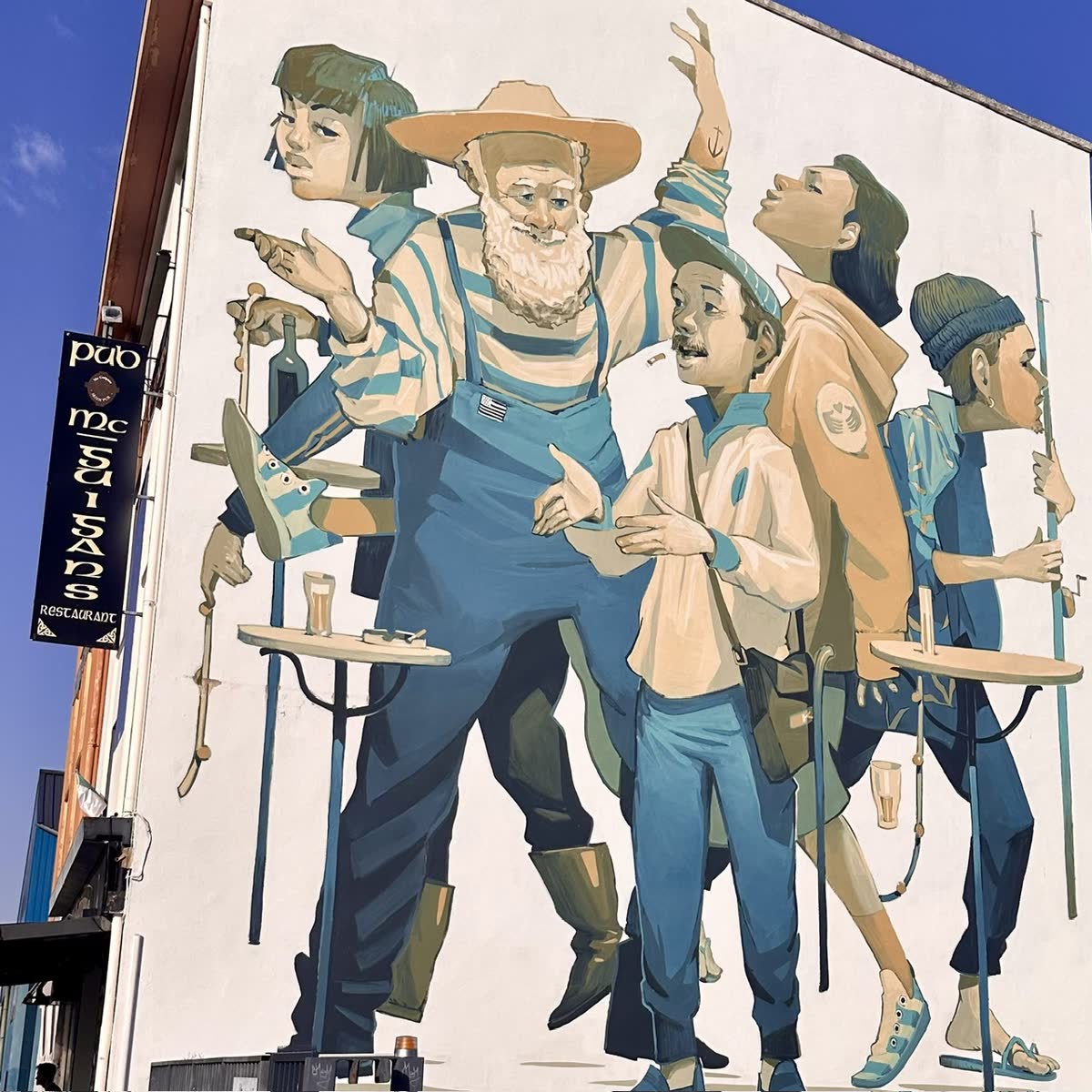
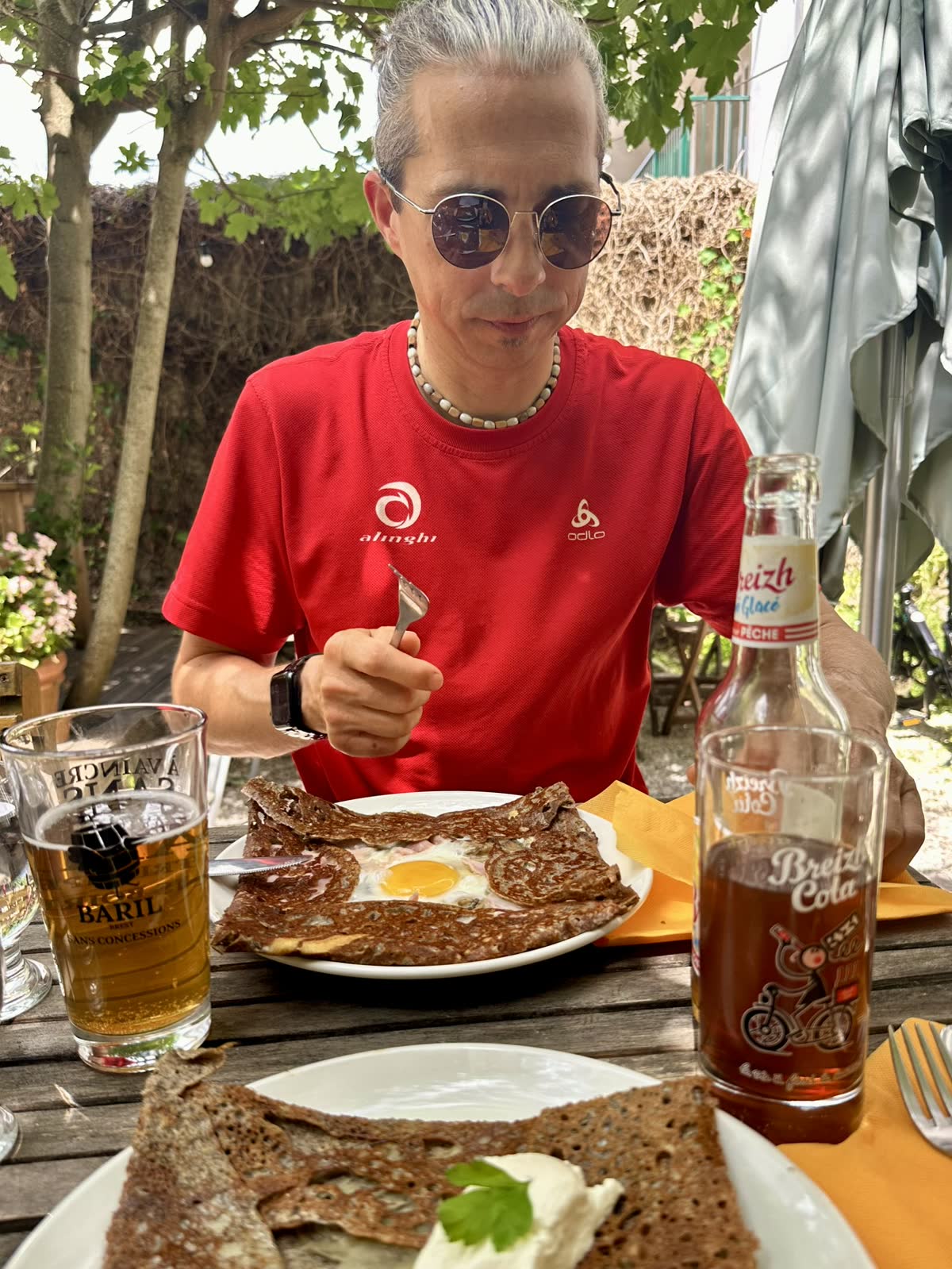
We explored on our e-bikes in the unseen heat. First stop was a creperie to try the galettes, savoury and sweet, dodging some thundery rain between courses.
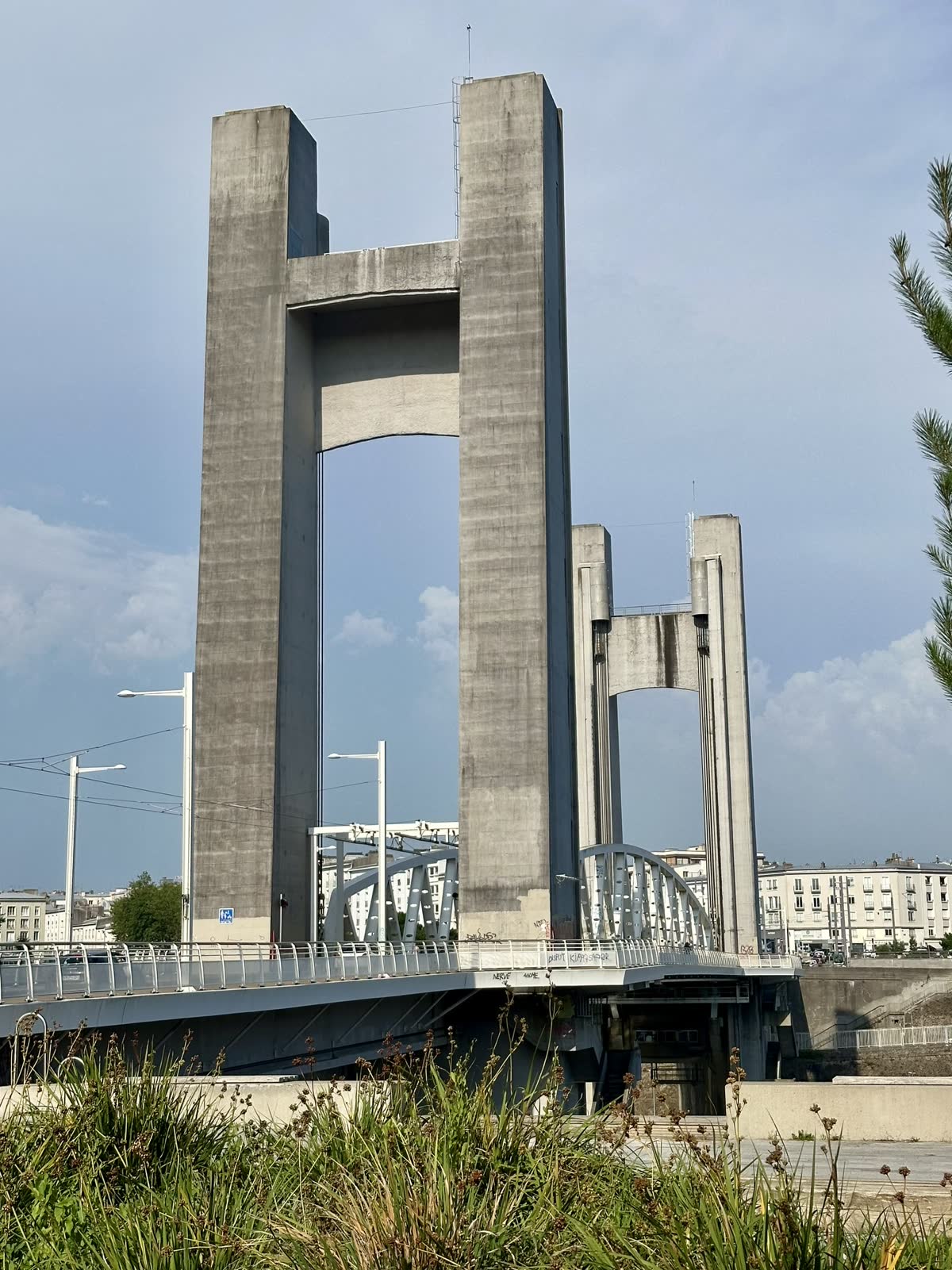
The cable car was closed, so we crossed the Pont de Recouvrance instead - an enormous vertical-lift bridge spanning the Penfeld. Even without the cable car it was worth the detour.
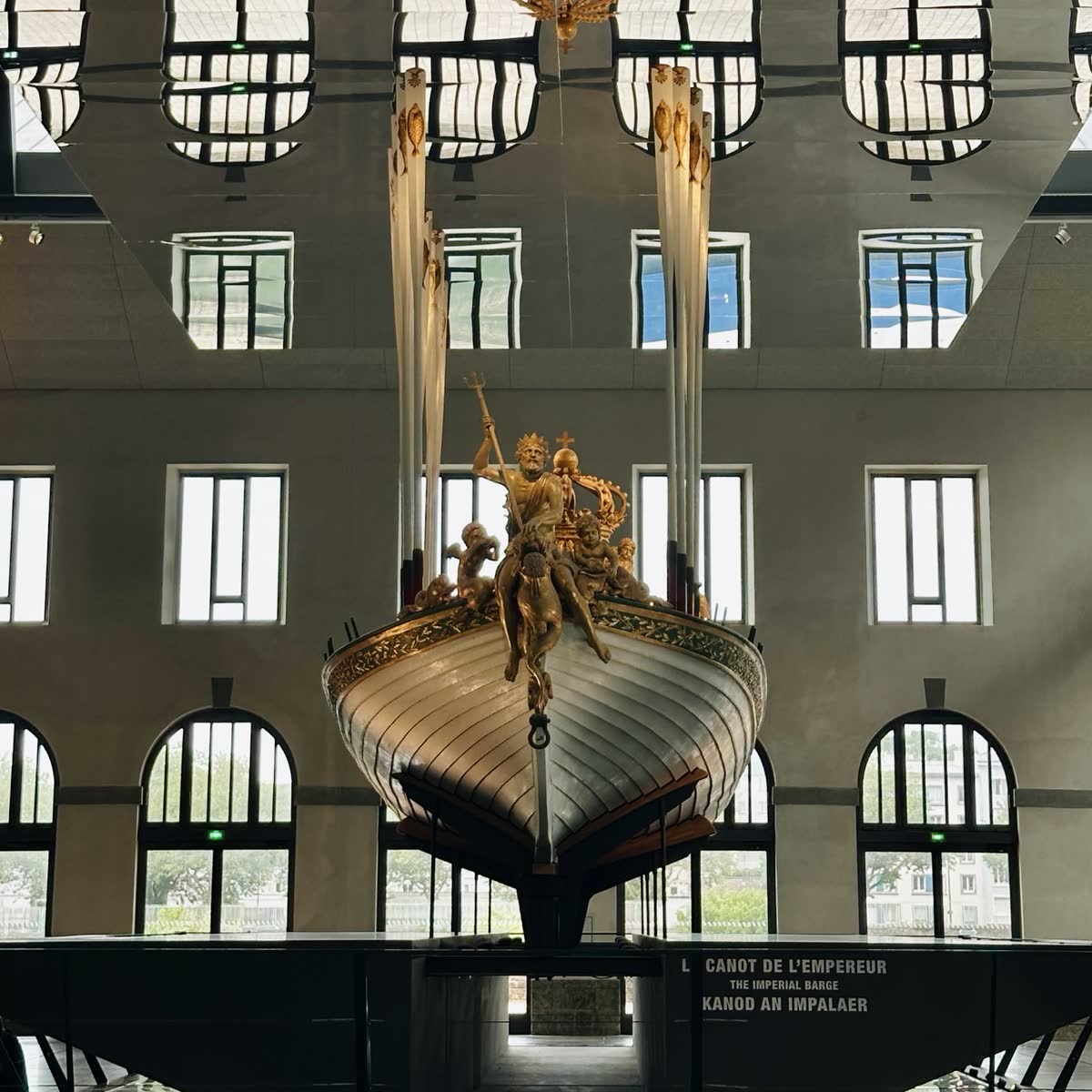
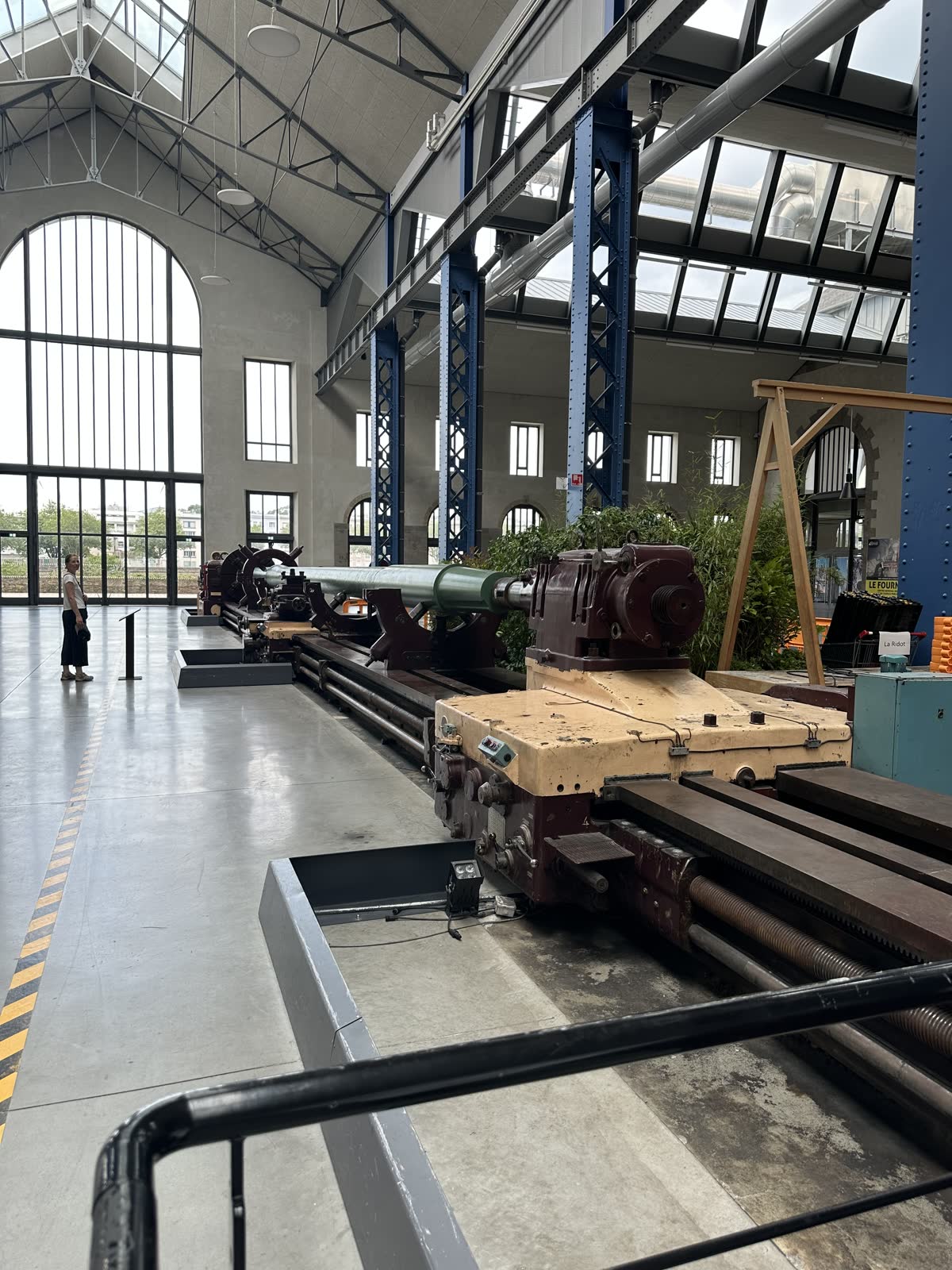
Across the bridge towards the Ateliers des Capucins to visit the Musee 70.8 - we got one free entry when we checked in at the marina. The museum focuses on the oceans, maritime history and France's relationship with the sea. Surprisingly interesting - and wonderfully cool during the afternoon heat.
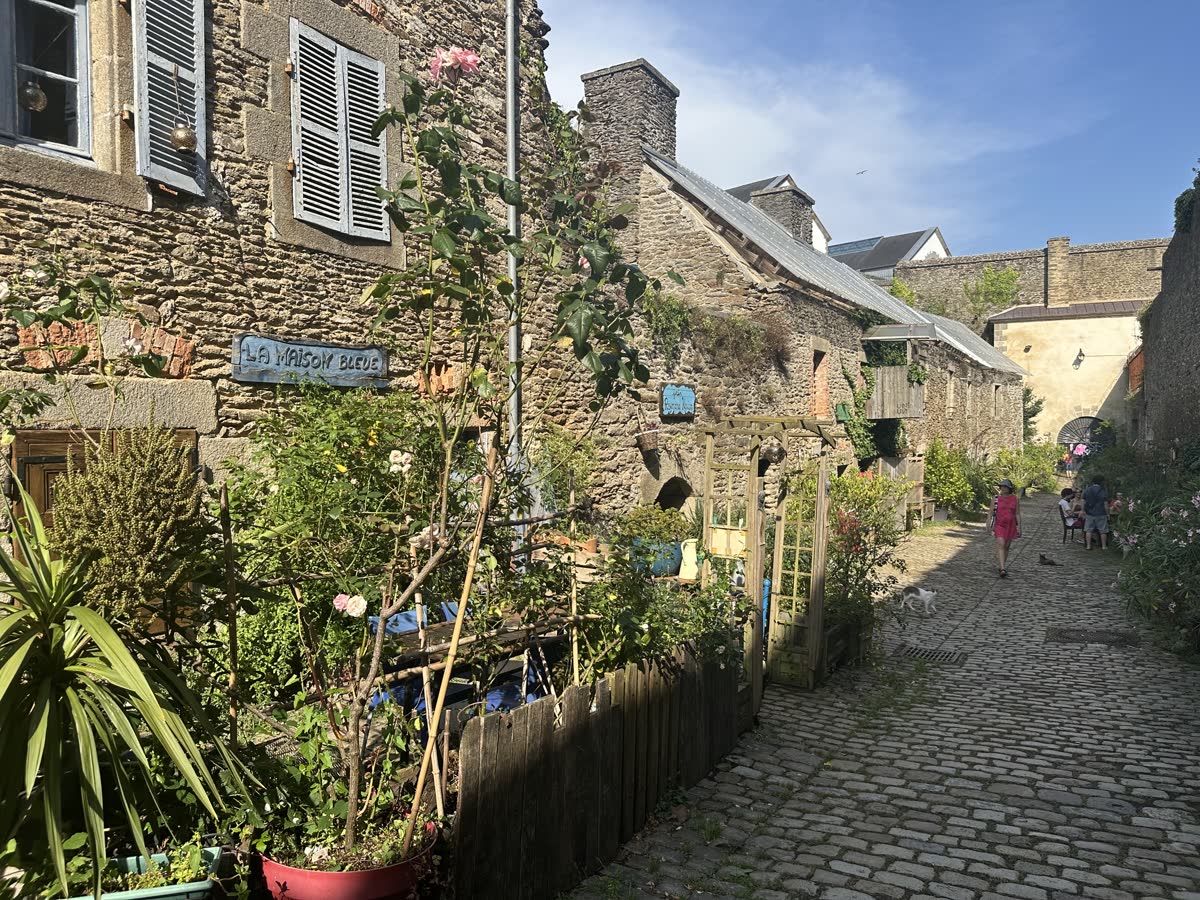
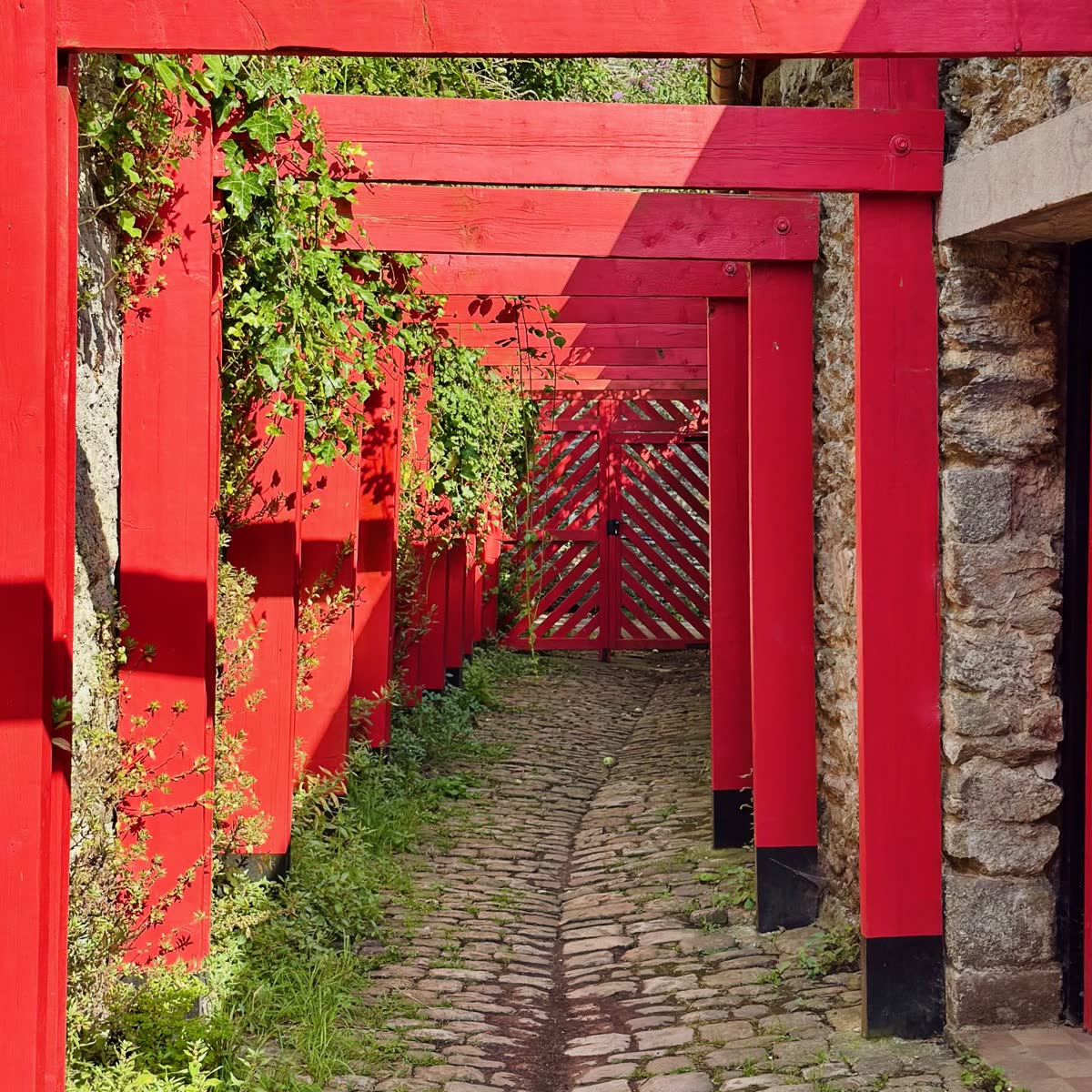
Afterwards we wandered through Rue Saint-Malo, the only surviving pre-war street in Brest. Hidden away from the rebuilt city, it feels like stepping into a completely different place.
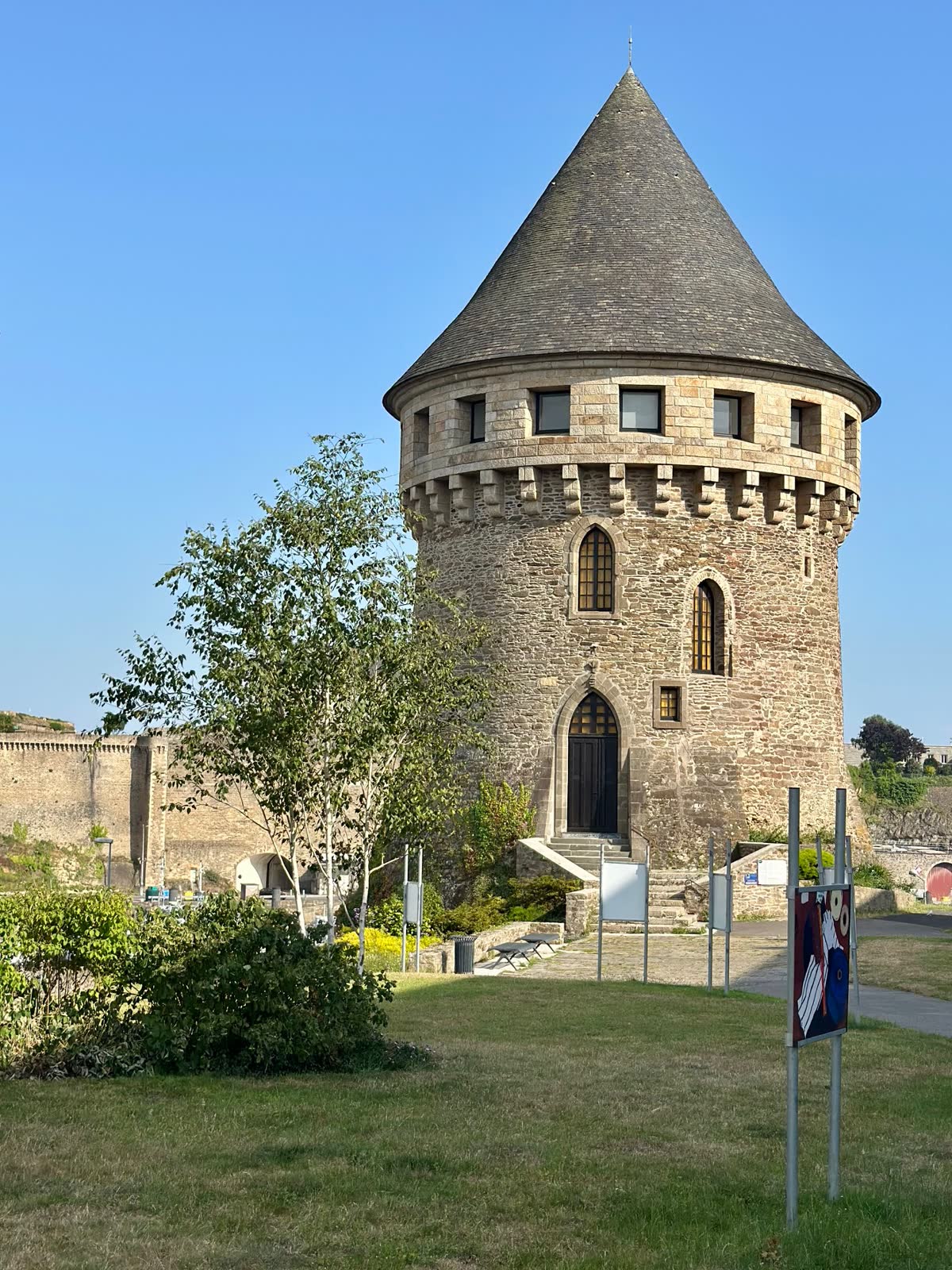
A detour via Tour Tanguy - a medieval tower on a rocky outcrop beside the river, with nice views across to the Chateau de Brest and dioramas of the old city inside.
The Air Raid Shelter
The next day we decided on another afternoon stroll through Brest. What started as a quick walk around the Chateau ended with quite an exploration.
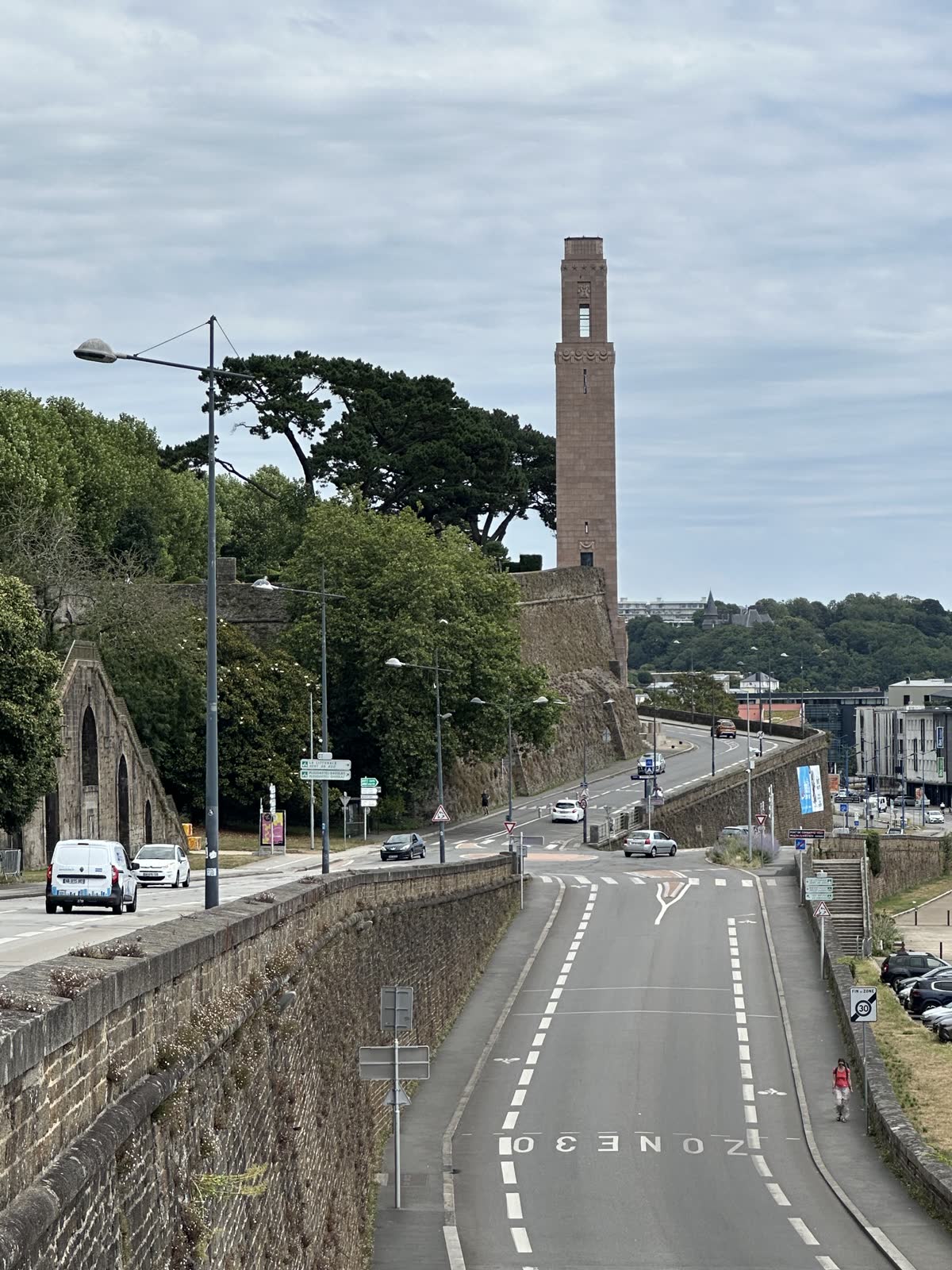
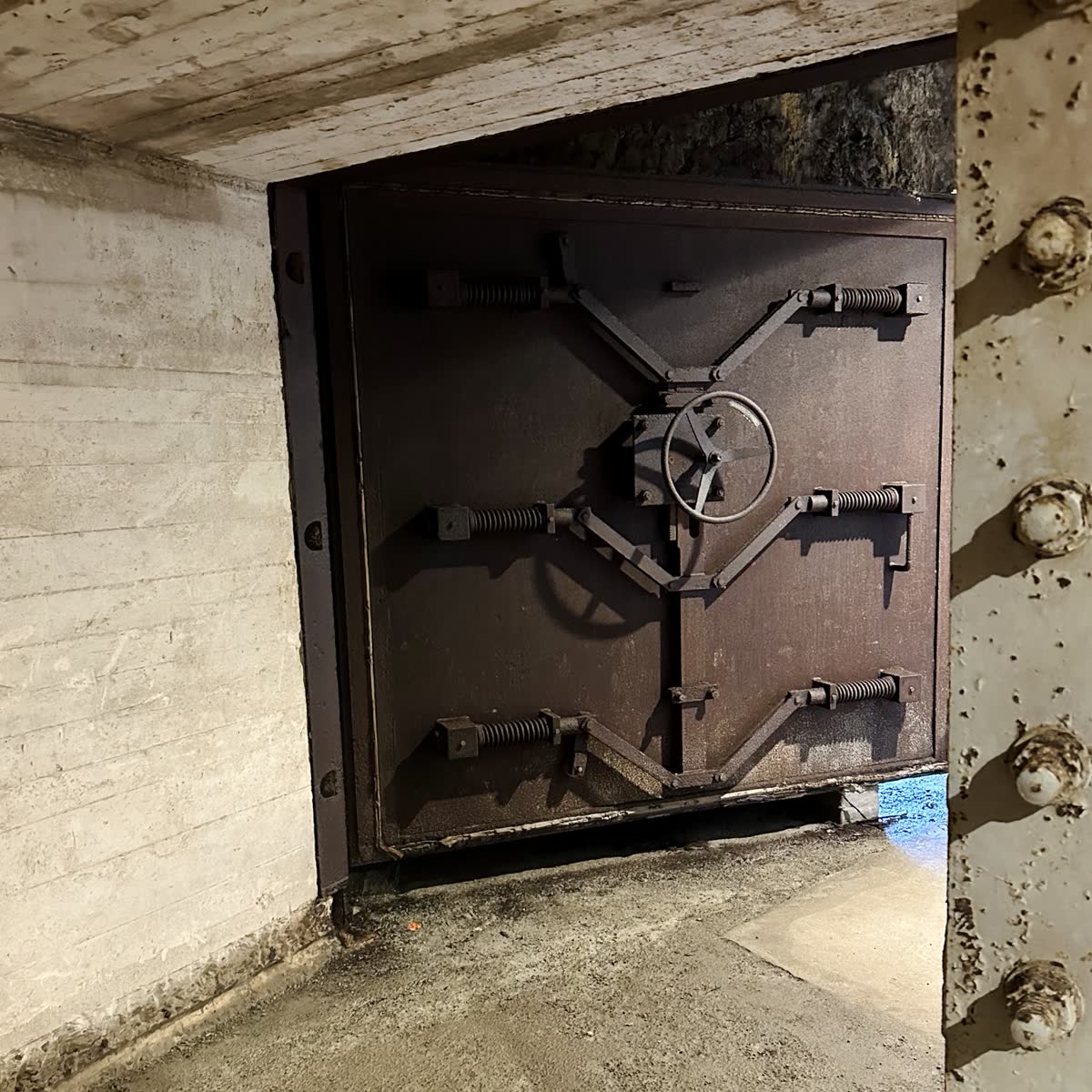
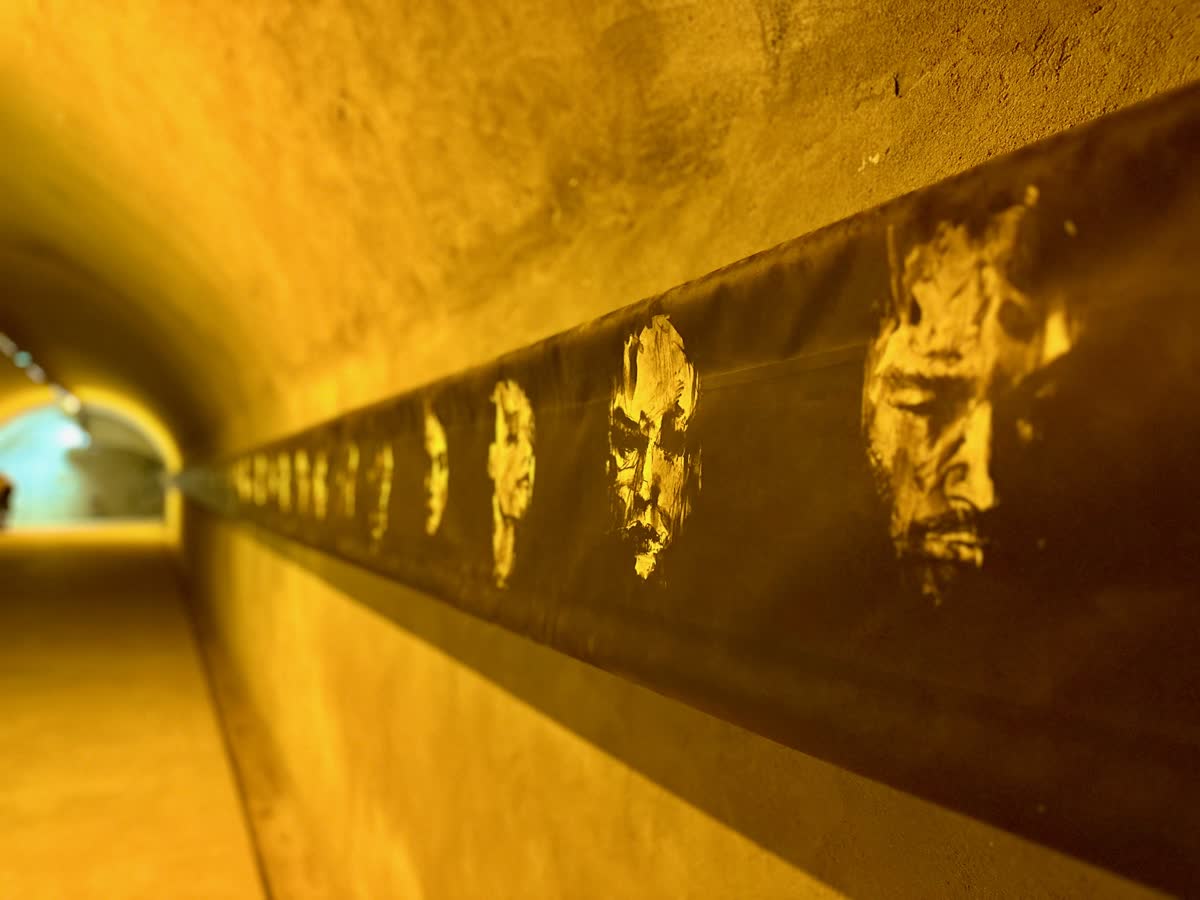
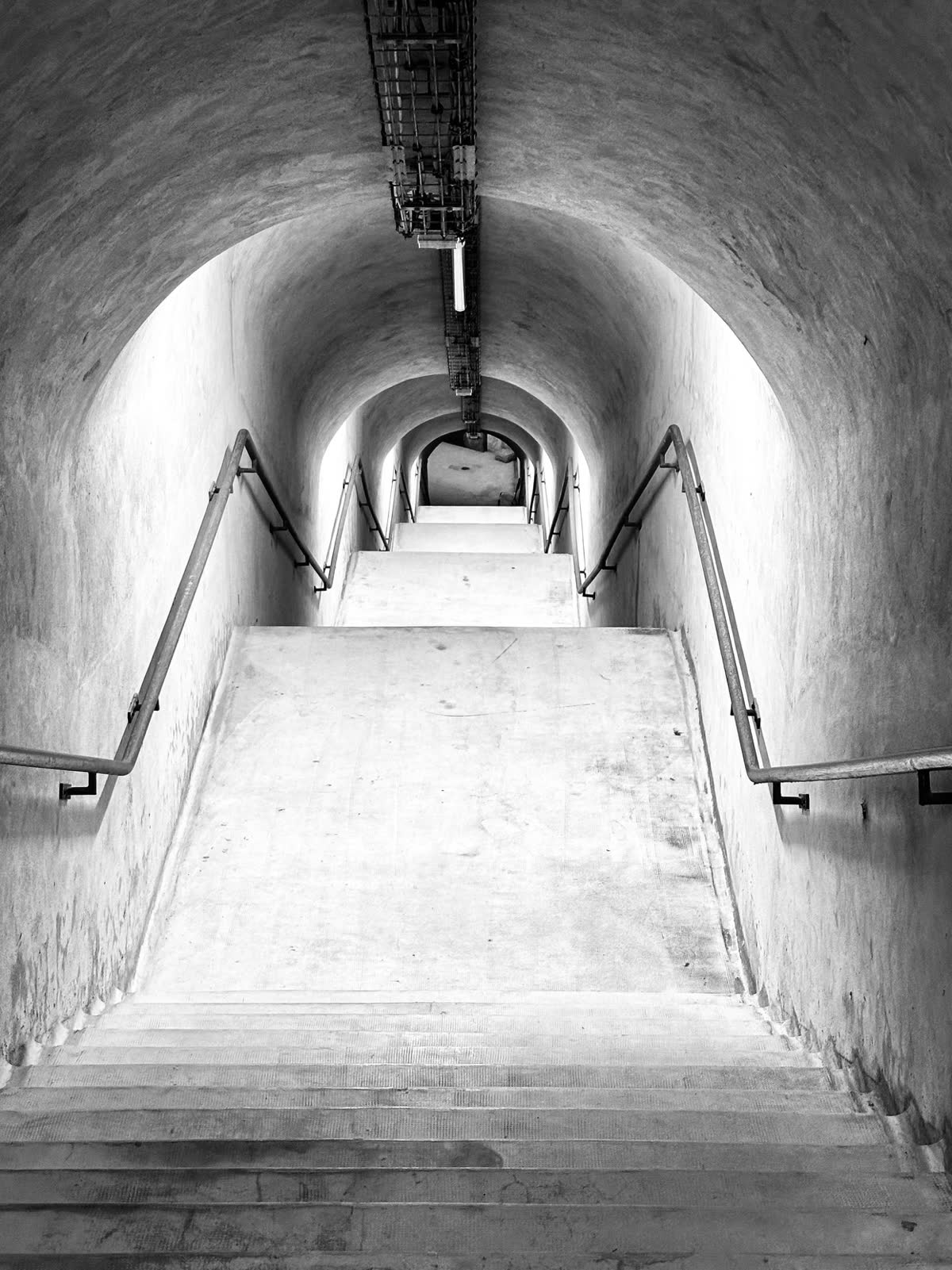
Following the old ramparts along the river, we found ourselves at the entrance of the Abri Sadi Carnot - a massive World War Two air raid shelter carved deep into the rock beneath the city. Built by the German Organisation Todt and the French STO, it was designed to protect up to 3,000 people from the Allied bombing raids that devastated Brest.
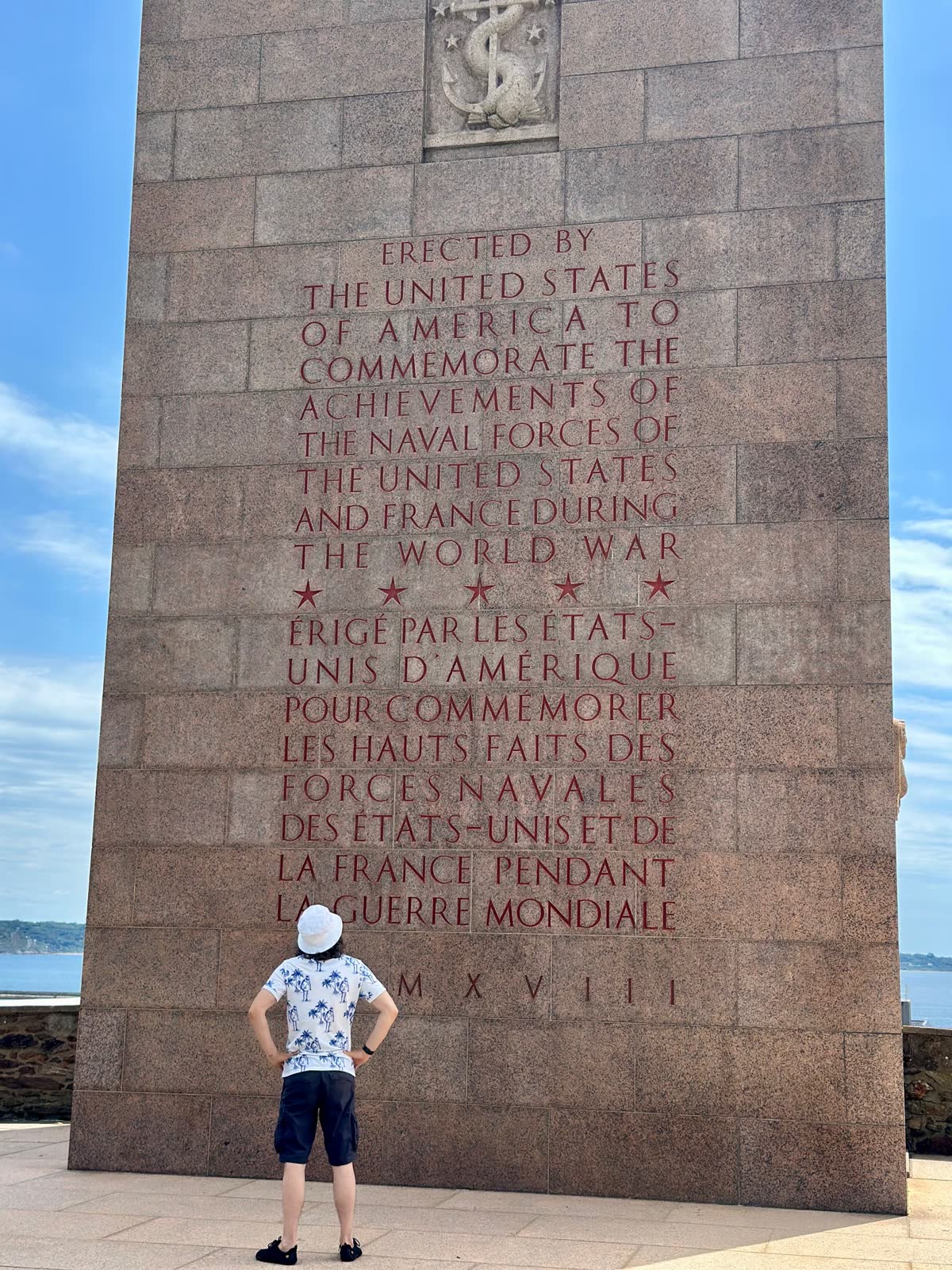
Walking inside was breathtaking. The sheer scale of it - long, echoing tunnels, thick concrete walls, the weight of history pressing down from above. Photographs and displays telling the stories of Brest during the war: the occupation, daily life under bombardment, the liberation. The shelter survived the war almost intact, and today it's a free museum. One of the best things we did in Brest, and it costs nothing to enter.
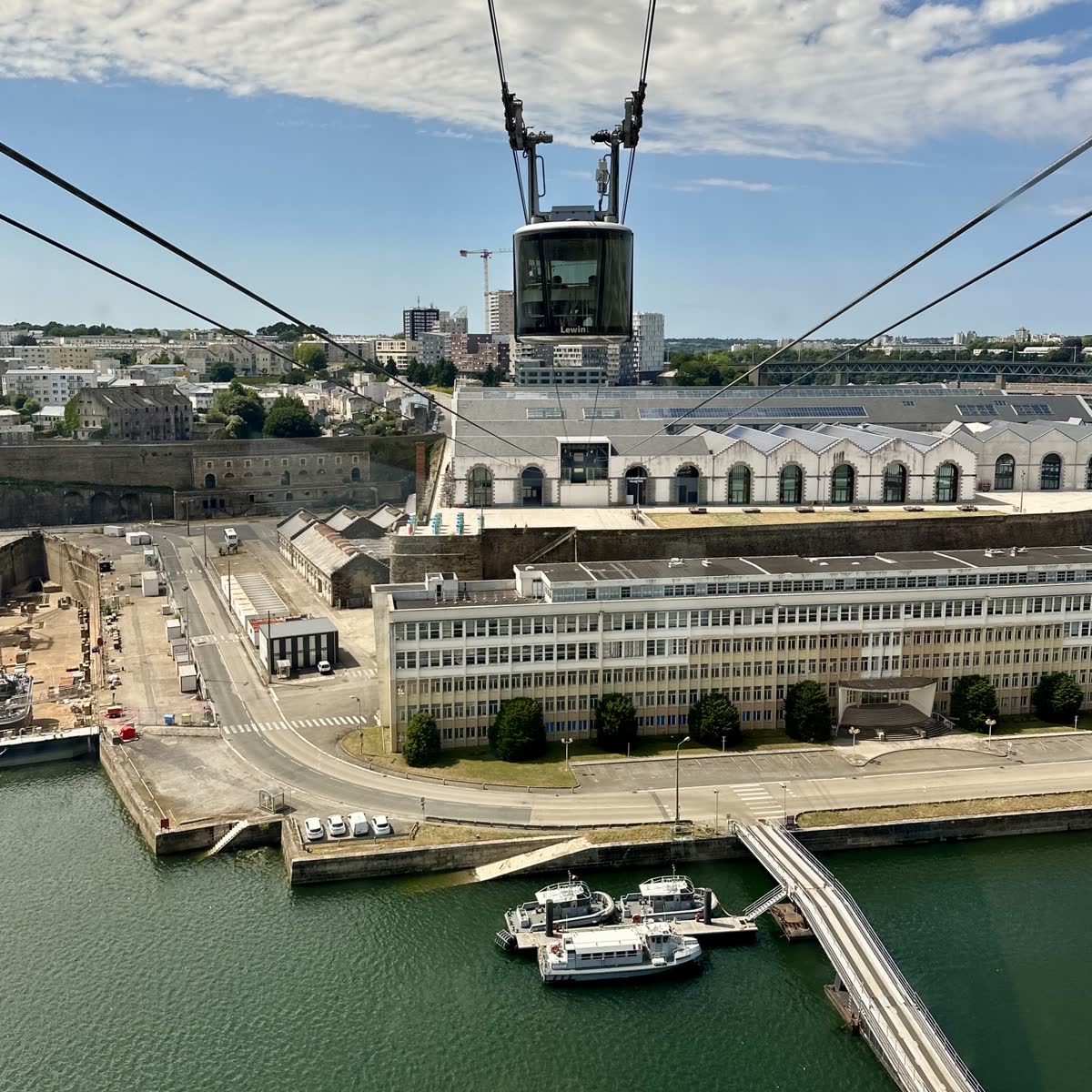
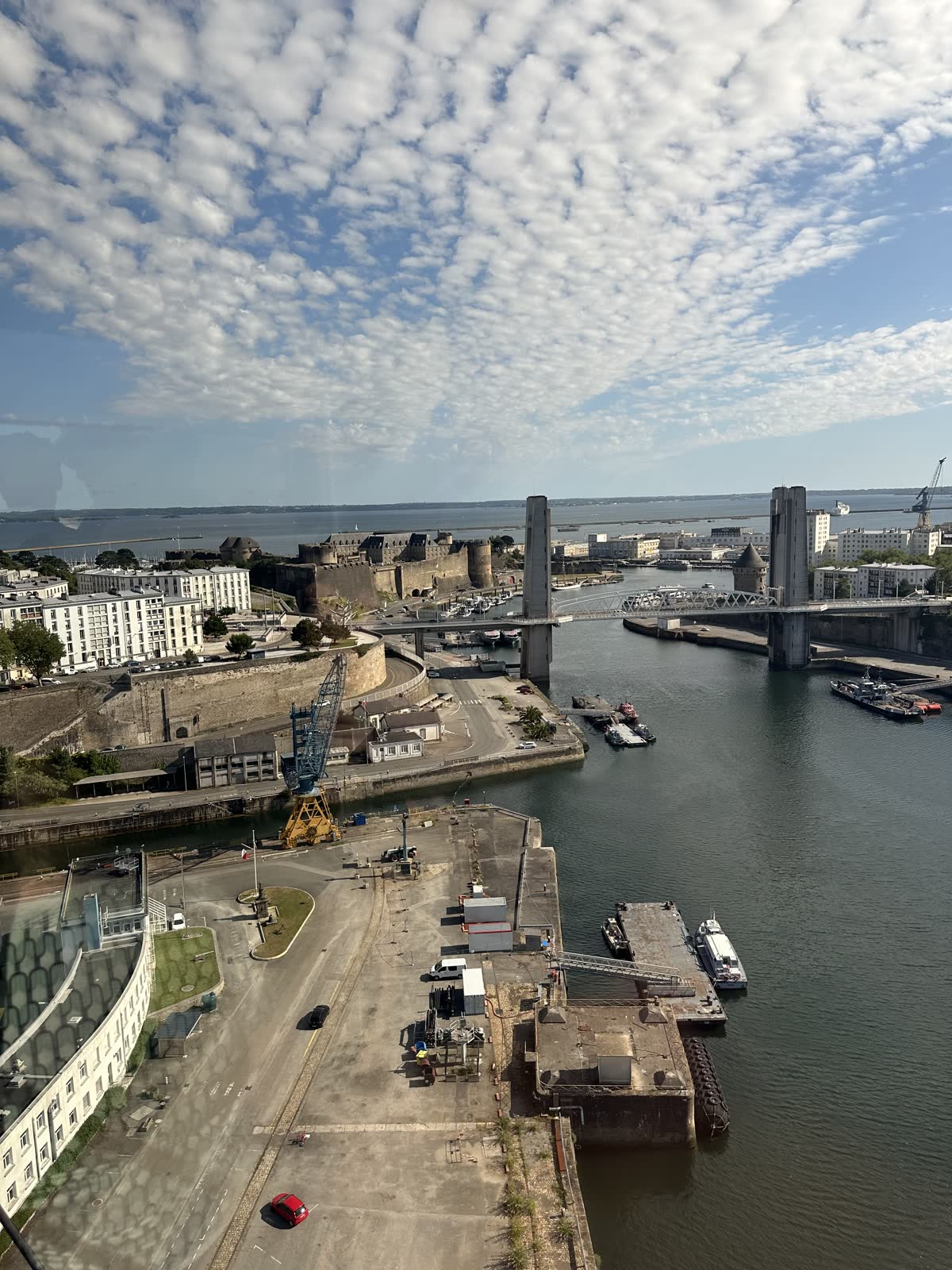
When we came out, we saw that the cable car was back in service. We'd tried earlier in the week and found it closed, so we spontaneously decided to go for a ride. It crosses the River Penfeld, connecting the city centre to the Recouvrance district. Return tickets are under three euros - well invested for the view and the experience. From above, you get a completely different perspective of the harbour, the warships, and the city spread out around the river.
Spider Crabs and Wooden Hammers
Walking back, we crossed a restaurant called Le Crabe Marteau. People were sitting there with little wooden hammers and bibs, cracking into crabs. It looked like great fun, and after all the exploration we felt a bit hungry. So in we went.
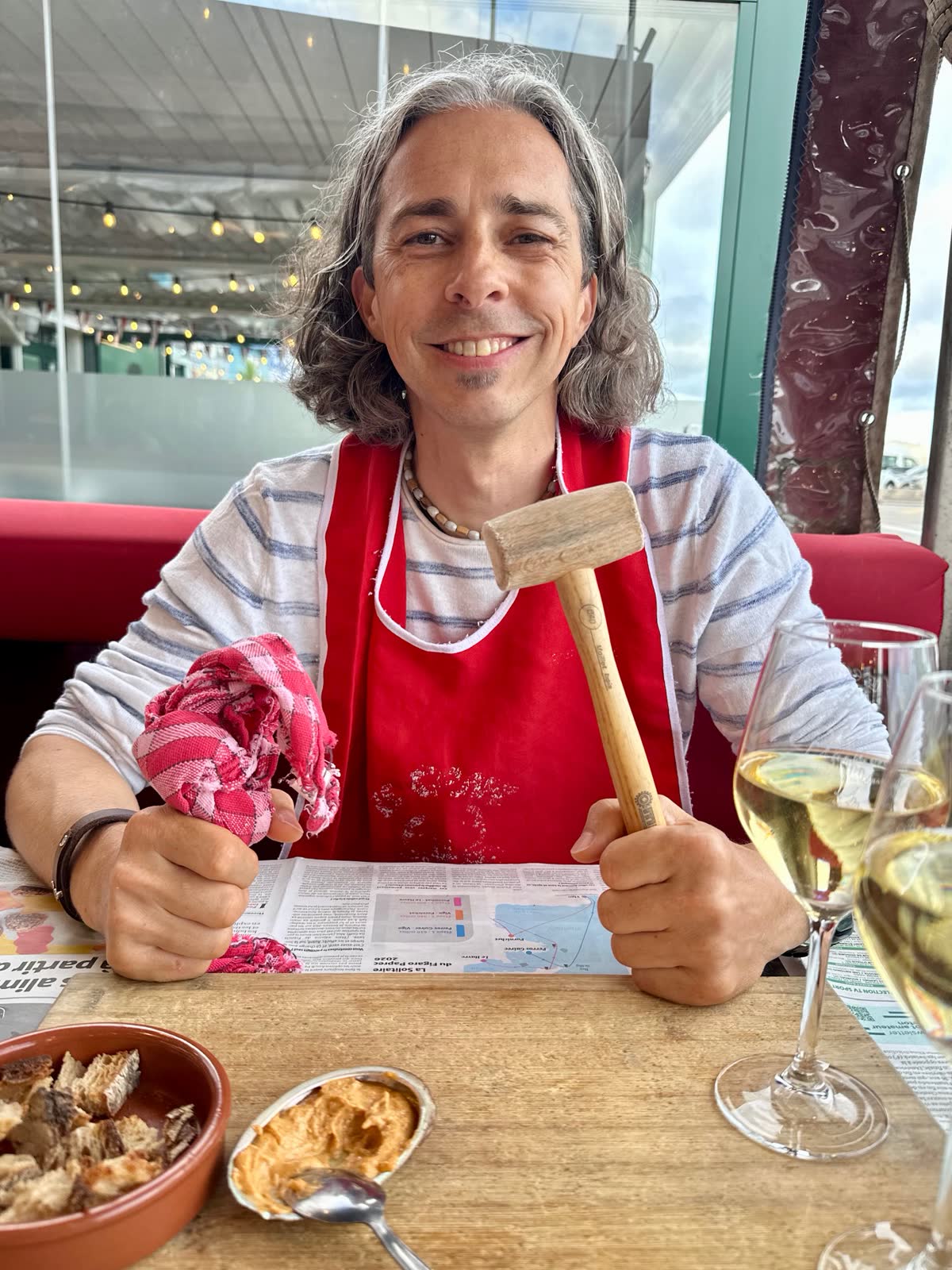
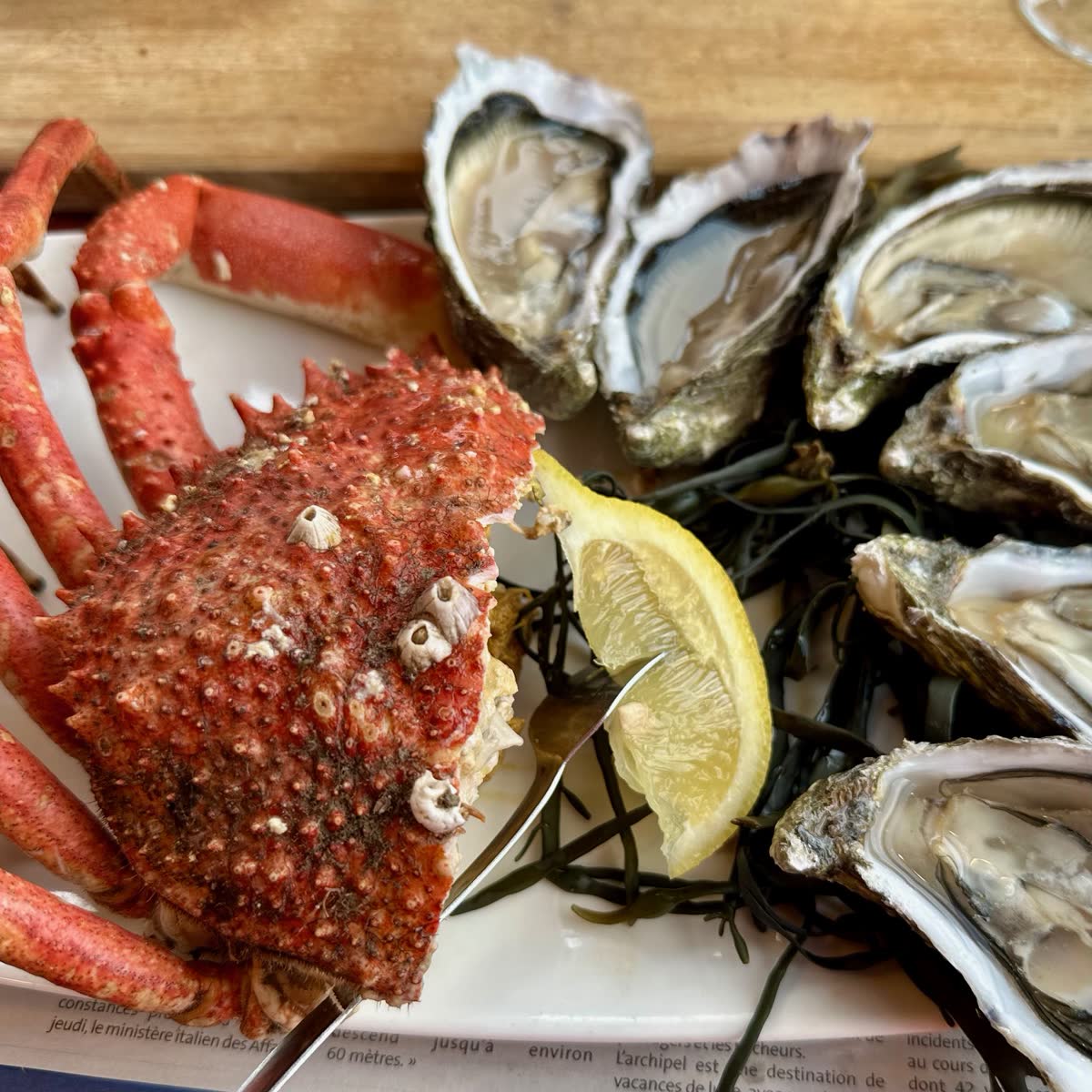
We ordered plates with half a spider crab each, plus oysters and langoustines - paired with a lovely fresh glass of French white wine. Dinner became one of those evenings you don't plan - good seafood, excellent wine, and a conversation with another crew preparing to cross Biscay. By the time we walked back to Lagertha we were already looking forward to our own departure.
Housekeeping and French Pharmacies
The remaining days disappeared into the usual marina routine. Laundry, fresh bedding and finally packing away the winter duvet - it seemed unlikely we'd need it again anytime soon.
While Rob hunted down a few good French reds, Andrea discovered why French pharmacies have the reputation they do... and also realised she'd forgotten to pack a summer dress. The boutiques solved that problem quickly enough. Some French patisserie made up for the pharmacy bill, much to Rob's dismay.
Andrea somehow managed to narrow the cheese selection down to a reasonable amount - though we both knew it wouldn't last long. Groceries stocked, supplies sorted, and another evening with nibbles and some of the reds onboard. France happened to be playing in the World Cup that evening, and every goal echoed across the marina from the public screenings nearby. It felt like a fitting welcome to our first days in France.
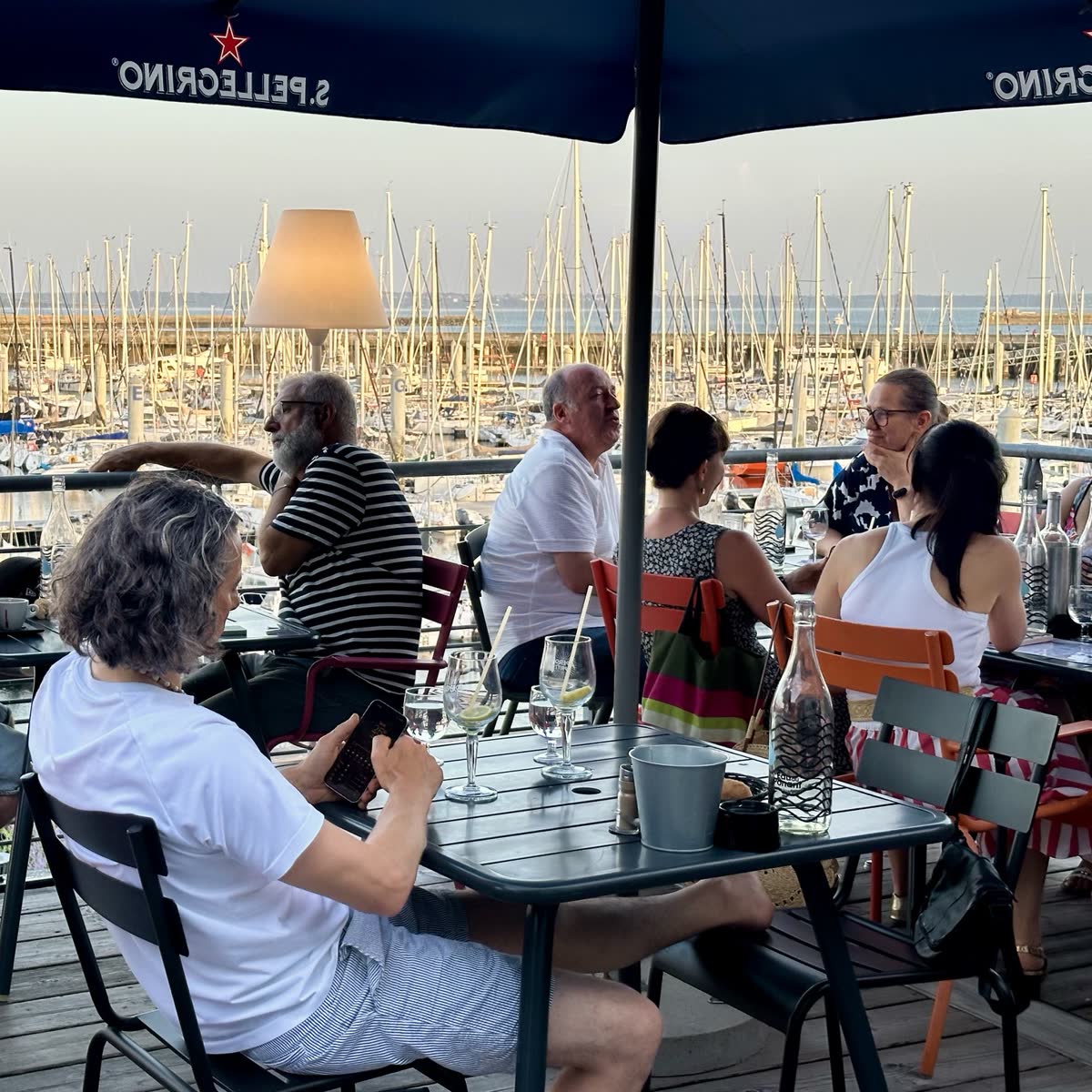
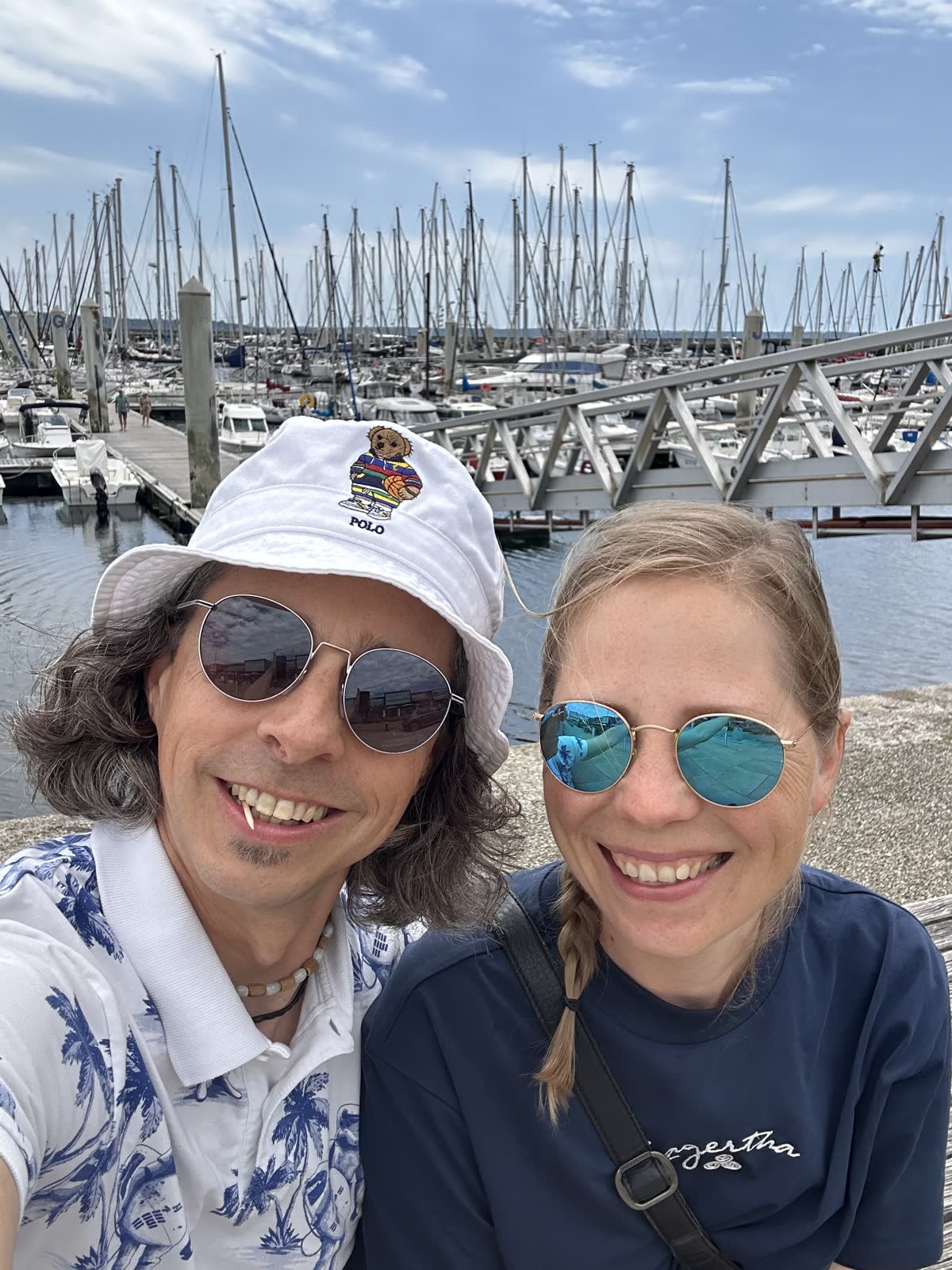
Five days earlier we'd slipped away from the Isles of Scilly wondering what our first visit to France would be like. We'd crossed the Channel, watched dolphins glow beneath the stars, explored Brest's hidden history and settled into a completely different cruising culture.
Ahead lay the Bay of Biscay. A crossing we'd been thinking about for years. France had already exceeded every expectation - but the real adventure was only just beginning.
#Lagertha #Brittany #Brest #Nightsail #EnglishChannel #ChenalDuFour #Bioluminescence #Dolphins #Schengen #France #AbriSadiCarnot #Heatwave